Guide Dog for the Blind program marks 25 years on Vashon
Published 3:09 pm Wednesday, October 1, 2025
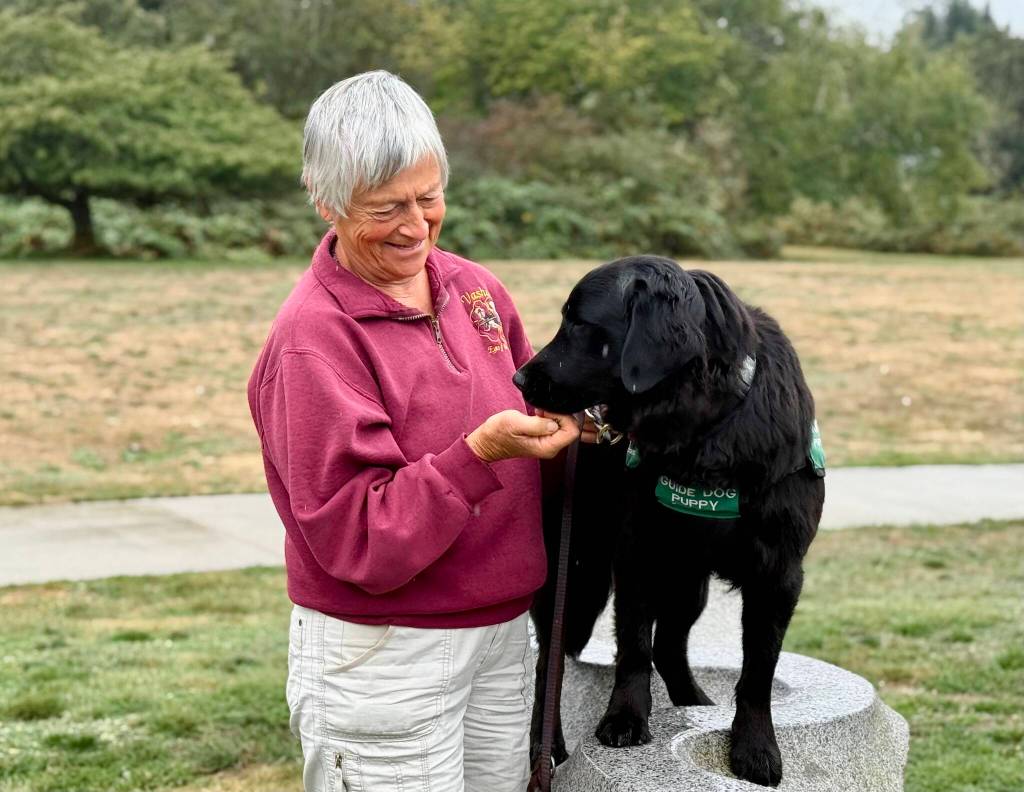
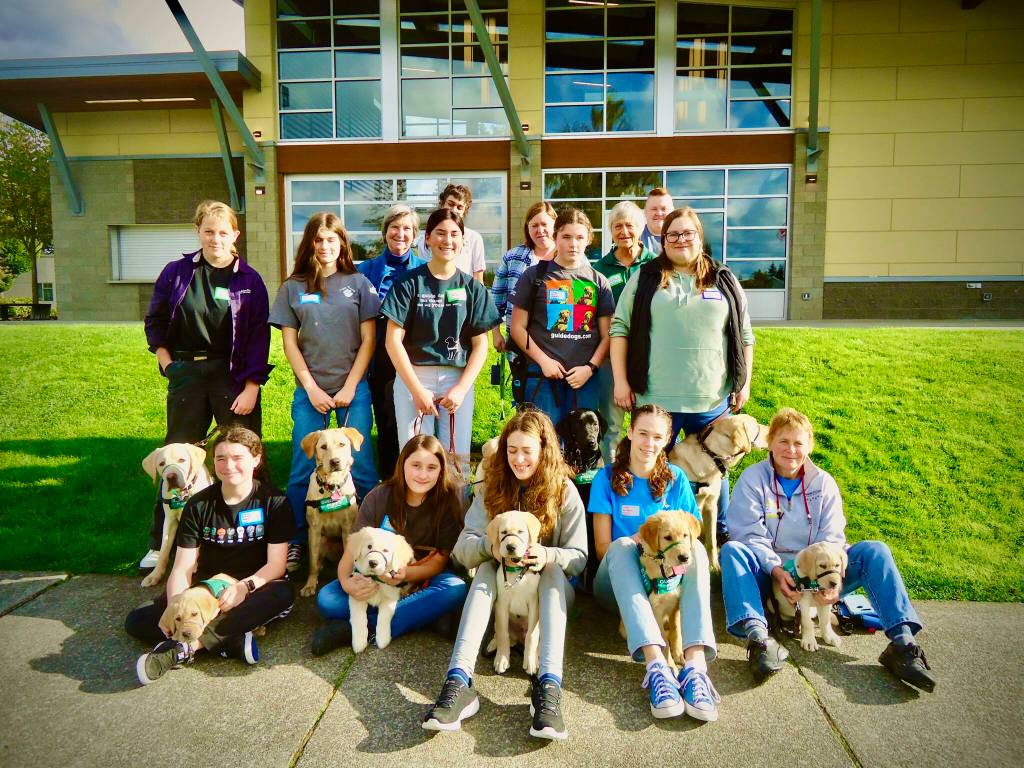
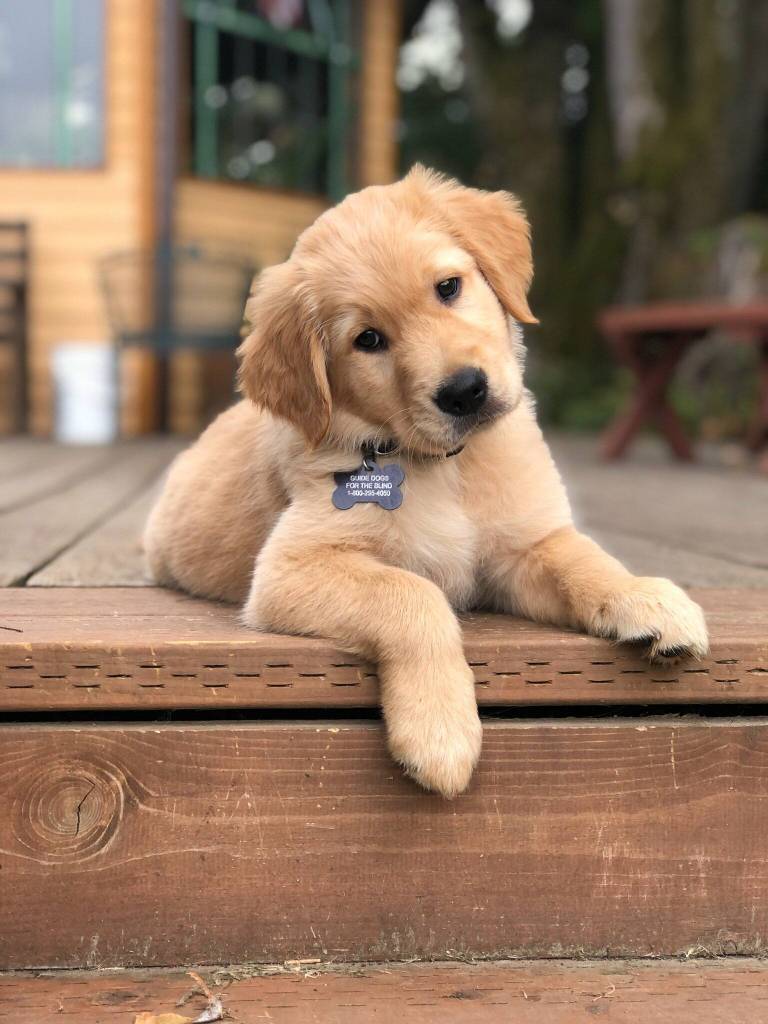
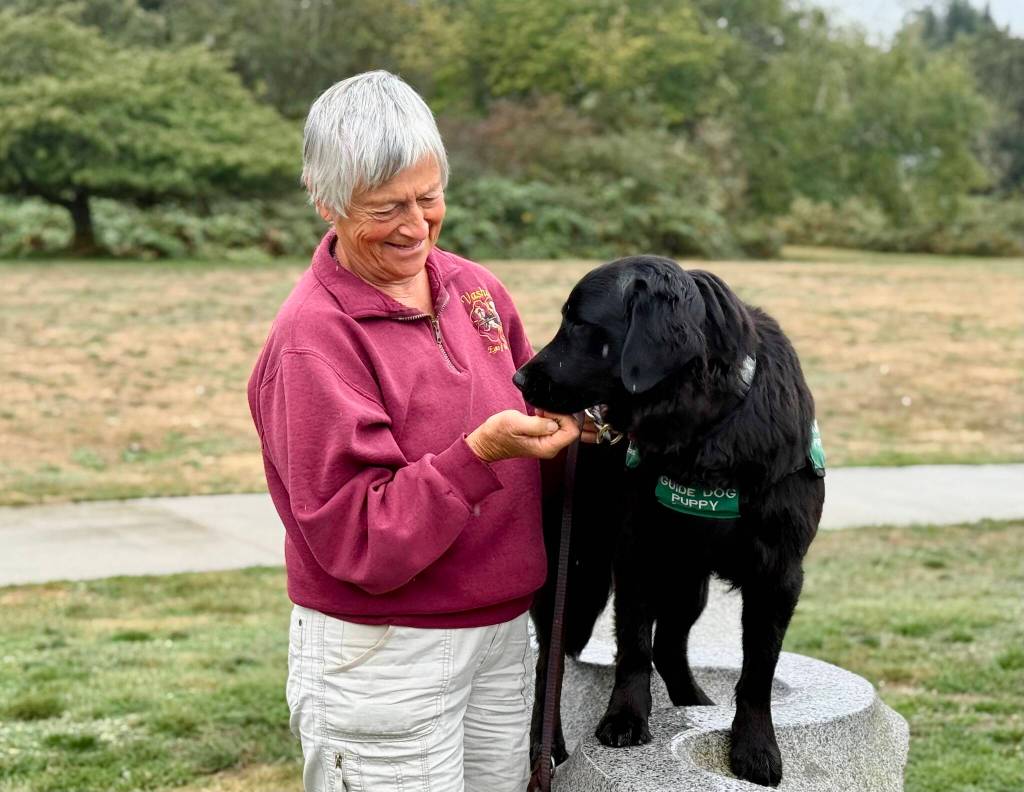


In the busy hallways of Vashon schools, it’s not unusual to see a golden retriever or Labrador trotting alongside a student in a bright green vest marking the pup as a service dog in training. They ride the ferry together in the mornings, sit through algebra and wind their way through crowded passing periods — learning, just like their young handlers.
For 25 years, those dogs and students have been part of the Vashon Guide Dog Program, a school-based puppy-raising club affiliated with Guide Dogs for the Blind (GDB).
Since the club began in 1999, members have trained about 200 puppies, more than 80 of which have gone on to become guide dogs for people who are blind or visually impaired. It’s one of only two GDB clubs in Washington that operate primarily through schools — and over the years, it has become a formative experience for countless island students.
The story begins with Char Phillips and a golden retriever named Peg. Phillips, now the athletics secretary at Vashon High School, was 13 when she raised her first guide dog. She remembers waiting for the letter announcing Peg’s graduation, and the overwhelming pride that followed.
She rode a Greyhound bus from Washington to San Rafael, Calif., to watch Peg graduate. “It brings tears to my eyes still because it’s just an amazing program,” she said.
Years later, when her son Eric Phillips was in sixth grade at McMurray Middle School, he asked to raise a guide dog. Together they took on Kazie, a black Lab, and the club was born. The program quickly grew to include middle and high school students and today the high school club is the larger of the two.
Guide Dogs for the Blind was founded in 1942, originally to assist service members who were blinded during World War II. Guide dog clubs operate in 10 western states, keeping the programs close to GDB’s two campuses outside Portland and its larger headquarters in San Rafael, Calif.
Raisers receive their dogs at around 8 weeks old and keep them for about 14 months, teaching basic obedience and socializing them in public. GDB covers medical care and equipment, while raisers handle food costs. At 14 months, the dogs return to guide dog school for advanced training. Most spend four months there before being matched with a blind or visually impaired person; those who don’t meet the program’s standards are placed in other service roles or adopted by their raisers.
“Just like not all of us are rocket scientists, not all dogs are going to be made for guide dogs,” Phillips said with a laugh.
The program has become a community effort with countless households involved over the years. There are currently nine puppies in training.
“We really need more adults,” Phillips said. “We need more puppy sitters, more people that would like to help out.”
Phillips has raised 30 dogs herself — two of which she kept as pets — and is currently raising Soda, a chocolate lab. She’s watched students grow in confidence and maturity, learning to give firm “no’s” to adults who ask to pet their dogs — a surprisingly empowering skill for teenagers, she said.
Graduation ceremonies can be emotional. Students meet the blind recipients of the dogs they raised and hear first-hand how their work has changed someone’s life.
“All of a sudden they are free,” Phillips said. “They don’t have to ask somebody to take them someplace. They don’t have to hold somebody’s hand.”
Twins Madison and Morgan Earnest, now seniors at VHS, have been raising dogs together since sixth grade. Over the years, they’ve trained nearly a dozen puppies — including their current dogs, Charlie and Wells.
“I got to see the blind person receive a dog and it was really cool to see how much it impacted that person,” Morgan said. Commuting to school with a dog and juggling the responsibility hasn’t always been easy, she added, but the feeling of making a difference keeps her motivated.
For Mecky Chappelka, one of the Vashon club leaders, the program has been just as transformative for her as an adult. She began training dogs when her daughter was in middle school and has since raised 17.
“It’s a lovely way to extend your family,” she said. For an introvert, it’s also been a bridge to community — people stop her to ask about the dogs, and many of the recipients have stayed in touch.
“We get some very shy kids that learn to just speak up, stand up, educate people, but also help their dogs become the best they can,” Chappelka said. “It teaches important life lessons and really hard life lessons that adults struggle with, like having to let go of the dog when it’s time for them to return to campus. It’s a hard lesson to learn, but the kids grow immensely with that responsibility.”
Many students’ lives have been shaped by the program. Delphine Medeiros raised her first guide dog, a yellow Lab named Corbett, as a freshman at Vashon High School. She remembers getting him on Dec. 11, 2011 — he wore a jingle bell collar for the holidays — and later watching him graduate as a guide dog.
When Corbett retired, a VHS lunch lady who had loved him adopted him. “It was a beautiful full-circle moment,” Medeiros said. “The dogs impact everyone at the high school.”
Being a 14-year-old helping a visually impaired person gain independence was “extremely empowering,” she said. “I think it’s a great way for younger people to see a positive difference they can make.”
Throughout high school, Medeiros helped raise about five guide dogs. After graduating, she spent her summers back on Vashon assisting Phillips with training. “I’m just all about Char — the way that Char does it, it can’t be beat,” Medeiros said.
In 2022, she moved to California and took a job with GDB as a foster care coordinator in San Rafael, connecting dogs with foster families.
“Guide dogs is one of those things you might not be consistently involved [in],” she said. “But, I mean, that’s your community. And you can always go back there, and you can always get involved again.”
Medeiros said she wouldn’t be where she is now without that first experience at 14. “I just feel like I could almost tie every step of my life back into that initial decision to raise a puppy,” she said.
The club runs entirely on volunteers and donations. Students and adults can apply to raise a puppy, help with puppy-sitting when handlers are away, or assist with training events. GDB places the dogs with their future handlers at no cost.
“It takes a village and we’d love to have more involvement from the community,” Chappelka said. “Char has been the heart and soul of this for 25 years. She’s pretty amazing.”
Phillips has no plans to retire from the club anytime soon. “People ask me, ‘When are you going to retire,’ but they don’t ask me, ‘When are you going to give up guide dogs,’” she said with a laugh.
For more information or to raise a puppy, get in touch with Phillips at cphillips@vashonsd.org.