Lawmakers urge islanders to support tax reform
Published 11:10 am Tuesday, November 18, 2025
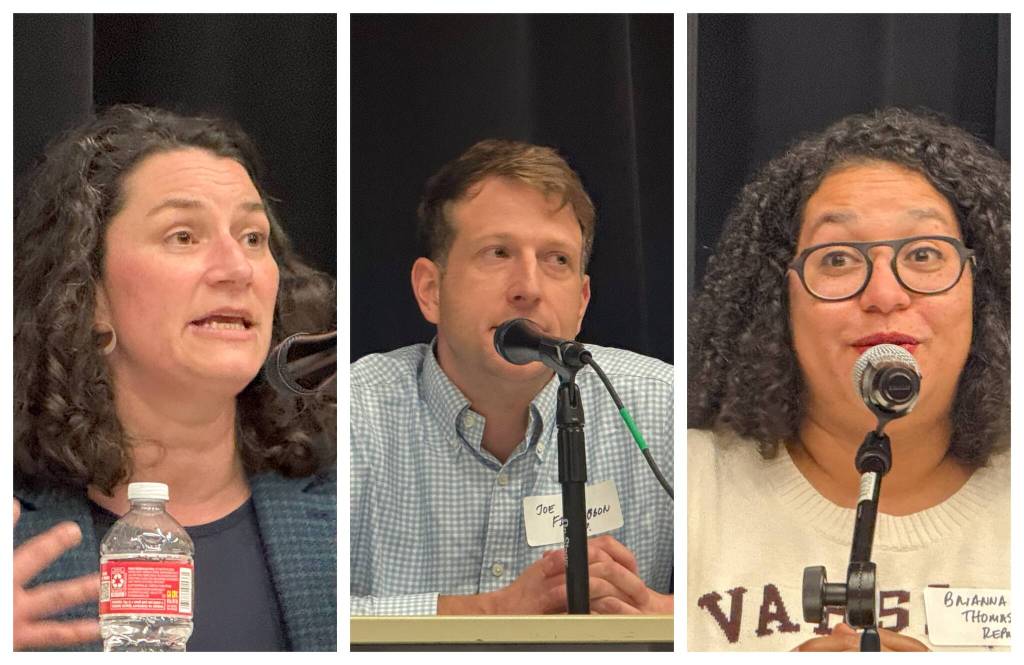
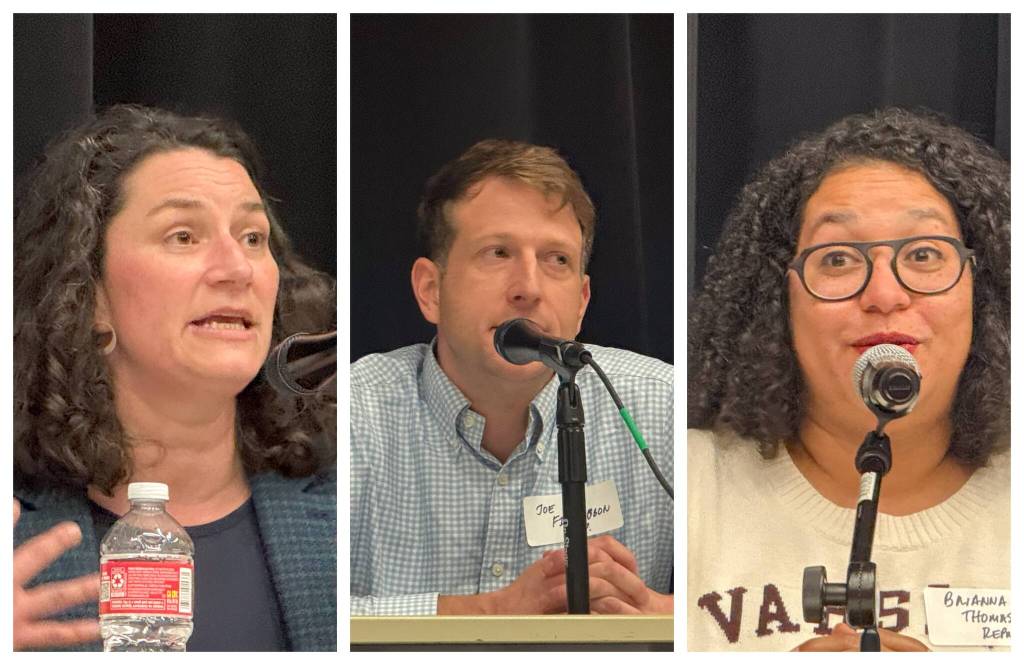


Vashon’s three state lawmakers held a forum at Vashon High School Thursday night where they shared concerns about aging ferries and the state’s dire budget situation while urging islanders to support significant tax reform to address Washington’s financial woes.
They also sounded similar notes about the Trump administration, decrying federal policies that they said are proving deeply harmful to low-income people, immigrants and a clean-energy future.
“We know we’re facing unprecedented times right now because of the person in the White House,” Sen. Emily Alvarado, a Democrat, told the audience, noting that earlier that day the Trump administration announced huge funding cuts to people experiencing homelessness. “We’re working to figure out how we protect our people here in Washington as we face challenges and threats from the other Washington.”
Rep. Joe Fitzgibbon and Rep. Brianna Thomas, also Democrats, echoed Alvarado’s comments.
Fitzgibbon, the House majority leader, said the state faced an “enormous budget shortfall” during the last legislative session, adding that since then, the Trump administration “has made our lives far more difficult.”
He discussed several ways the state is attempting to stand up to the Trump administration — working, for instance, to protect the state’s mail-in voting system and close the Northwest Detention Center in Tacoma. But he underscored the challenge lawmakers face. “It’s tricky when the state is trying to regulate the federal government,” he said.
Thomas, too, took aim at President Donald Trump and the impact his policies are having on people experiencing food insecurity. She said she grew up on Food Stamps (now called SNAP) and knows what it’s like “to go to bed hungry.”
The 90-minute forum was moderated by Craig Beles and hosted by Islanders for Ferry Action, an advocacy group working to improve ferry service on Vashon. Questions were submitted ahead of time by island organizations and individuals, covering a range of issues.
Vashon is a part of the 34th Legislative District, which covers all of West Seattle, White Center, Vashon and part of Burien. The delegation is newly configured, and this was their first time to host a forum altogether on Vashon.
Alvarado, a lawyer and low-income housing advocate, was elected to the House in 2022, then was appointed to the Senate earlier this year when Sen. Joe Nguyen was tapped by Gov. Bob Ferguson to head the state Commerce Department. This month, she ran unopposed for her first full term in the Senate.
Thomas, former chief of staff for Seattle City Councilmember Lorena González and now a policy advisor in the city’s Human Services Department, was tapped by the King County Council in January to fill Alvarado’s seat in the House. She, too, ran unopposed for a full term in the House in November. Fitzgibbon, formerly an aide to Sen. Sharon Nelson, was elected to the House in 2010. He became the House majority leader in 2022.
Much of the discussion Thursday night focused on ferries — with all three lawmakers saying they understand this is a critical issue to a ferry-dependent island.
“You live on an island — you deserve reliable transportation,” Alvarado said.
Gas taxes were increased this year to support the state’s transportation budget, which helps to fund the ferry system, Fitzgibbon added. “We have a lot of boats in the pipeline.”
They also said that the Washington State Ferries’ service contingency plan is under review. The plan is a source of frustration to Vashon ferry advocates because it designates the Triangle Route’s third boat the relief vessel for the whole system.
“This will give us an opportunity to look at how we share the burden when we have disruptions,” Alvarado said.
Hadley Rodero, WSF’s deputy director of external relations, who was in the audience, confirmed Alvarado’s comment: “We expect to get a service contingency plan released in early 2026,” she told the roomful of island residents.
The three lawmakers also focused on the state’s budget challenges, stemming in part, they said, from a tax structure limited by the lack of an income tax. Echoing the theme of the evening, Thomas at one point told the audience, “Say ‘reform our tax code’ three times really fast.”
Alvarado said that if Washington had a tax code similar to the average state, “we’d have $3 billion more in revenue. … I know people don’t want to talk about taxes. But it is the answer to so many of these questions.”
Fitzgibbon, who chaired the House Environment & Energy Committee from 2014 to 2022 and has focused much of his political career on legislation to address climate change, also discussed the impact the Trump administration is having on clean energy: The administration, he noted, has canceled millions of dollars in funding for clean energy projects.
But Fitzgibbon also sounded a hopeful note, saying that Washington state is a leader in climate policy — rivaling California for the top position, he said — and that as a result, “We’re showing these laws are working well, making our economy stronger, not weaker.”
In the last legislative session, he noted, progress was made on recycling with the passage of the Recycling Reform Act, which requires manufacturers to reduce packaging waste and fund improvements to residential recycling programs. The legislature also made progress on other important environmental goals, he said, including salmon recovery in the Puget Sound region.
“There is hope,” Fitzgibbon told the audience. “There is a lot of good work happening.”
After the forum ended, several people milled about, discussing some of the comments they heard from the state lawmakers. Beth Lindsay, a communications and political consultant, said she was impressed and encouraged by the lawmakers’ shared focus on tax reform. “From my perspective, it’s new. We’re in a moment.”
Wendy Aman, a member of Islanders for Ferry Action, said she was pleased and surprised to hear that WSF is reconsidering its service contingency plan. She and other ferry service activists have asked the state to come up with a new plan for addressing unexpected fleet shortages.
“This is the first time we’ve heard that they’re reconsidering it,” she said. “We don’t mind being part of the solution, but we don’t want to be the entire solution.”
Leslie Brown is a former editor of The Beachcomber.