Backbone readies boldest protest art yet
Published 10:30 am Wednesday, March 11, 2026
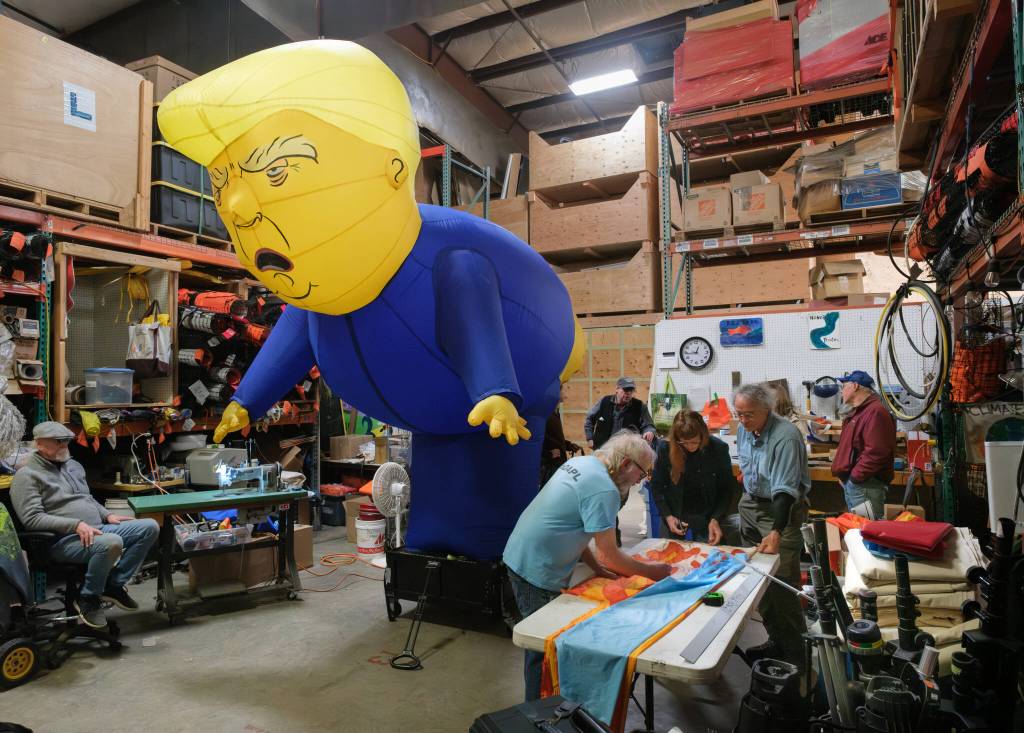
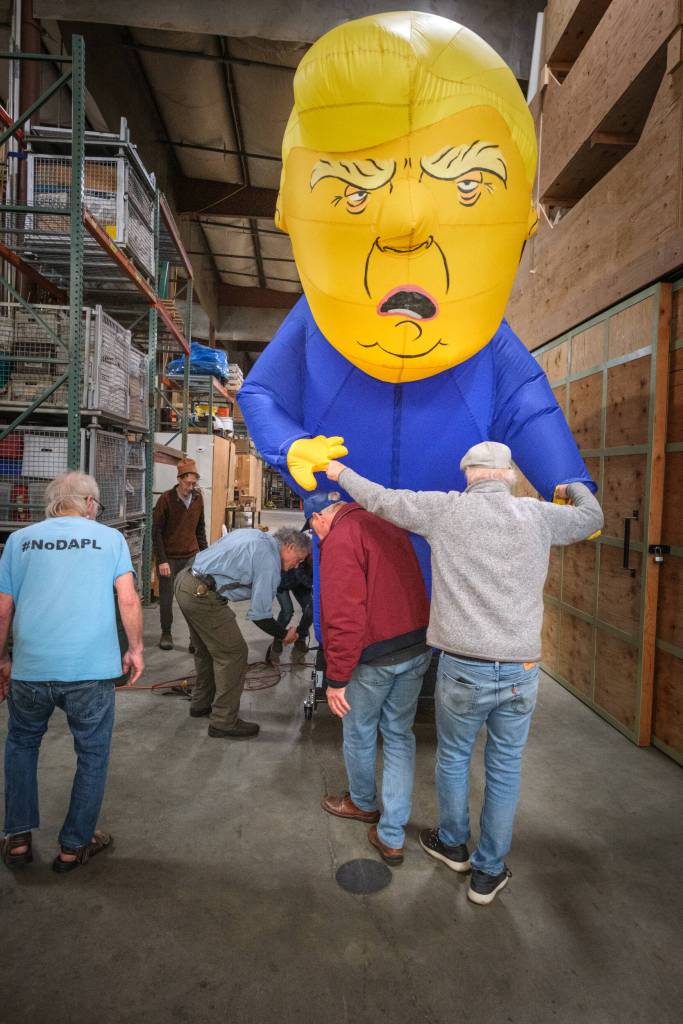
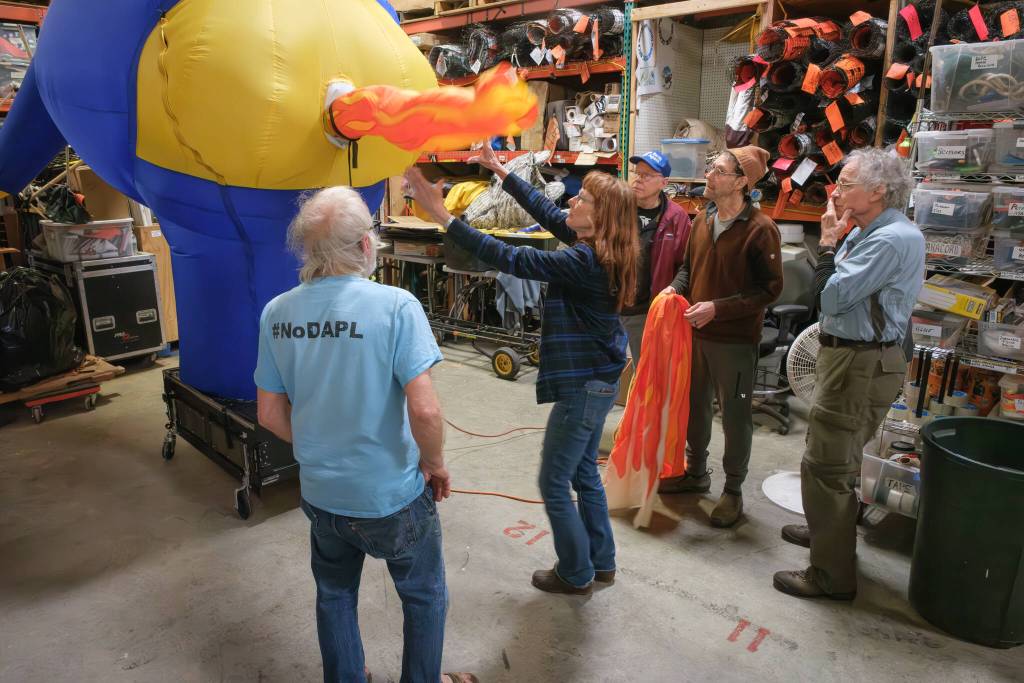


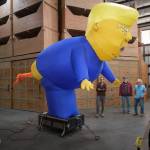
Twenty-five days before the March 28 nationwide “No Kings” protests, a handful of volunteers stood beneath Donald Trump’s inflatable rear in a Vashon warehouse, staring up at a problem.
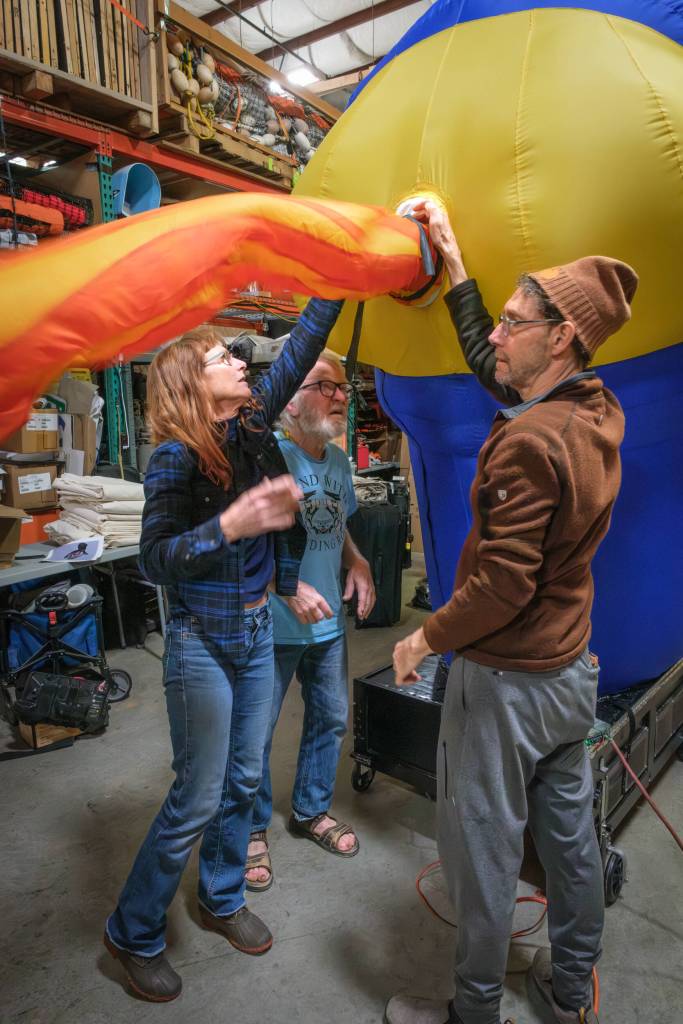
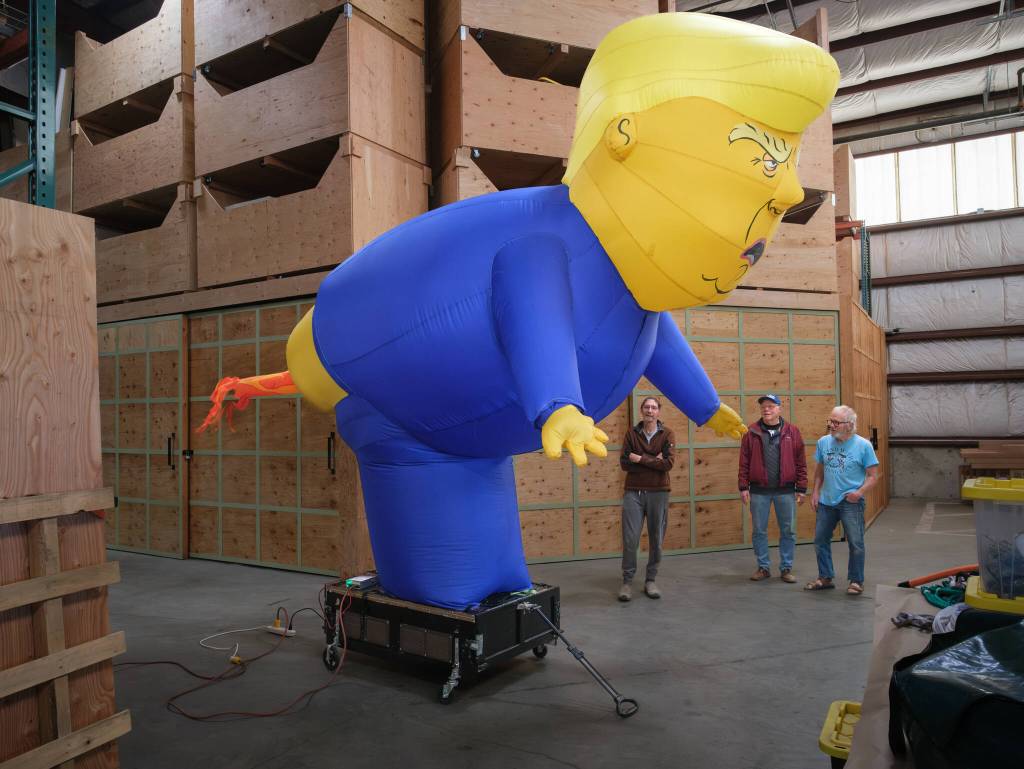
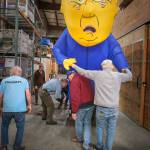
Trump was mostly there — the bulbous blue suit, the exaggerated form, the looming, ridiculous height of him — but the flame meant to shoot from behind, the visual punchline, would not fully inflate.
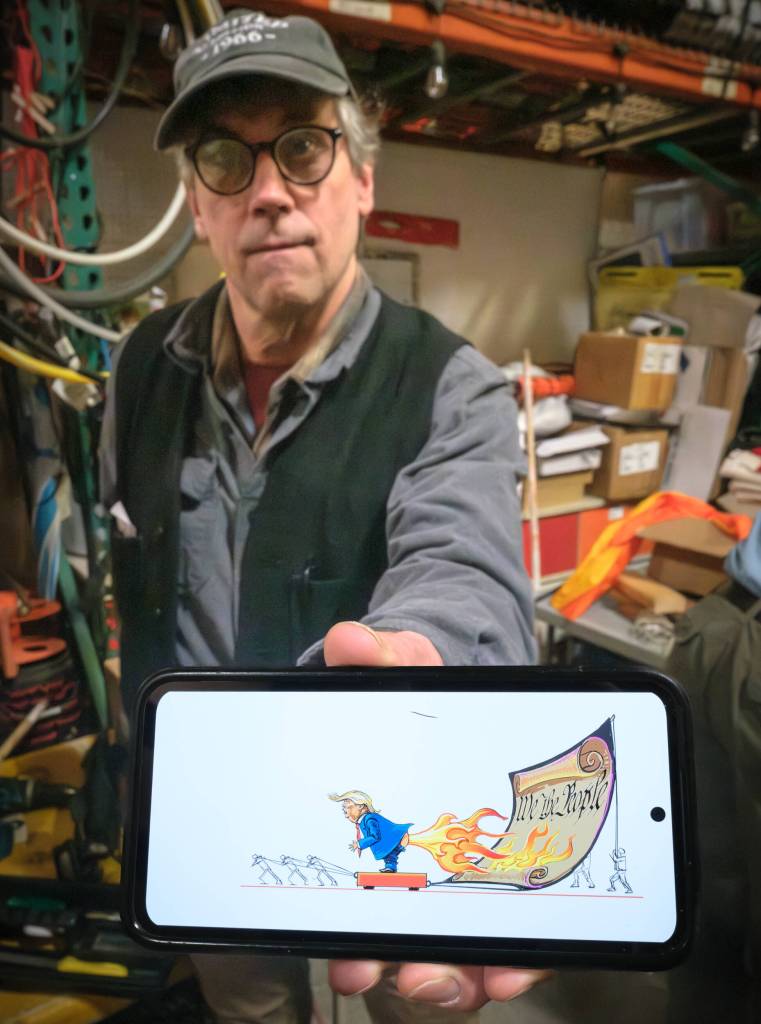
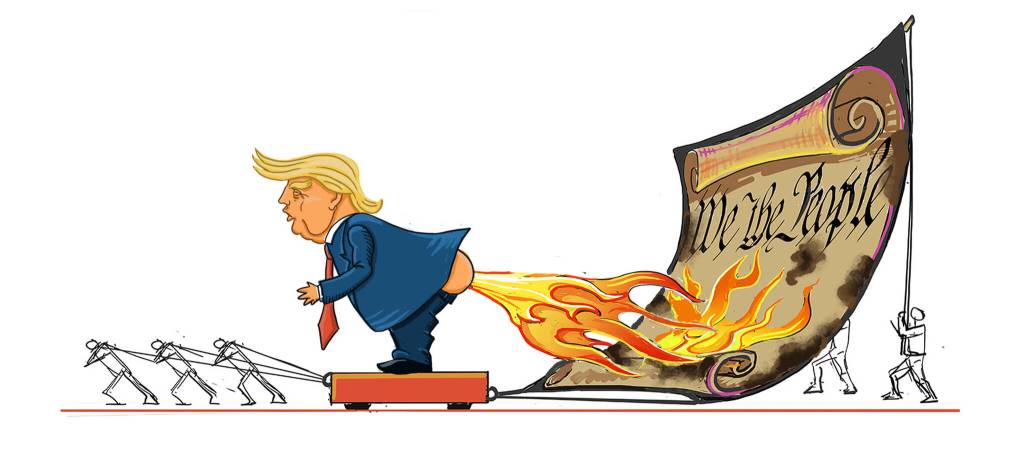
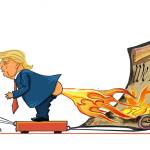
The message, once deployed, will be hard to miss: a 13-foot inflatable Trump appearing to set a “We the People” scroll — bearing the opening words of the U.S. Constitution — on fire.
“We are getting more ridiculous as he gets more ridiculous,” Bill Moyer, executive director of the Vashon-based Backbone Campaign, said.
For more than two decades, the nonprofit activist collective from Vashon has specialized in protest art that is theatrical, handmade and instantly legible — imagery built not just for the street, but for the photograph.
Their giant muslin “We the People” scrolls have become some of the most recognizable symbols of recent anti-Trump demonstrations.
With “No Kings,” a nationwide day of anti-Trump protests, approaching, Backbone is attempting what Moyer called its most ambitious weekend yet: sending teams, props and protest imagery to Washington, D.C., New York, Houston, Minneapolis and one still-undecided Pacific Northwest city.
“It’s the most we’ve ever attempted to do in a particular weekend,” Moyer said.
The D.C. deployment is meant to be the loudest debut. The inflatable Trump — designed to appear as though he is torching the Constitution from his rear — will rise there for the first time, accompanied by a smaller, 10-by-15-foot version of Backbone’s iconic “We the People” banner, distressed to look burned.
Backbone deliberately chose not to use one of its full-size constitutions, Moyer said, because the piece was meant to feel more cartoonish, more biting and more openly satirical.
The original 18-foot-wide banners serve a different purpose and, Moyer said, act as “a symbol of our collective power.”
“It’s a mission statement for the country — the creation of a more perfect union,” Moyer said of the original scrolls. “People interact with it, they sign it, they invest themselves in it. And then they carry it, they transport it through the streets. And they feel really proud about that.”
This imagery, he said, is meant to do something else entirely. “This is a statement about Trump’s impact on the things we care about, whether it’s a burning constitution or a smoldering earth,” Moyer said.
Not every message lands at every political moment. Earlier in Trump’s return to power, he said, a piece this blunt might have alienated more people than it attracted.
“If you just go after the hero without him already undermining his own credibility, you’re not going to be able to recruit people to your cause,” Moyer said. “It’s also to make people embarrassed, to undermine the resolve of the people who have been supporting him.”
In D.C., the symbolism feels especially sharp.
“It’s ridiculing the emperor who happens to live there,” Moyer said. “For the debut, it feels important to have it right at the center of the pack.”
Rob Briggs, the artist behind most of Backbone’s recent inflatable puppets, helped build the new piece but will not be in D.C. to deploy it. In support of the climate, he does not fly.
The Trump puppet is the largest, most complicated inflatable Backbone has made, Briggs said.
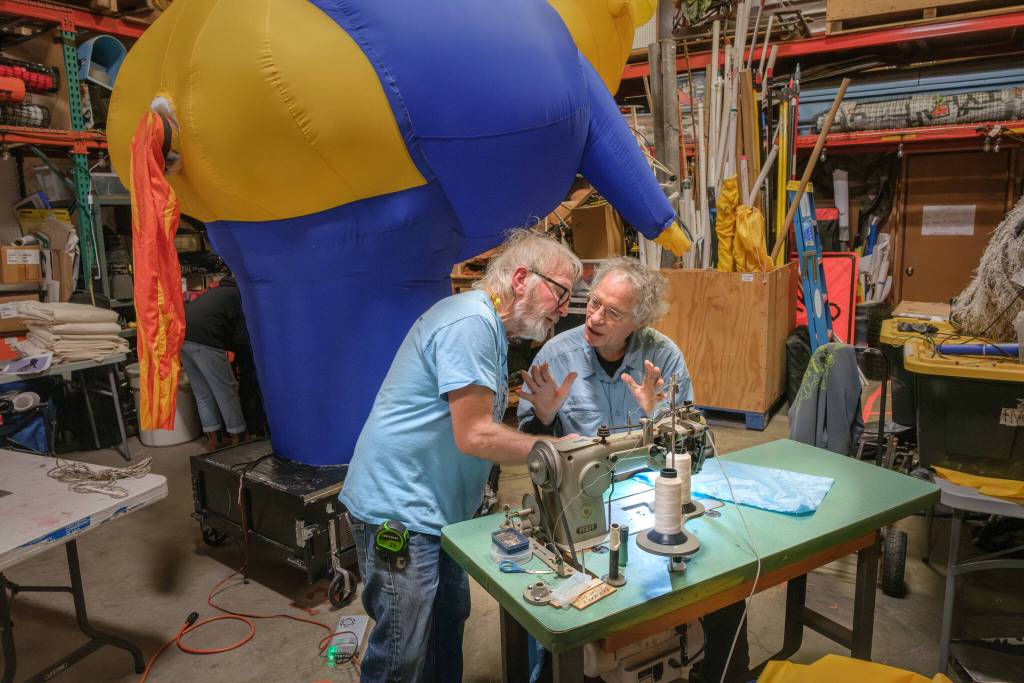
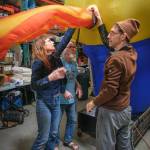
The inflatable is assembled from about 50 separate pieces, all sewn together by volunteers. He models the forms in three dimensions, prints them on paper, then volunteers use those printouts as stencils for nylon pieces cut with a hot knife and stitched into shape. Trump requires two fans — one for the body and a more powerful one for the flame.
Briggs has worked with the campaign for nearly a decade, helping create the inflatable Earth, salmon and whale seen in local parades and demonstrations.
“I’ve been adamant about the need for informed public policy related to climate since I was in high school,” Briggs said in the warehouse, wearing a blue baseball cap reading “make earth cool again.” “It’s absolutely critical. It endangers everything we care about.”
He said the current administration is taking a “wrecking ball” to years of climate progress.
“It’s just destroying any forward progress in renewable energy, electric vehicles,” Briggs said. “It would be sensible to tax fossil fuels, but he’s increasing the subsidies for them. It’s very counterproductive and extremely destructive of the attempts to form an international consensus, because it’s a global problem.”
Still, Briggs does not expect a 13-foot caricature to communicate a policy platform.
“If people can laugh at this buffoon in office, then it’s way less scary,” Briggs said.
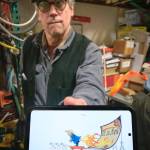
Bill Jarcho, who has been with Backbone since the beginning, said the idea for the piece emerged around Trump’s election last January, but work on the inflatable has been underway since September and has taken an estimated 500 hours of volunteer work. The design progressed from sketch to miniature 3-D model to full-scale cutouts.
Jarcho sees humor as one of the group’s sharpest political tools.
“I just think humor is the sword that cuts through all the fear and authoritarianism,” he said. “Humor dissipates it and it gives people great heart.”
The inflatable headed to Washington may be Backbone’s most outrageous new piece, but it is only one part of the group’s larger March 28 effort.
At the center of that effort are the collective’s better-known “We the People” scrolls. First created in 2007, the hand-painted muslin reproductions of the Constitution’s preamble can stretch as long as 200 feet and be carried by dozens of marchers at once. One bears years of signatures from people who have helped shoulder it through demonstrations across the country.
Of the group’s three large scrolls, one will go to Houston, one to New York and one to Minneapolis. In Washington, a smaller burned scroll will be held by “LICE agents” — Backbone’s insectlike parody of ICE officers — beside the debut of the inflatable Trump.
The group will also deploy two versions of its chain gang — oversized caricature heads depicting political figures including Trump, J.D. Vance, Stephen Miller and Kristi Noem, paired with black-and-white prison uniforms and linked together to evoke public shame, punishment and accountability — in New York and the Pacific Northwest.
Houston, Moyer said, is especially significant because Backbone wanted to bring the imagery somewhere new, in a Southern state not run by Democrats.
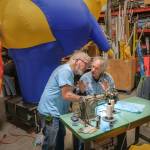
Inside the warehouse, a volunteer hovered near an industrial sewing machine making last-minute fixes. Fabric rustled. Fans whirred.
The piece is still days away from being complete, surrounded by the practical details of getting it there: fans, batteries, stitched seams, nylon panels and shipping logistics. The whole inflatable rises from the box it stands in, then folds back down into it for travel.
Watching it near completion felt, for Moyer, like the release of months of collective labor.
“I freaking love it,” he said. “I’m so grateful to work with so many amazing people who are builders.”
He said Backbone’s visibility has grown, but the people behind the images remain largely anonymous to the broader public.
“I think it’s cool as long as our people know and take pride in it,” Moyer said. “Providing the symbols and tools for their movement to be enrolling and to clearly express our values — it needs these visual anchors.”
For now, the warehouse remains a place of in-betweenness: not yet the protest, not yet the photograph, not yet the national image, just the work before the work. Fabric on tables. Volunteers at machines. A joke that has to be sewn, packed and inflated before it can land.
And if Jarcho is right, the goal is not only spectacle, but survival — the old democratic art of mocking power before power hardens completely.
“Those are the people who could make fun of the king without losing their heads,” he said. “Hopefully we can continue without losing our heads.”
Backbone is seeking donations and volunteers to help cover the travel, shipping and deployment costs of its March 28 actions.