At Maury shore, Jayapal backs restoration
Published 1:30 am Wednesday, April 22, 2026
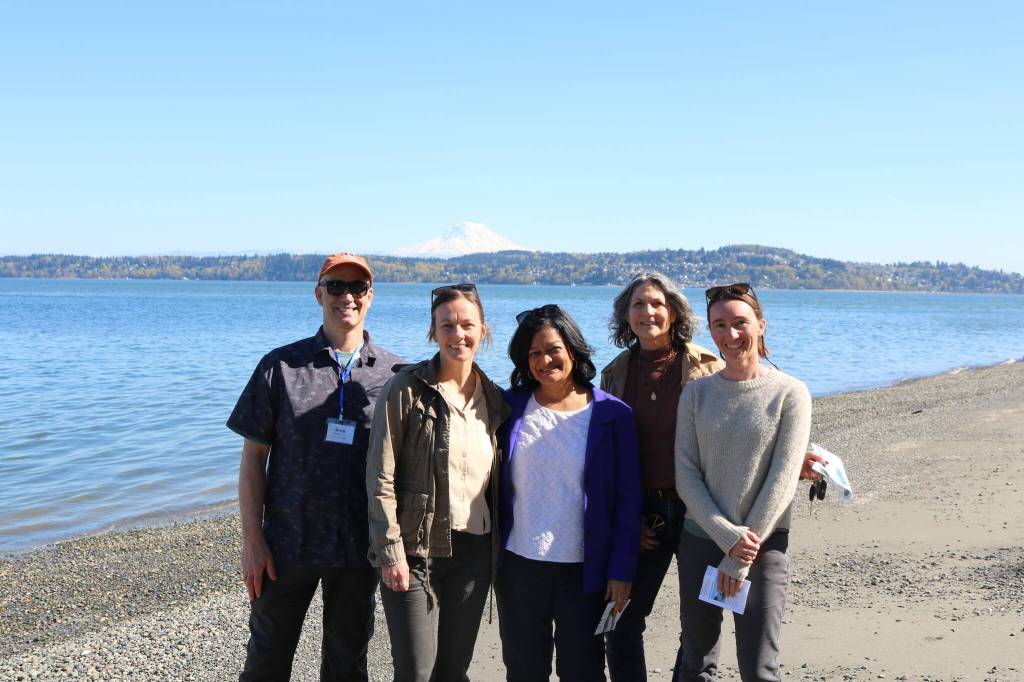
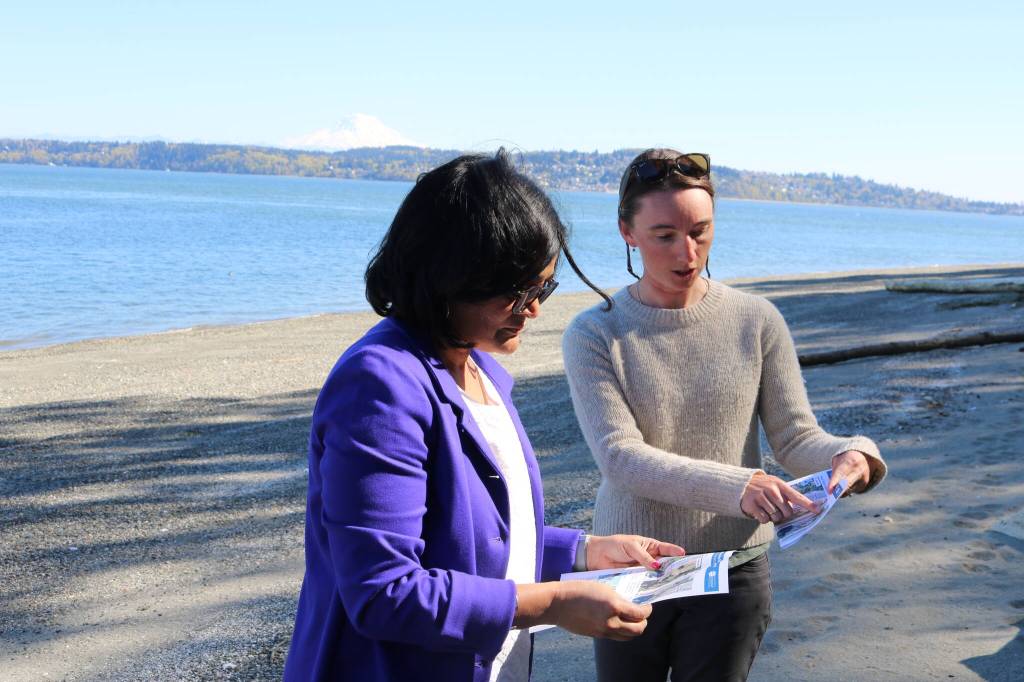
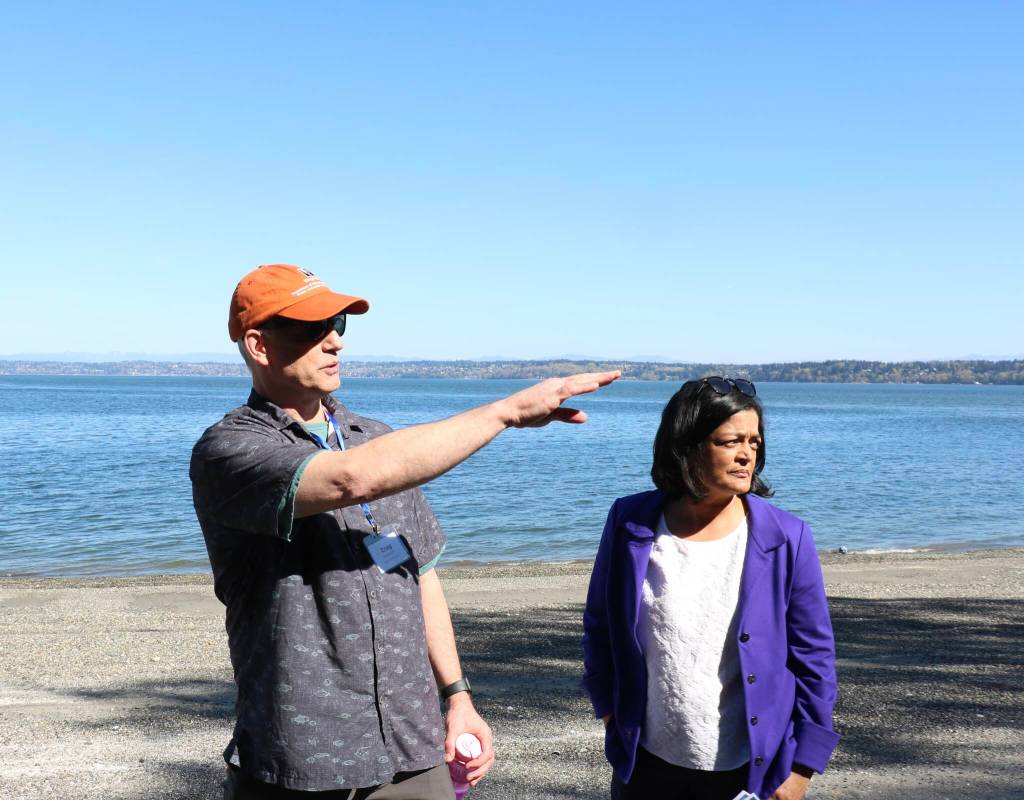
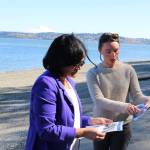
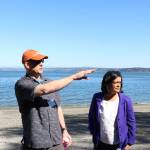
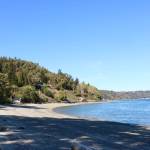
On a recent full-day visit to Vashon, U.S. Rep. Pramila Jayapal, D-Wash., met with community members and toured funded projects — including a stop at a sandy Maury shoreline where she spoke with officials about a data-collection effort set to receive $281,000 in federal funding.
At the site, Jayapal joined representatives from King County and the Washington State Department of Ecology and described her support for the project as part of a long-term effort to steward the region’s natural environment.
The project — funded through fiscal year 2026 appropriations bills — is a partnership between the Vashon Nature Center, King County and the Washington State Department of Ecology.
Once underway, scientists will evaluate shorelines on-island to better understand the impacts of removing shoreline armoring and refine techniques for future restoration projects.
Shoreline armoring refers to hard physical structures — such as seawalls and bulkheads — that create a hard, man-made edge along a beach rather than a gradual slope of sediment, vegetation and trees.
In Puget Sound, the Department of Ecology reported in 2010 that 700 miles of shoreline were armored — from commercial ports to residential beachfront properties — usually to reduce erosion and protect waterfront homes and infrastructure.
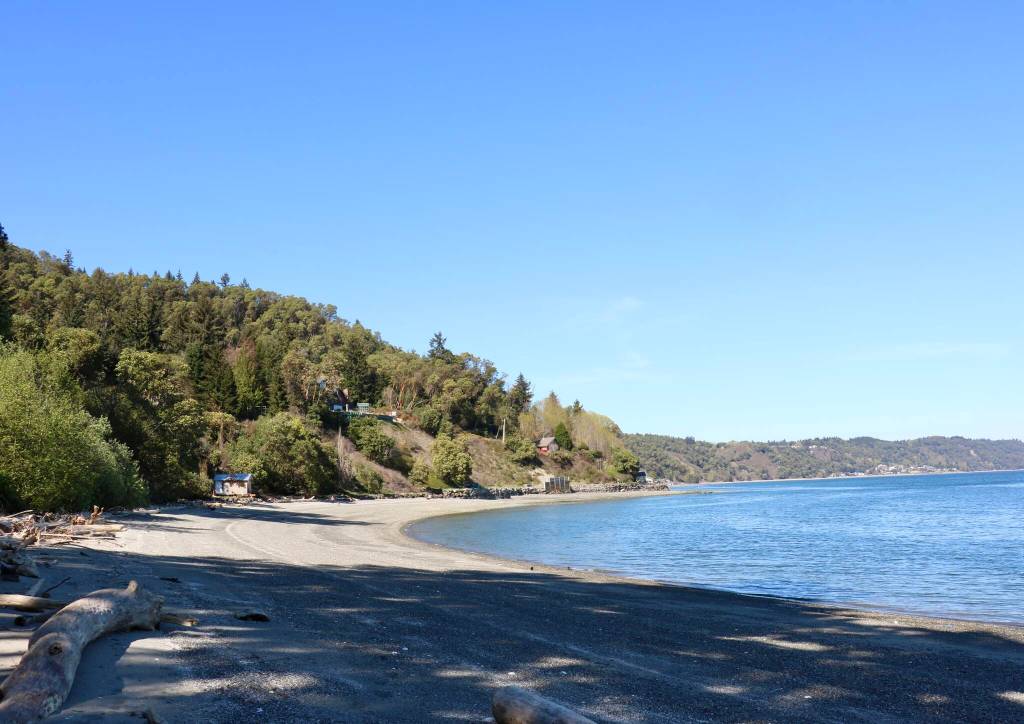
That number once included Piner Point Natural Area on Maury — the site of Jayapal’s visit — a protected King County shoreline just a 10-minute drive from Dockton Park.
The shoreline’s story — where sections of bulkhead were removed by the county in 2010 and again a few years ago — is part of a broader county and state effort to move away from armoring and instead rely on natural beach features to stabilize shorelines.
That is because county and state scientists say the structures disrupt shoreline habitats by blocking the natural gradient between water and land.
When waves crash against a hard wall instead of tree roots and vegetation, project researcher Michelle Gostic said, the natural coastal processes that deposit woody debris, provide tree cover and create shallow-water areas that forage fish need to survive cannot happen.
Standing among piles of driftwood beneath a canopy of trees, scientists pointed to Piner Point as evidence of how dramatically bulkhead removal can reshape a shoreline.
Gostic said her team hopes to demonstrate how restoring beaches to their natural state can both benefit habitat and protect against coastal hazards.
“A lot of people in the Puget Sound don’t want to get rid of their bulkheads because they think it’s offering protection,” Gostic told Jayapal at the site. “We want to provide data and evidence that shows that nature-based, soft-shore solutions like this, that are good for habitat recovery, can also be resilient against erosion, flooding and sea level rise.”
Piner Point Natural Area is not the only shoreline on the island where armor has been removed — it is one of many sites, including Forest Glen, Lost Lake and Dockton Park.
Once bulkheads are removed, habitat recovery can happen surprisingly quickly, said Vashon-Maury Island Basin Steward Greg Rabourn, who acquires properties for preservation and restoration.
“Down by Lost Lake Natural Area, the bulkhead was taken out in August and September, and there were fish spawning there by, like, October and November,” Rabourn said.
The new project, which will build on county-level restoration work, is just one of 14 funded through Jayapal’s Community Project Funding, which is directing nearly $18.4 million in federal money to the greater Seattle area.
Jayapal said securing federal funding for local projects is a central part of her job and said the more than $18 million awarded across the district comes as many communities struggle amid Trump administration cuts.
Project funding will support sophisticated data-gathering techniques that track sediment levels, shoreline shape and the return of woody debris and vegetation that signal recovery.
Funding will also go to the Vashon Nature Center, whose network of scientists and volunteers has been monitoring more than 10 island sites where bulkheads were removed since 2016.
Gostic said the project will rely on that data, as well as ongoing observation, to support the work.
“We’ll get a more complete picture of how these restoration projects are performing,” Gostic said.
Other shoreline efforts underway include the county’s Shore Friendly King County program, which connects homeowners with resources to promote shoreline stewardship. The county also offers workshops on shoreline management and alternatives to bulkheads.
With funds for the project approved, Gostic said the team is awaiting disbursal before selecting specific locations for the project and beginning data collection.
For more information about how homeowners can promote shoreline stewardship, visit Shore Friendly King County.