Communities rising
Published 1:30 am Tuesday, May 19, 2026
Seeking a response to our national crisis, I find myself increasingly drawn into my local community. It seems to me that restoring our national ethics and saving our failing democracy requires us to disentangle from our corporate-driven lifestyles and re-entangle ourselves within our local community.
To move forward, it may be useful to look back to what community was long ago, during a time of similar crisis. In the British colonies of America in the 1770s, almost all of the colonial inhabitants lived on rural farms, connected by rough trails to small villages or towns. A trip to the nearest city involved a day or more of travel and was often only possible when the rutted wagon trails were dry. A bit like living on Vashon today, if we didn’t have motorized vehicles or paved roads, and the nearest city was Olympia.
Almost all food was locally grown and bartered for at the open-air market. All labor and most essential services were local. Social bonds were maintained and information exchanged at church, in the market and at frequent, well-attended town meetings. News from outside was discussed, debated and digested within the community, allowing a general consensus to emerge. Without the collective resolve of their community, few colonists would have decided to boycott British imports or join the war for independence.
Since the invention of the automobile, we have lost much of our community engagement — and with it, much of our civic power. We commute to work elsewhere, to shop elsewhere, even to worship elsewhere. We are no longer organized within our communities, but rather by the large corporations that employ us, sell to us and tell us what to think. Face-to-face friendships have withered from lack of attention, while infotainment actors and internet “influencers” we will never meet have become more important to us than our next-door neighbors.
A ruling class of corporate billionaires now takes almost all the value we create. Worker productivity — value creation — has doubled since 1970, while worker compensation has increased only about 40%. The “company town” has become the “company nation.” Corporations have been designated as “persons,” allowing their billionaire owners to use money extracted from us to corrupt and control our government. Political parties present us with false choices among candidates who, for the most part, have served the corporations and ultra-wealthy rather than those who elected them.
Restoration can begin here, at home. When we know and care about our neighbors, we will stand together in response to threats against any of us. We will unify our individual voices into a chorus of: No, you won’t. Not here. We will educate each other, debate the issues and find those issues that unite us. We will speak as a community to our representatives and to the media. We will strengthen connections with other nearby communities, making our collective voice even louder.
Buying from our local merchants, makers and farmers will keep more of our created value within our community. Even when the price is slightly higher than buying from the superstores or Amazon, the value to us is much greater because we are paying the people in our own community, who in turn will support other workers and other businesses in the community.
Using cash instead of credit for local purchases will retain an additional 3% of our money on Vashon instead of putting it into the pockets of the ultra-rich.
We must encourage ourselves and our children to choose local work that is focused on real human needs — work that will not be easily replaced by robots and AI. We need more teachers, healers, builders, retailers, farmers, electricians, plumbers, civil rights attorneys, appliance repair experts, solar panel installers and service staff in welcoming “third spaces.” Joining with other communities near us, we can concentrate our work and commerce within small businesses rather than large corporations.
To make this work, individual citizens, local interest groups and local businesses all must come together under this banner of community. Whatever the short-term sacrifices, our rewards will be much greater — financially, politically and spiritually — through the restoration of a more human way of life, within a vibrant community.
We are communities rising. Together with thousands of communities across this nation, we will elect and hold accountable true representatives of the people.
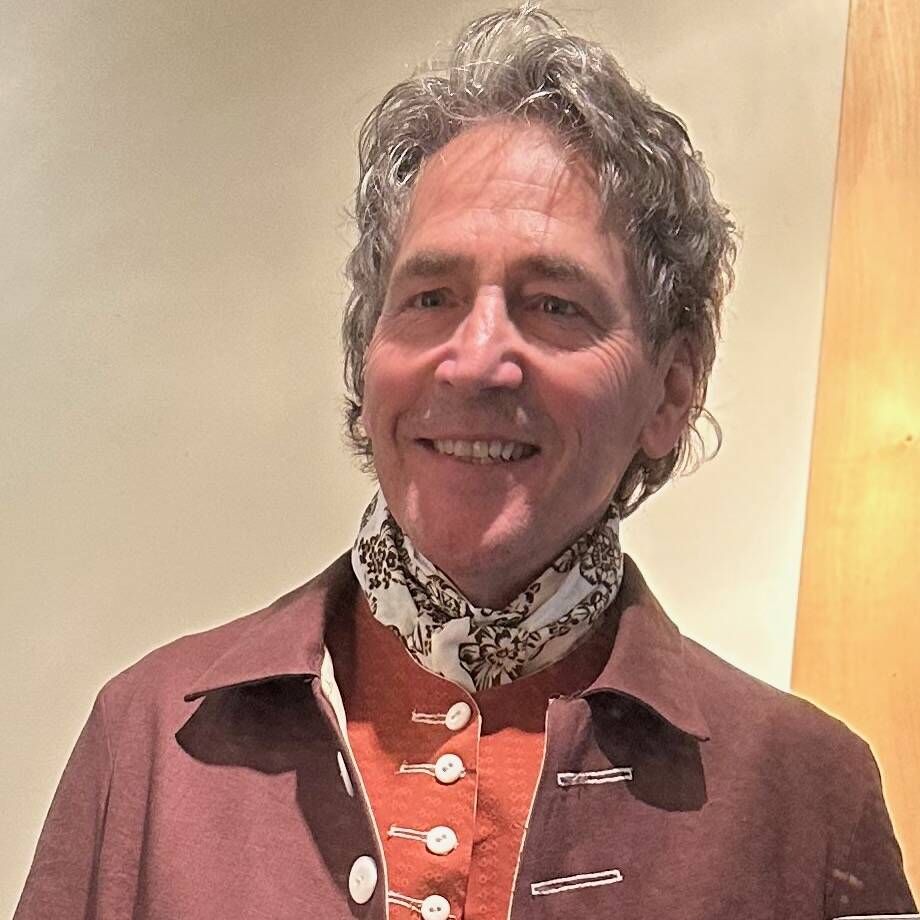
Bryan Long is a former business executive and former high school teacher who now tends a hobby farm on Maury Island, donating his excess produce to the Vashon Food Bank.
Since early 2025, Long has become active in Indivisible Vashon, helping to build the Protest Group, the Vashon Bucket Drum Brigade and the fledgling Theater for Social Change. You may sometimes see him around town dressed in 1770s colonial fashion, expressing his alter ego, Thomas Paine.