Maridee Bonadea lived a life of action, advocacy and adventure
Published 10:30 am Tuesday, August 4, 2026
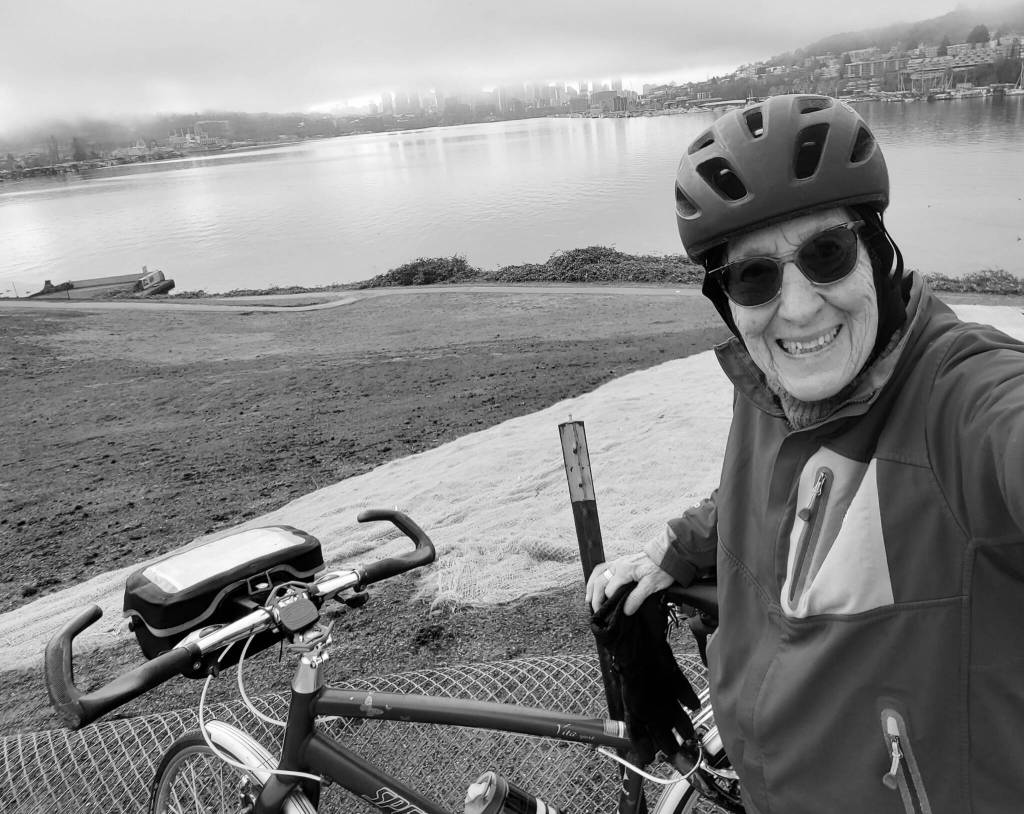
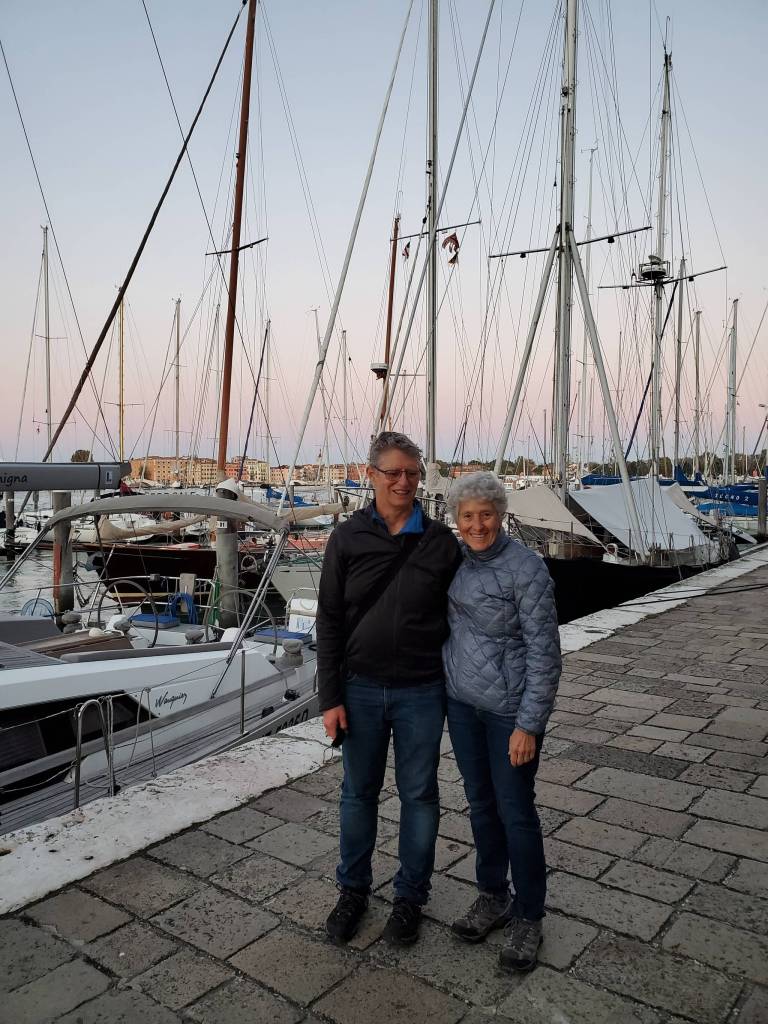
Maridee Bonadea did not wait for permission.
She rode a bicycle across North America to Seattle, became a mother when lesbians had few established paths to parenthood, joined the Peace Corps in her late 50s and moved to Bangkok in her 60s to study human rights.
When she saw an injustice, she spoke. When she imagined an adventure, she went. Often, she brought other people with her.
Bonadea, a Vashon resident since 1998, died June 15 after she was struck by a box truck while riding her bicycle near the Fauntleroy ferry dock in West Seattle. She was 76.
She had just left a ferry from Vashon and was headed to an anti-ICE protest at Seattle’s downtown waterfront — a trip joining two constants of her life: bicycling and showing up for people whose rights she believed were threatened.
Her wife, Laura Belt, and daughter, Lani Bonadea, said the collision should not define a life that reached across decades, communities and continents.
“I think most people only got to see one part of her because she did so much,” Lani said. “Even her family was awed by her and sometimes found it hard to keep track of how much she did and the places she went.”
Bonadea was born Feb. 17, 1950, in Aberdeen, South Dakota, and grew up in an Air Force family that moved frequently, living in places including Japan, Virginia and Hawaii.
When asked where she was from, Bonadea sometimes called herself a military brat. If pressed to name a place, Belt said, she chose Hawaii.
She swam competitively and surfed as a teenager on Oahu. Growing up accustomed to leaving one home and starting again in another made her comfortable with change and willing to set out for unfamiliar places, Belt said.
After graduating from high school near Washington, D.C., in 1968, Bonadea traveled around the country and became increasingly devoted to bicycling. In early adulthood, she and a companion rode from New York through Canada to Seattle, where she settled.
Cycling remained a source of transportation, community and freedom. Bonadea later commuted by bicycle from Vashon to her accounting job in downtown Seattle and rode for more than 20 years with the Rainbow Riders, a group of women who took regular trips throughout Washington.
“It was her escape, it was her exercise, it was what filled her soul,” Belt said.
Building community
Bonadea earned a two-year degree in accounting and worked for CC Grains, a collective involved in the emerging cooperative food movement.
She also became involved in women’s health organizing when many lesbians did not feel safe or welcome seeking conventional medical care. Members of a grassroots collective taught one another about their bodies, basic health care and donor insemination.
“It was totally grassroots,” Lani said. “It was just whoever wanted to learn, so that they could help take care of each other.”
Bonadea advocated for reproductive freedom, women’s rights, LGBTQ rights and the rights of lesbian mothers. She rode her bicycle to California to raise money for the Lesbian Mothers National Defense Fund and helped organize what Lani described as Seattle’s first Dyke March.
When Lani was young, Bonadea worked bicycle security at Pride events with her daughter beside her. Lani said she now sees evidence of her mother’s work in younger generations of LGBTQ parents and children.
“It makes me really proud to see people living their lives and knowing that my mom helped speak out for them, especially gay parents,” Lani said.
Bonadea became a mother in 1984, when lesbians seeking parenthood faced few established options and little legal protection. She also later served as a foster parent.
“There was this kind of me-and-her-versus-the-world feeling,” Lani said.
Their relationship went through difficult periods, but they continued traveling together and worked to understand one another.
After her mother’s death, Lani found herself reconsidering the many ways Bonadea had cared for her while also working on behalf of others.
“I felt like everything she did was for me, even when she was doing things for other people,” she said. “She just loved me so much and would do anything for me.”
Later, while working and raising her daughter, Bonadea attended The Evergreen State College, primarily at its Tacoma campus. She continued in accounting because organizing and advocacy rarely paid enough to support a family, Belt said, but she found ways to make her work serve others.
At a Seattle residential home for people with chronic mental illnesses, Bonadea managed money for residents who needed assistance. She also helped them stage a play and build a human-powered boat for the Green Lake Milk Carton Derby, complete with a propeller powered by a bicycle.
She later worked as an accountant for King County, most recently in its licensing division.
Adventure as a way of life
Bonadea and Belt knew each other through overlapping Seattle circles for years before becoming a couple. Bonadea’s enthusiasm, curiosity and attention to social and political issues were among the qualities that drew Belt to her.
Bonadea was more gregarious and outspoken; Belt was more analytical and reserved. Bonadea was inclined to assess a situation and act, while Belt tended to consider every possibility.
“I’m going to do this, and you’re welcome to join me if you want,” Belt recalled of Bonadea’s approach. “But I’m going to do this.”
During their first year together, Bonadea proposed a monthlong cycling trip through Vietnam and, despite U.S. travel restrictions, found a route through Canada.
Bonadea paid close attention to the people traveling beside her, Belt said, making sure they were safe and able to continue.
“She had a way of luring people on her adventures,” Belt said. “And she was good about watching out for people.”
Bonadea and Belt moved to Vashon on New Year’s Eve 1998 and married in 2015.
On the island, Bonadea played with the Vashon Bucket Brigade, belonged to Indivisible Vashon and the Vashon-Maury Island Garden Club, helped organize an LGBTQ film series at the Vashon Heritage Museum and volunteered at Granny’s Attic.
Her creativity appeared throughout her home and garden. Bonadea made trellises from fallen branches, built an arbor from salvaged materials and remade clothing other people might have discarded.
“She was able to see things and see why they would be valuable to somebody that might, at first glance, just look kind of junky,” Belt said.
Bonadea also kept groups moving. She organized rides, revived annual traditions and persuaded friends to gather when inertia might otherwise have kept them home. Members of the Rainbow Riders remembered her as the force who kept people showing up.
In what Lani described as her mother’s first attempt at retirement, Bonadea joined the Peace Corps.
She served in Mali from 2008 to 2010, combining her desire to help others with her appetite for seeing how people lived elsewhere.
“She was always trying to figure out: How can I go and learn and help people, and also travel and explore new places?” Lani said.
Later, Bonadea moved to Bangkok to pursue graduate studies in human rights. She completed part of the program, using the experience to better understand international institutions and how political systems affected individual communities.
In later years, Bonadea increasingly advocated for transgender people and immigrants while continuing her longtime work for women and LGBTQ communities.
“She was just always looking at, ‘Where can I support? Who needs us to show up in the streets now?’” Lani said.
Bonadea kept journals for decades, filling them with reflections, news clippings, stickers and other records of her experiences. She wanted the journals eventually donated to the Lesbian Herstory Archives in New York.
She was also nearing completion of a memoir about how she became a feminist. Belt said Bonadea had worked with writing mentors online and was nearly ready to share the manuscript.
Travel remained central to Bonadea’s life until its final days. About a week before she died, she and Belt returned from Alaska, completing Bonadea’s goal of visiting all 50 states.
They were planning a fall drive across the country to see changing leaves and the Bay of Fundy, followed by a possible trip to Brazil. Some of those journeys may still happen; Lani has told Belt she will make sure Belt continues having adventures.
Carrying her activism forward
Bonadea’s final bicycle trip ended on Southwest Wildwood Place near 47th Avenue Southwest, shortly after she left the Fauntleroy ferry terminal on a route Belt said she had ridden hundreds of times.
The Seattle Police Department’s investigation remained open as of the family’s interviews. An eyewitness account of the collision differed from police’s initial public description.
The day after Bonadea’s death, members of the Rainbow Riders placed a white ghost bike at the crash site. Flowers, Pride flags and handwritten messages soon surrounded it.
More than 200 Critical Mass cyclists later rode to the memorial as members of the Vashon Bucket Brigade played drums and family members and advocates called for immediate safety improvements.
After Seattle City Councilmember Rob Saka called for a moment of silence, Lani responded that her mother would have expected more.
“She also liked to raise hell,” she told the crowd. “This is not just about an honorary bike lane or about this one street — this is countywide.”
Photographs of her mother marching for gay and women’s rights, often alongside the slogan “Silence = Death,” have remained on Lani’s mind.
“She wasn’t about quiet thoughtfulness,” Lani said. “She was about, ‘No, let’s speak up for what we know is right.’”
Bonadea’s family and the Fauntleroy Community Association have drafted a letter asking Seattle’s mayor and City Council members to take immediate action, including removing parking from the narrow section of Southwest Wildwood Place where Bonadea was killed.
The Seattle Department of Transportation said July 1 that its Vision Zero team had conducted a preliminary visit and planned further review of the street’s design, traffic operations and maintenance needs.
The Fauntleroy Community Association will hold a public forum on bicycle safety from 6 to 8 p.m. Aug. 11 at The Hall at Fauntleroy, 9131 California Ave. SW. Organizers expect to hear from Bonadea’s family and supporters, cycling advocates and representatives of city agencies and elected offices.
Lani said the loss has pushed her to take on a role her mother once filled.
“Especially now that she’s not here to raise a ruckus, it makes me want to be more outspoken,” she said. “I already had that same kind of personality, but I didn’t use it to the same effect that she did.”
A memorial for Bonadea will be held Aug. 8 on Vashon. Because the gathering will be at the family’s home and parking is limited, attendees are asked to RSVP at marideememorialbbq@gmail.com for the address and transportation information.
Bonadea is survived by her wife, Laura Belt; daughter, Lani Bonadea; sister, Zoe James; and many extended family members, friends and community members.