Green Brief Commentary: Celebrating natural heritage alongside human imprints
Published 1:30 am Wednesday, July 9, 2025


Editor’s note: Green Briefs is a regular series of commentaries by eco-leaders on Vashon, presented in The Beachcomber in partnership with The Whole Vashon Project.
Efforts to share the amazing natural and social heritage of the Chautauqua/Ellisport neighborhood reached a milestone in June with the installation of the Ellisport Hidden History Heritage Trail.
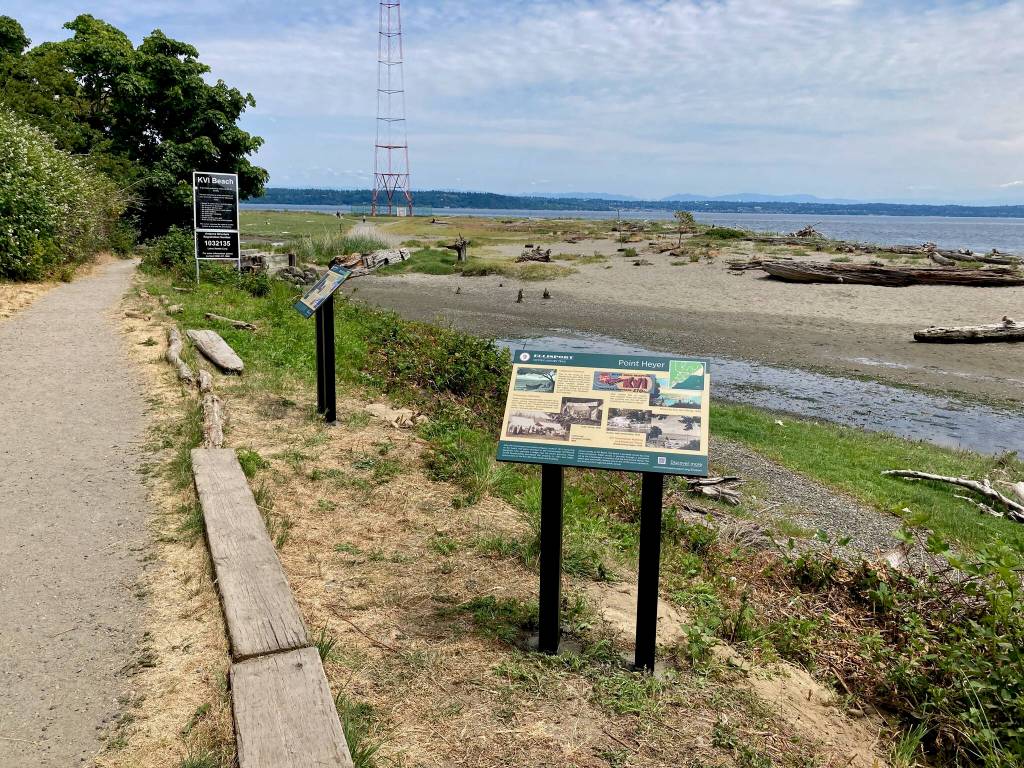
The one-mile trail begins at the Tramp Harbor waterfront parking area near Ellisport Creek, and winds through the neighborhood and the entrance to KVI beach. It reflects Ellisport’s community spirit, rich history and natural ecosystem’s protections with informative signs depicting pictorial views and stories of the past — allowing one to imagine the past while reinforcing the importance of our relationship with this place and with the environment in general.
The trail contains 14 small, low-profile, accessible signs that blend into the landscape. They showcase the amazing and complex evolution of the community, reaching back to the retreat of the last ice sheet over 16,000 years ago that largely shaped the landscape we see today. The Ellisport trail was modeled after the Dockton Heritage Trail installed more than 15 years ago.
Although Ellisport is now a quiet residential community with two preschools, the sx̌wəbabš or Swift Water People have hunted, gathered and lived on the island since time immemorial. After the arrival of European homesteaders in the mid to late 19th century, extensive logging and clearing prepared the area for development of educational and commercial ventures.
In 1888, the neighborhood was platted as Chautauqua Beach and became the permanent location for the Puget Sound Chautauqua Assembly, an educational and social movement with a massive pavilion, a three-story administration building, a hotel, hundreds of tent parcels, a steamship dock, and the temperance-focused International Order of Good Templars Grand Lodge.
Commercial and industrial ventures followed, including a large sawmill, a substantial food-growing greenhouse complex, the 24-bed retreat Madrona Lodge, two post offices, a gas station, two general stores, and one of the first radio stations in Washington state (KVI). There were three different “Mosquito Fleet” ferry docks, the first car ferry to the island, and bunker-C oil pipeline dock for power.
The pilings still evident from each of these docks are gradually wasting away, yet some support houses for dozens of purple martins and roosts for bald eagles, kingfisher, blue herons and seagulls.
The Point Heyer estuary — AKA KVI Beach — is the result of two opposing drift cells, where sand and gravel are moved and deposited by wave action. Each moves material to the south and east, intersecting at the massive sand spit exposed at low tide east of the radio tower.
This estuary is one of the last remaining large salt marshes in the southern Salish Sea and is home to an amazingly diverse and productive — yet fragile — ecosystem, including an assortment of birds, reptiles, plants and marine life. The exposed sandy areas, protected by the driftwood behind the high tide line, host the native yellow sand verbena, a succulent plant which is currently in bloom.
Also on KVI beach, just around the corner to the north, is a massive bluff exposing the Vashon Till — a kind of unsorted and stratified sediment deposited by a glacial ice sheet. It has abundant, thin lenses of sand and gravel channels that formed as water was squeezed out of the underlying glacial drift when the 3,000-foot-thick ice sheet moved south toward its maximum extent in Olympia.
If you walk north before getting to the Klahanie beach community, you will also see the Vashon Till at the top of the bluff overlying the Vashon Advance Outwash Sand Unit — another type of glacial sediment known for its significant groundwater storage and for creating the island’s main aquifer unit.
Thanks for the Ellisport Hidden History Heritage Trail are due to 4Culture and King County CSA grants, Vashon Heritage Museum’s fiscal sponsorship and their research collection, the Vashon-Maury Island Land Trust for advice, Jessica DeWire for her graphic design expertise, and island residents for providing much needed financial support for this project. The biggest contributions, however, were the many hundreds of volunteer hours spent planning, designing, researching and installing the trail.
We invite you to visit the Ellisport Hidden History Heritage Trail, walk the neighborhood, and learn about historic Ellisport. The most remarkable learning is perhaps how much rich history is hidden, waiting to be explored, revealed, and appreciated. Understanding how natural processes have shaped the landscape, and the impact humans have had on modifying it, gives us the knowledge, tools, and appreciation to better protect the planet we share with many other living beings.
Steve Bergman is a geologist, Zero Waste Vashon board member and Whole Vashon Project advisor.