Green Brief Commentary: Planet Earth, people and plans
Published 1:30 am Thursday, July 17, 2025


Editor’s note: Green Briefs is a series of commentaries by eco-leaders on Vashon, presented in The Beachcomber in partnership with The Whole Vashon Project.
Deep time — the concept of geological time that spans billions of years — is hard to comprehend.
For the last few billion years, Earth’s evolution and the processes that shaped it can be viewed through two contrasting lenses.
The dominant perspective is uniformitarianism, which measures the gradual and steady changes involving periodic cycles of weather, climate and plate tectonics. Much much rarer yet higher-impact is catastrophism, which involves sudden, brief, and violent events such as asteroid strikes and massive volcanic eruptions, resulting in intense climate change and mass extinction events.
Humans, who came on the scene just in the last few hundred millennia, are proving to be their own kind of catastrophism. We have accelerated the rate of many changes to the planet by several orders of magnitude compared to the background non-human-controlled natural rates.
Australian scientist Will Steffen and his team have characterized this as a “Great Acceleration,” evaluating the “planetary boundaries” of human hability — such as global freshwater use, ozone depletion and ocean acidification — which our present-day activity risks bumping into.
In many publications over the last several decades, the science indicates that human-induced global warming due to fossil fuel burning and landscape transformation have produced the climate crisis we are all now experiencing, with higher frequency and intensity droughts, floods, heat domes, windstorms and other events.
Luckily, many groups in our region are responding to the climate crisis by developing Strategic Climate Action Plans (SCAPs) — roadmaps designed to navigate the rapidly changing landscape by reducing greenhouse gas (GHG) emissions, adapting to climate impacts, and building resilience and sustainability in their communities.
King County is now revising its last SCAP from 2020 and has recently released a 735 page long draft document: the “King County 2025 Strategic Climate Action Plan,” available for download at tinyurl.com/KCSCAP.
I strongly recommend going through this comprehensive report to see how our leaders have created short term action and identified long term goals across three focus areas: greenhouse gas reduction, sustainable and resilient frontline communities, and climate preparedness, with a new flagship section showing how climate actions are integrated with many components of King County divisions.
In the words of Dow Constantine, who has served as King County Executive for the last four SCAPs: “Our charge to ensure the planet and people can thrive for generations is greater than one person, it is about collective action. Everyone has a role in reducing our collective carbon footprint, whether it’s choosing transit, buying from local farms, checking on neighbors during a heat wave, or empowering the next generation to lead on climate action.”
King County is the most populous and diverse county in Washington State, with about 2.3 million people mostly concentrated in cities like Seattle, and 4-5% living in rural, unincorporated areas including Vashon-Maury Island.
Although Vashon contains nearly 2% of the area of King County, the island encompasses 52% of the county’s marine coastline. The island has one of the county’s eight recycling and transfer stations, and one of the five county wastewater treatment plants. Vashon residents also submitted the largest number of comments to King County during the SCAP update process last year, compared to other communities.
We don’t have time to review all the similarities and differences between the island and King County here, so let’s jump to two questions you may be pondering: Does the SCAP cover island issues, and does the island need its own SCAP?
We have a volunteer, grass roots team led by Kevin Jones and including Rob Briggs, James Rickard, Eric Walker and I (among others) delving into these questions for the last several years. We believe the island represents an ideal “petri dish” for developing and testing new approaches to facing the climate crisis, both on the island and beyond.
Work related to the county SCAP is already taking place on the island. A collaboration has led to the establishment of a local resilience hub, identified in the SCAP draft as a method to help communities adapt to climate change. Vashon Be Prepared, Vashon United Methodist Church, Vashon Maury Island Food Bank and Vashon Youth and Family Services are turning the Methodist Church into a place where climate change adaptation will happen. This work is proving to county leaders and staff that the island is a place where ideas can become reality.
We welcome your input and ideas. Stay tuned for our team’s recommendations for a potential island-specific SCAP.
Your thoughts on the draft SCAP are also important. Please share them with us — scbergmanvashon@gmail.com — and Marissa Aho, King County Executive Climate Office Director, at maaho@kingcounty.gov and Erin House, King County Council Member Mosqueda’s Chief of Staff, at erin.house@kingcounty.gov.
Thank you for joining me in helping to make Vashon-Maury Island a model green community.
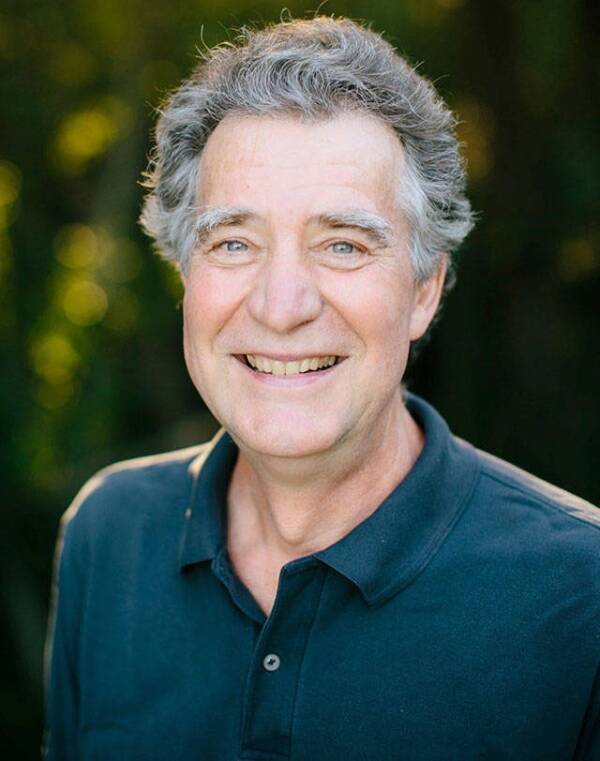
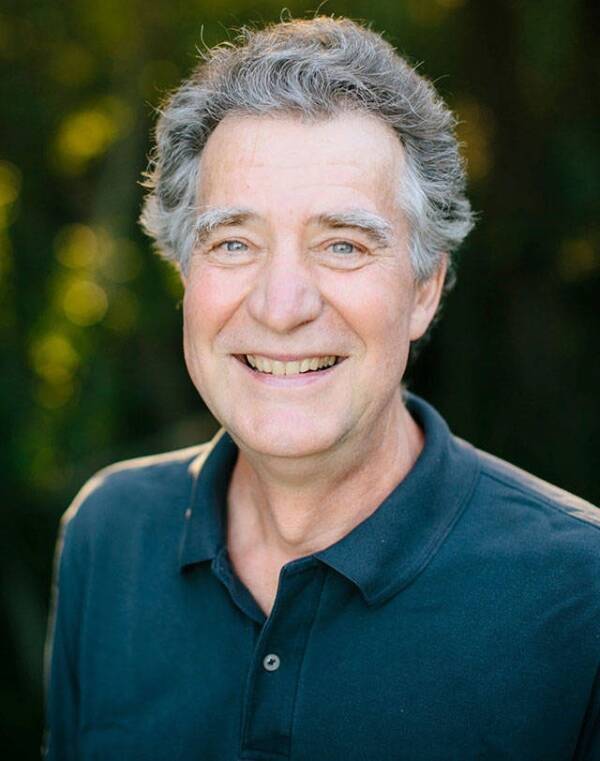
Steve Bergman is a geologist, Zero Waste Vashon board member and Whole Vashon Project advisor.