What a Swainson’s thrush tells us about our forests
Published 9:24 am Thursday, September 4, 2025
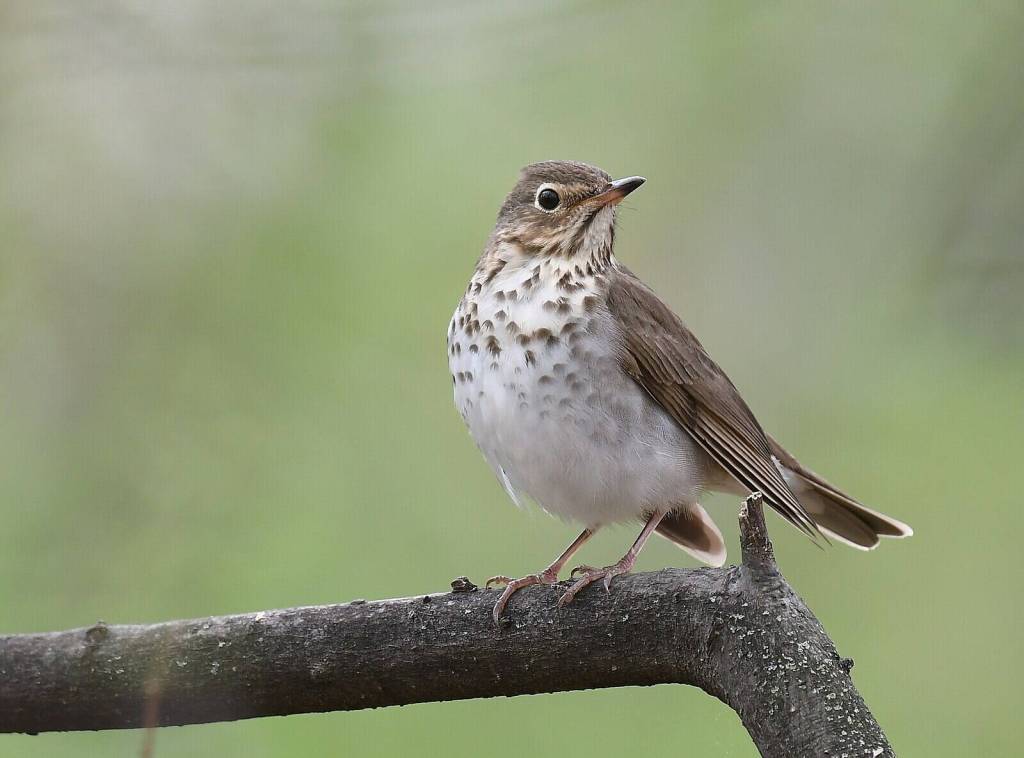



Swainson’s thrush — you don’t have to know it by name to recognize its song echoing through our woods.
From the moment these migratory songbirds arrive in May, until md-July, the forest resounds with their spiraling songs as they claim and defend territories mate, and raise a single clutch of one to five eggs.
The woods are quieter now, but Swainson’s thrushes are still with us, foraging for insects in the thickets and low branches, and occasionally picking at fruit as they build themselves up for their journey to winter ranges in Central and South America.
I’ve read that the breeding adults depart first, so it may be that it’s the newly independent fledglings who are lingering on their natal grounds, acquiring the energy they need to power their flight to winter homes they have never seen before. So, you might still hear a soft “whit,” like the sound of a drip of water, as one bird calls to another. But nature’s calendar is unforgiving for creatures who overstay their resources, and the young songbirds will leave soon.
Aside from their enchanting song and long-distance fortitude, Swainson’s thrushes (like other birds) play overlooked roles in supporting our ecosystems, from pollination, seed dispersal and pest control to their roles as both predator and prey in complex ecosystem food webs. In these ways, and others, they serve us as well.
I feel lucky to have this bird as my summer neighbor. To hear their song out our back door — typically they’re the last bird singing as night falls — feels literally like a ringing endorsement of how we tend our properties. That the salmonberry and snowberry thickets we encourage, the elderberry, thimbleberry, cascara and other fruiting trees and shrubs that we plant, the mature evergreens we maintain and the seedlings we nurture for the future — all this and more are providing the foraging, nesting and chick-rearing habitat thrush families need to succeed.
This land stewardship benefits many other species of birds and wildlife, seen and unseen, besides Swainson’s thrushes. The condition of bird populations can tell us how the ecosystem as a whole is doing. The thrushes’ return, year after year, makes me think we are doing something right.
It may not always be so. Climate and habitat modeling by the National Audubon Society projects that more than 70% of the Swainson’s thrush habitat in the coterminous U.S. will become unsuitable for these birds at 3.00 C (5.40 F) warming. At even 2.00 C (3.60 F) warming the species may disappear from the Puget Lowland. If they go, they will not be alone.
Resisting climate change requires actions at every level, many of which we already know how to do. There are some reasons for modest hope in how we protect and manage our private and public forest lands.
Recent research has shown that the Swainson’s thrush, chestnut-backed chickadee and several other forest bird species do much better in shadier forests that provide a measurably cooler refuge compared to surrounding warming landscapes, and where a diversity of native trees and shrubs provide a variety of different plant and insect food resources. In habitats with higher diversity, the loss of one or more resources still leaves options for finding food to feed hungry nestlings and to fuel up migratory birds for that long journey south.
Where I live, at Vashon Cohousing, we plant Douglas firs, cedars, and other native trees to replace the aging alders in our eight acres of undeveloped forest. We work to increase the presence of native shrubs and wildflowers across our property to provide host plants and pollinator resources for native bees and other insects, and food and shelter for birds and other wildlife. And we do our best to manage holly, ivy, and other invasive plant species, that don’t — can’t — provide the full range of resources our wildlife and ecosystem need.
No matter what we do, there are uncertainties ahead for our ecosystem, but we are doing our best to build in natural diversity and resilience in our landscape.
We’re not alone. The King Conservation District provides help — including cost-share funding — for private landowners to meet forest health goals. The Vashon-Maury Island Land Trust and the King County’s forestry program are among many organizations and public agencies that are using the best available science to plan for and promote overall health and climate resilience in our forests and waterways. Forest development plays out over a long trajectory in time.
We’re not where we need to be yet, but we’re on a positive path. And we’re keeping good company.
Will our thrushes be back next year? Swainson’s thrushes are always among the later arrivals to Vashon, and every year my partner and I wait somewhat anxiously to hear the first quiet calls that signal their return. When we finally do hear them, as we have every year so far, we breathe just a little easier, feeling that, for now at least, this one fragile thing is still right with the world.
Jim Evans is an ecologist and educator who serves on the board of the Vashon Bird Alliance. He can be reached at frangula54@gmail.com.