Islander completes ‘triple crown’ with English Channel swim
Published 2:07 pm Wednesday, September 10, 2025
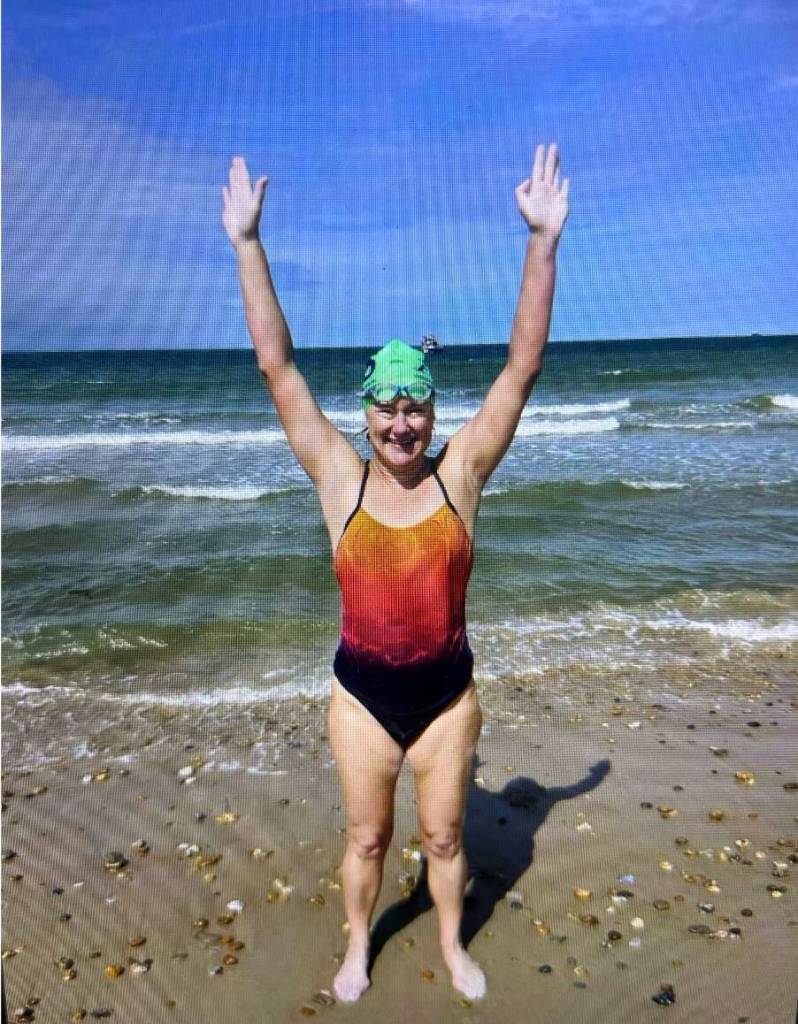

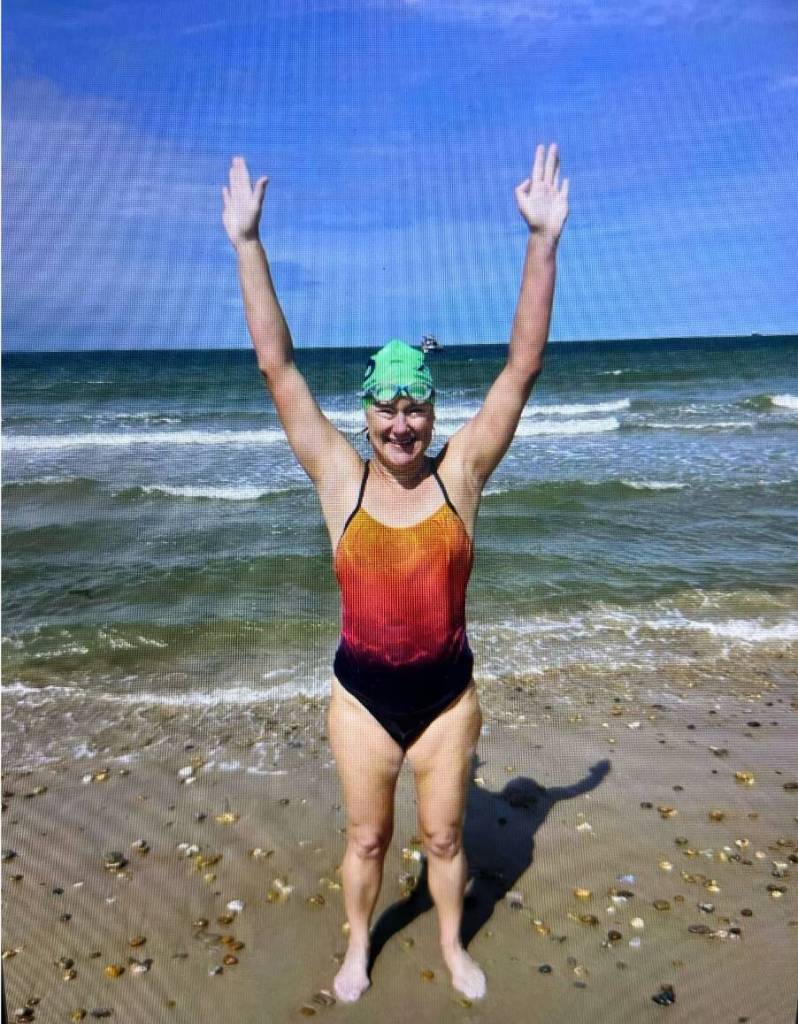


Tucked into the southeastern coastline of England, Dover is a bucolic town with a storied history.
In particular, it was near there in 1940 where the rescue of British soldiers from Dunkirk by an armada of “little ships” launched, and it is is there where most attempts to swim the English Channel originate.
In Friday, Aug. 22, at 11:15 p.m. local time, it was where islander Mary Singer jumped off the support boat, Pegasus, swam to shore at Samphire Hoe, got out of the water to be acknowledged, then plunged back in to begin her swim to France.
More than twenty-one miles and fourteen hours later, she waded ashore, having fulfilled a huge dream.
She had been here before, but as a part of a six-person relay team last summer — not as a solo swimmer. One of her relay team members from Vashon, Heidi Skrzypek, was as a member of the support team on the Pegasus, as were Mary’s husband, Katsumi Purbeck, and her mother, Carrie Singer.
The time and date for the swim had been arranged almost two years earlier, so despite the looming storm in the channel on Aug. 22, the show had to go on as scheduled. Even watching the YouTube feed from the boat was nausea-inducing for the audience of local area open water swimmers viewing it from afar — but Mary and her support team persevered.
Our swimmer was christened “Gale Five Mary” by the boat’s captain, Eddie Spelling, a veteran “salt” whose philosophy — that it is better to swim into the sunrise than into the sunset — dictated the start time in the middle of the night. The winds were over seventeen knots and the wave heights were such that Mary sometimes couldn’t get her arm out of the water to complete a stroke or get a clean breath: conditions that made for an unexpectedly eventful swim.
Training for months around Vashon where water temperatures average only in the mid-50s and while wearing only a swimsuit, Mary had built up her miles and hours in the water such that she was swimming 10 hours over a weekend.
For these training swims Mary would tow a rubber ducky (the QuackPacker) for her nutritional needs. The water temperature for last week’s swim was a relatively balmy 66 degrees, which took one item off the top of the list of challenges.
But the squirrely currents as she approached the French coast made landing a long, drawn-out process. As Skrzypek observed from the support boat: “French inshore waters are where the hard part is just getting started! Forty percent of the effort is in the last 4-5 miles. It’s common for the French segment to take a very long time. Mary was on target for an 11 to 12-hour swim per the pilot, but she swam on a huge spring tide. Big water, big pull, and as we approached “the cap” [Cap Gris-Nez — grey nose] two sides of water were converging making it extra difficult. It was almost superhuman to get through. She gave it 100%, and as long as you touch France, it is a victory!”
One final challenge was the pesky swarms of barrel jellyfish whose individual stings are unpleasant but whose cumulative effect is serious. They grew both in size and number near the French end of the swim. Benadryl brought the swelling down in a couple of days.
But compensating for some of the challenges was an early morning greeting from two Common Dolphins who raced up alongside her and leapt out of the water. If there had been a thought bubble over Mary’s head it would have read: “Thanks, I needed that.”
The swim ended just south of Wissant, France, in a village called Tardinghen, on the far Northwest part of that portion of the French coastline. Patrice Chassery, Wissant’s local swim enthusiast, was waiting on the beach to greet Mary. Last year’s relay team had met him, so it was an unexpected and happy reunion.
As Mary stepped on the shore, she became one of 2,690 thousand successful solo swimmers to do so — about 30% of whom have been women.
And on top of this achievement she has now completed the triple crown of distance swims (from Catalina Island to the California coast, a circumnavigation of Manhattan and the English Channel). The number of people who have achieved this feat, first accomplished in 1987, was 366 at the time of Mary’s swim.
In spite of the relatively warm water, a Channel swimmer burns a lot of calories — perhaps as many as ten thousand for the swim’s duration. And this means that an intake of food is imperative. Mary “fed” approximately every half hour. Feeds were alternating carbohydrate and electrolyte drinks. Sometimes a little flavored gel was rubber-banded to the outside of her drinking cup.
The crew would go forward on the starboard side of the boat and throw out a special Tupperware-like flip-cap cup filled with the feed. It was attached with paracord and a carabiner, and then it would get pulled back in. She has mastered the art of just doing quick 30-second feeds even in a very rough sea.
In a Signal chat, Mary said she was deeply touched by all who had an interest in the swim.
“After an event, we marathon swimmers comment that it is a team event, and that team extends to all of you who root for us from afar,” she wrote. “The swim was hard. It took me about three hours to mentally accept that these were my conditions. The water did calm in the middle, until the storm came up.”
She detailed how she used Dan Simonelli ‘s guidance to “find the fun” in the hard swim.
”I decided that it was kind of fun to be rocked all over,” she wrote. “I thought of my New York circumnavigation swim, which I loved because of the energy of the water, and wondered if I’d look back on this water in the same way. The water was wild! And not just due to the wind — there were places where I was caught up in odd eddies.”
She wrote that missing the Cap was a huge disappointment, but Skrzypek had help her push through that aspect of the swim.
“I looked up at her and asked ‘did we miss the Cap?’ And she shrugged and said something to the effect of “We’ve got feeds. We’ll just keep swimming until you hit land.’”
“That was just what I needed in that moment,” she wrote, adding that she was overwhelmed with gratitude to Skryzpek, her mother and husband “champs” for their support.
What’s next for Mary? The Bering Strait? Havana to Key West? Or maybe a BarcaLounger and a cool drink? Stay tuned.
Pat Call is a freelance writer for The Beachcomber who has only swum in the sound when he has flipped his single rowing shell. Heidi Skrzypek, an avid open water swimmer, contributed to this article as an on-site reporter.
Corrections: Earlier versions of this article included two statistical errors. The number of people who have completed the triple crown of distance swimming (Catalina Island, circuit of Manhattan and the English Channel crossing) was 366 at the time of Mary Singer’s swim, not “under 300” as originally reported. Additional Singer was the 2,690 swimmer to accomplish the English Channel solo crossing (not among “under 2,000” to do so, as originally reported). The Beachcomber strives for accuracy and regret the errors.