After Epstein: Goertzel on funding, fallout, rumors
Published 10:30 am Wednesday, March 11, 2026
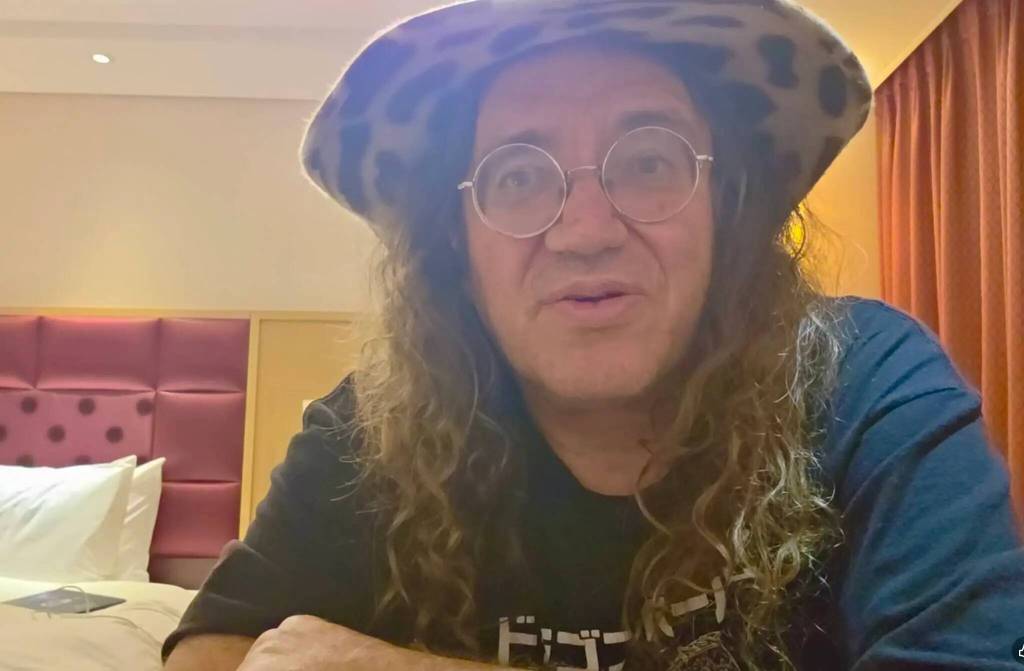
He was scraping by, struggling to make ends meet, and then, he said, he met Jeffrey Epstein.
In 2001, Ben Goertzel said a meeting with the wealthy financier soon delivered a $100,000 research fellowship that helped keep his work afloat and his rent paid.
Years later — amid the 2008 great recession, a divorce and a business he said was collapsing — Goertzel said he began soliciting additional funding from Epstein for his artificial intelligence projects.
“He was willing to donate money without a lot of paperwork or strings attached,” Goertzel said in an interview with The Beachcomber. “Just based on a handshake, that you were going to use it for the research that you said you were.”
Goertzel spoke with The Beachcomber after a Feb. 27 story and after he posted a Substack essay, a video and comments on social media addressing the relationship, writing that he was “not in the know about his horrible crimes.” Documents so far posted online by the Department of Justice show years of correspondence between the two men. Goertzel’s name appeared 802 times in the searchable Epstein archive.
Goertzel is among a growing number of scientists and researchers who have publicly responded after the trove of documents triggered new scrutiny around Epstein’s ties to academia and the scientists who sought his support — many of whom, like Goertzel, say they did not understand the extent of Epstein’s crimes.
In recent days, Goertzel — an island resident since 2020 and a prominent figure in the world of artificial intelligence — has sought to explain why he accepted Epstein’s funding on and off for years, while emphasizing that he had no connection to Epstein’s social life, travel or crimes.
“People who do this kind of thing know it’s evil and horrible and keep it secret,” Goertzel said. “It’s not like they show it off to everybody they know.”
Goertzel described the relationship as practical and limited — office meetings, donation requests and scheduling logistics — conducted in opulent, controlled spaces where he said he saw nothing that suggested criminal behavior.
Goertzel described “nice offices” filled with sculptures and paintings, objects that telegraphed wealth. He said he never saw “any girls or bimbos or underage hot girls hanging around.”
He recalled visiting Epstein’s home office once or twice in New York, describing a “huge mansion townhouse.”
He said he never attended parties with Epstein and never traveled with him, including to the private island in the U.S. Virgin Islands that Epstein owned.
The money, Goertzel said, fit a practical need at key moments. The 2001 funding, he said, “saved me from having to get a day job and [allowed me to] really focus on research.”
Later the amounts were smaller relative to his broader work. Over a 17-year span, he said, Epstein’s support was “a very small part” of a much larger funding picture — “many tens of millions of dollars, maybe up to $50 million,” from various sources for Geortzel’s AI projects.
“The amount of money from Epstein was pretty trivial,” he said. Goertzel has previously estimated the total at about $360,000.
Goertzel said Epstein’s money served as a lever for larger grants. He described research funding arrangements in Hong Kong, where private donations could unlock government matching funds.
“We had these research grants in Hong Kong, where, if you put in like $25K the Hong Kong government would put in nine times that amount,” Goertzel said.
The appeal was not only the money but the ease of obtaining it. “The whole point of the arrangement,” he said, was that you “didn’t have to put a lot of attention into it.” Sometimes, Goertzel said, Epstein agreed to donate; sometimes he did not. “It just depended on his mood.”
But Goertzel’s relationship with Epstein unfolded against a timeline of years in which Epstein’s criminal activity had been a matter of public record.
In 2008, Epstein entered a Florida plea deal that included a charge involving a minor and later served about 13 months of an 18-month sentence in the Palm Beach County jail. Goertzel said Epstein at the time told him he had been jailed for soliciting a prostitute in Florida, and he accepted the explanation. The sentence length struck him as unusual, but he did not “look into the details.”
“There were many things happening in my life other than studying the court records of this guy,” he added.
He also contended that Epstein’s case did not feel particularly splashy or lurid.
“At that time, Epstein court proceedings were not a big deal, like these are not all over the news,” Goertzel said. “You would have had to search articles in local newspapers to see people talking about the plea deal.”
A review of coverage from 2008, however, shows Epstein’s case was reported by major outlets, including CBS News, The Guardian, NBC News, the New York Post, New York Times and the Palm Beach Post.
In one 2008 New York Times article, authorities said Epstein “also paid women, some of them underage, to give him massages that ended with a sexual favor.” The story described a police account involving a 14-year-old girl who said she was paid for massages in 2005. Goertzel said he does not remember reading any of that coverage.
“It’s clear now, he had this systematic machine for recruiting high school-aged girls to sexually exploit them,” Goertzel said. “That was not in the news in 2008, even if I had looked.”
As the Justice Department documents between Epstein and Goertzel circulated online in recent weeks, so did speculative interpretations — including viral claims that routine references to food or logistics in Epstein’s emails might be coded messages tied to crimes. “These are not secret-coded messages about conspiracy theories,” Goertzel said.
Replying to a comment on The Beachcomber’s Facebook page, Goertzel said, “The emails I had with Jeffrey Epstein about food were really just about food,” and said the money Epstein wired was meant to cover drinks and snacks at a conference.
He also addressed an email exchange that has drawn criticism in which he responded enthusiastically to Epstein after Epstein’s release from jail in 2009. “Congratulations,” Goertzel wrote to the sex offender.
Goertzel explained that he simply ”typed something, not thinking it would be online.”
He framed many of his interactions as transactional and compartmentalized, part of what he called the disorienting realization, years later, that Epstein could sustain a philanthropic persona alongside a sustained pattern of serious abuse.
“Even a horrible monster of a human being may have many sides,” Goertzel said. “Just because he had this horrible exploitative side, doing these terrible things with teenage girls, that doesn’t mean that was the only thing he ever did. His donation to scientists had essentially no connection with that other side of him.”
“He’s not the least likely person I know to have had a dark side,” Goertzel added. “I’ve known other billionaires, and they’ve all been freakish in some way or another, like it was above my pay grade to tell what species of freakish billionaire he was.”
Goertzel also sought to explain past emails in which he defended Epstein amid negative publicity. “At the time, that was what I thought,” Goertzel said. “If I had not thought that, I wouldn’t have continued engaging with him.”
The attention the Goertzel-Epstein correspondence has drawn has moved beyond ethics in research funding. Goertzel said online commentary has escalated into personal attacks — accusations that he is a pedophile by association and should not be allowed near schools.
Two of Goertzel’s children attend schools on the island. He said the online rumors have been jarring.
“It’s really bizarre to me to have this rumor now going around that I’m somehow a child molester because I accepted money from someone who later turned out to be,” he said.
“My kids are the main reason I don’t just bail on the whole thing and move overseas,” Goertzel said. “My kids have grown up in this community.”
Goertzel originally moved to Vashon to be closer to his mother and sister, both of whom have long worked with children, in schools and as advocates.
Goertzel’s mother, Carol Goertzel, said that her son’s fundraising was never dinner-table conversation.
“We were always close, but we were never talking about who he raised money from,” she said. “He always was extremely committed to family.”
Carol described her son as driven by work and family, and said fundraising has long been part of his professional life. “He’s a really good fundraiser, because he’s so passionate about what he and the people working with him are doing,” she said.
As a longtime advocate for women and girls, Carol said “we always shared with our children and friends the work that we were doing to help women and girls in particular better their lives and be safe.”
She said she was part of a group that worked with the Pennsylvania legislature in the late 1970s — when Ben Goertzel was a child — to support some of the first laws aimed at helping victims of domestic violence.
Ben Goertzel said the shock of 2019 — when Epstein was arrested on federal sex-trafficking charges and later died in jail — remains vivid for people who had known him, even peripherally.
“In 2019 — when everything came out, everyone was upset then,’” Ben Goertzel said.
Goertzel said he worries that the Epstein controversy will become less about victims and more about the reputations of people who accepted research funding.
“My own view is this whole email dump is probably a kind of distraction campaign,” he said. “There’s a lot less attention going to the groups of his victims … than going to people who got science funding.”
Goertzel said he believes his work will continue and remain relevant.
“People will use my AI software and robots regardless of this,” he said, “just like they’ll keep sending their kids to Harvard and MIT, even though Harvard and MIT took Epstein’s money.”