What children discover when they spend time outdoors
Published 1:30 am Wednesday, March 18, 2026
On Vashon Island, nature is not just scenery. It is a teacher, a companion, and a steadying presence in daily life. The forests, shorelines, and meadows that surround us shape how we move through the world.
Yet for many children today, sustained time outdoors has become increasingly rare, replaced by tightly scheduled days and glowing screens.
As director of the Vashon Wilderness Program, I see what happens when we make space for something different.
When children spend meaningful, mentored time in nature, learning happens through the body as much as the mind. They move, notice, listen, and respond. Their nervous systems settle. Attention deepens. Curiosity leads the way. Nature does not rush them or rank them. It simply invites them to be present.
In these settings, children begin to build a relationship with themselves.
They learn to recognize when they are cold, tired, excited, or unsure. They practice decision making and problem solving in real time — how to cross a creek safely, how to build a shelter sturdy enough for rain, how to resolve a disagreement with a peer. They experience competence through shared responsibility: gathering materials, navigating terrain, caring for one another and for the land. These moments quietly cultivate selftrust.
Outdoor immersion also builds emotional resilience. Nature offers both wonder and discomfort, rain, mud, shifting conditions, alongside awe and delight. With supportive mentors and peers, children learn that challenges do not need to be avoided or managed away. They develop patience, adaptability, and empathy. These are life skills, not seasonal ones.
Perhaps most importantly, nature immersion creates belonging.
Children who return to the same outdoor places over time begin to feel rooted. They form relationships not only with peers and mentors, but with the land itself. They notice when the salmonberries ripen. They recognize the call of a chickadee. They crouch to observe beetles and ants at work. They come to understand that they are part of a living system rather than separate from it.
This year, our staff chose a guiding theme: “Beeing in Community.” The spelling was intentional. We were inspired by bees, creatures who understand instinctively that thriving depends on collaboration, shared purpose, and care for the collective. A hive functions not because of one extraordinary bee, but because many contribute in essential ways. Bees communicate, adapt, protect, and pollinate. They embody interdependence.
That understanding shows up daily in our programs. Children learn how they move through shared space matters. They practice cooperation and share responsibility. They discover what it feels like to contribute meaningfully. They experience being needed and being supported. They learn that their presence matters.
That sense of belonging is where stewardship begins.
You protect what you feel connected to. You care for what you know.
Which brings me to some of our smallest and most essential teachers: insects.
In our programs, children often move quickly from hesitation to fascination. A spider becomes an engineer. A beetle becomes a marvel of design. A dragonfly becomes a flash of iridescent power. Through curiosity, fear softens into respect.
This shift matters. Insects pollinate crops, build soil, decompose waste, and form the foundation of food webs. Birds, amphibians, fish, and mammals — including humans — depend on them. Yet insect populations are declining globally due to habitat loss, pesticide use, and climate disruption. When insects disappear, entire ecosystems begin to unravel.
If we want the next generation to care about biodiversity, climate resilience, and healthy habitats, they must first experience wonder, connection, and community.
At the Vashon Wilderness Program, we believe access to naturebased learning should not be a luxury. It is foundational to healthy development and to a resilient community. We work to ensure that children from a wide range of backgrounds, on Vashon and beyond, including Tacoma, West Seattle, and the Kitsap Peninsula, can participate in longterm, mentored outdoor programs.
One way our broader community supports this work is through the online WILD Auction, which is open now and runs through March 31. Funds raised help expand scholarship access, ensuring that financial circumstances do not determine whether a child can spend meaningful time outdoors.
Investing in outdoor education reaches far beyond any single child. It strengthens families, deepens community ties, and fosters a generation that understands what it means to belong to one another and to the living world that sustains us all.
Like bees in a hive, like frogs calling across a pond, each of us has a role in sustaining the ecosystems and communities we depend on. When we show up for children, for the land, and for one another, we practice what nature has been teaching all along: thriving happens together.
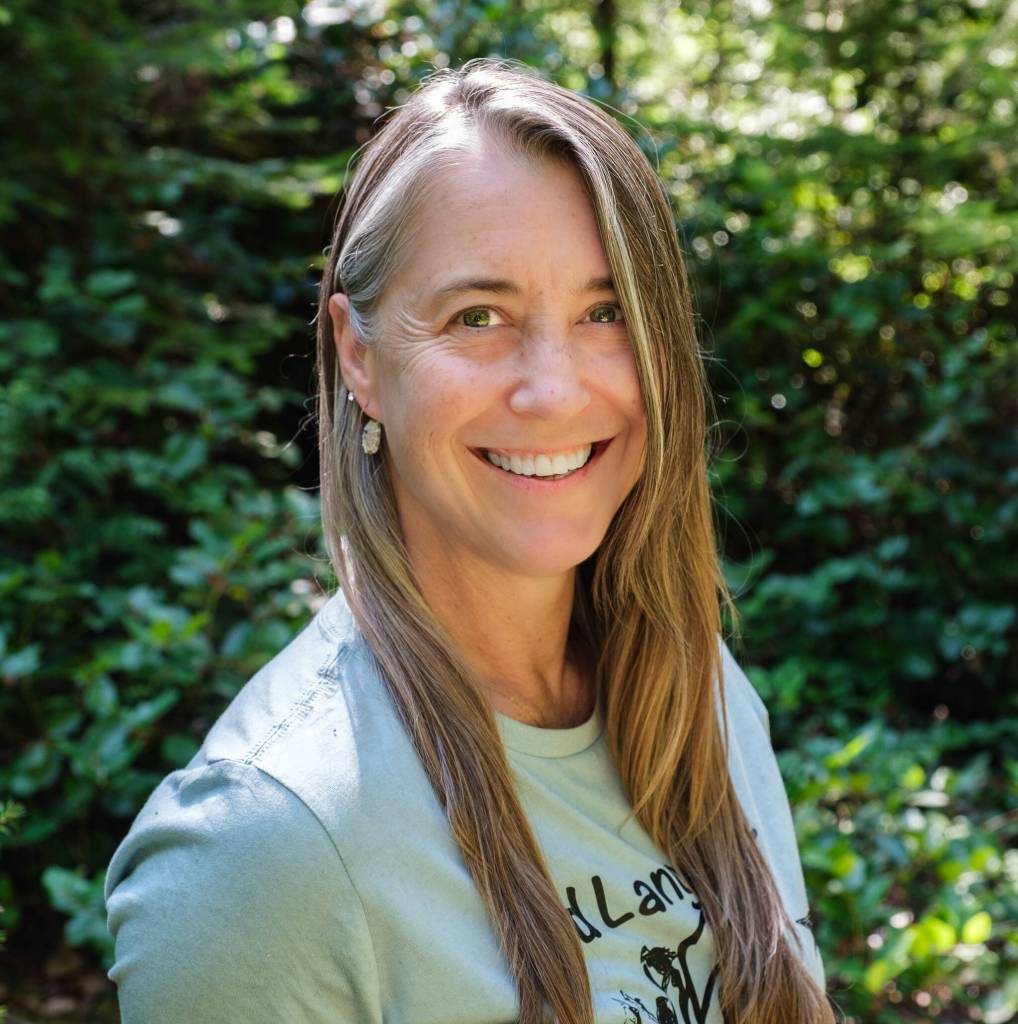
Nadja Vol Ochs is the director of the Vashon Wilderness Program.