New farmers take root at Matsuda
Published 1:30 am Wednesday, April 22, 2026
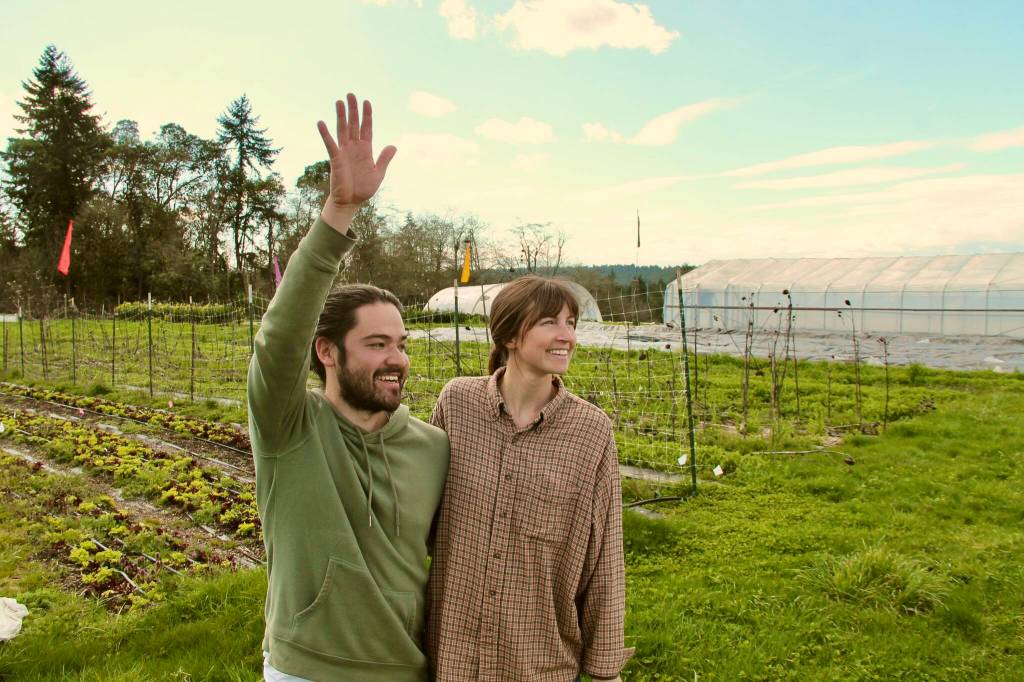
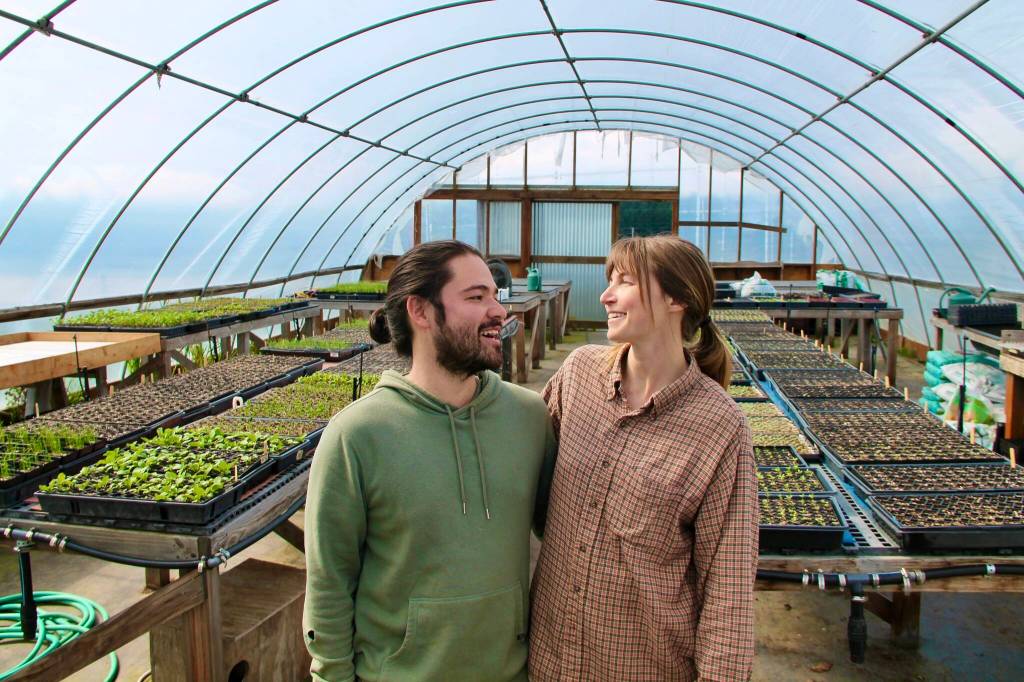


The first thing Lizzy Jansen and Koji Pingry planted when they arrived at Matsuda Farm this past January wasn’t a cash crop or a cover crop. It was strawberries — the same fruit that once helped make this farm part of one of the island’s last commercial strawberry operations.
“We never really grew strawberries,” Pingry said with a laugh, turning to Jansen. “But it felt right.”
The couple, who farm together under the name Makanai Farm, moved to Vashon at the start of 2026 to take over operations of Matsuda Farm — a property with deep ties to the island and to the history of Japanese Americans in the Pacific Northwest.
A century in the soil
The land the couple now tends was first farmed by Heisuke Matsuda, a Japanese immigrant who arrived on Vashon in 1927. By 1930 he had saved enough to purchase 10 acres — though because Japanese-born immigrants were legally prohibited from owning land, he held the deed through a trusted friend’s son until his own son, Yoneichi, came of age.
Over the following decades, the family built one of the island’s most productive strawberry operations, according to the Vashon-Maury Island Land Trust.
On May 16, 1942, the Matsudas — along with all other residents of Japanese ancestry on Vashon — were ordered to internment camps. Yoneichi enlisted in the Army’s 442nd Nisei Regimental Combat Team and served in Europe; his sister Mary joined the Cadet Nurses Corps.
While they were gone, the deputy sheriff entrusted to manage the farm never sent the family any income, left creditors unpaid and traveled to their camp with an offer to buy the property, according to the land trust. They declined. The family returned in 1945 to a farm in disrepair.
Yoneichi rebuilt, eventually expanding to nearly 50 acres, and the Matsudas ran what was probably the last large-scale commercial strawberry harvest on Vashon before retiring in 1985. His second wife, Miyoko, kept the land in production for nearly three more decades before entering into contract with the Vashon-Maury Island Land Trust for the remaining 12 acres in 2014.
In 2022, Mary’s son Ray Gruenewald donated an additional five acres, naming it the Mary Matsuda Gruenewald Forest — honoring the mother who had been torn from her community and wrongfully imprisoned as a teenager.
Mary later wrote a memoir about the experience, Looking Like the Enemy, which both Jansen and Pingry have read and recommend.
The meaning of Makanai
Makanai is a Japanese word for staff meal, or family meal — the kind of communal table shared in restaurant kitchens before service begins.
Jansen and Pingry chose the name during the pandemic, when friends who were cooped up in Seattle apartments would show up to their farm to help out, and Pingry would make enormous lunches for everyone.
“It embodied how we wanted to farm,” Pingry said. “Sharing food, sharing work, doing it together.”
Jansen, who grew up in Burlington and studied public health at the University of Washington, came to farming by way of a question she kept circling back to: if food access and nutrition were at the root of so many public health problems, shouldn’t she understand where food actually comes from?
She worked a season with a retired architect who ran a small CSA — a community-supported agriculture subscription — mostly for friends.
“We realized how much food is connected to all the other things we care about,” Jansen said.
Seven seasons later, they’ve grown their operation from a one acre farm, to leased land near Sedro-Wolley, to this farm on Vashon — at three acres, double the size of anything they’ve farmed before.
Their specialty has always been Japanese vegetables: Japanese cucumbers, mizuna, komatsuna, shungiku, Tokyo Negi and shimonita Negi varieties of green onion, Japanese eggplant, kabocha squash, goya — the bitter Okinawan melon — and more. Fifty to one hundred varieties in a full season.
This year, they’re trying ginger for the first time, in part because loyal customers from their time at the University District farmers market kept asking for it.
The connection to that market runs deep. The booth they occupy was once held by a Japanese farmer, who Pingry grew up visiting as a child. When the farmer retired, he asked the market association to give his spot to the couple. Many of his longtime customers stayed on.
“He’s the one that first made Japanese vegetables feel magical to me,” Pingry said.
Before they applied for the land trust’s request for proposals, Pingry had visited the property once while helping a friend research an article about Japanese American farming in the Pacific Northwest. The friend wanted to document both the history and the current state of Japanese American farmers in the region.
“I remember thinking, man — this is a pretty sweet gig. Farming this beautiful spot on Vashon Island,” Pingry recalled. “We’d joke about it. If that job ever came up, we should apply. But moving to Vashon felt more like a thought experiment than a real plan.”
When the land trust opened its request for proposals in March of last year, a friend sent it along. They applied.
For Pingry, the decision was inseparable from family history. His mother is a first-generation Japanese immigrant and his formal reckoning with the history of Japanese American incarceration came in a college Asian American history course.
Jenny Stamper, the land trust staff member who oversaw the process, said the organization received about a dozen applications and spent months reviewing them, including multi-round interviews and farm visits. What distinguished Jansen and Pingry, she said, was the convergence of their farming experience, their specific focus on Japanese vegetables and the meaning behind their farm’s name.
“I come from a kitchen background, and family meals are such a big part of food service and community,” Stamper said. “And then their Japanese American connection — being able to keep the legacy of the Matsuda family alive. It checked every single box.”
When the couple came to sign the lease in October, they brought strawberry plants — dug from the garden of their former landlord in Skagit, who had become like family — and planted them as their first act on the land.
“It felt symbolic,” Pingry said.
Farming forward
Makanai Farm’s model is deliberately small-scale and regenerative. The couple farm entirely without tillage, relying instead on bed preparation methods that preserve soil microorganisms and sequester carbon.
One of their mentors, a Japanese farmer from Yakima whose vegetables first inspired Pingry, farmed the same way. They learned from him directly, working a summer on his operation before taking on their own.
“So much about farming, in the industrial sense, is extraction,” Pingry explained. “We’re trying to do the opposite — build soil, not deplete it.”
They currently sell through a CSA of roughly 50 households — about 30 of whom have been members for six or more seasons — and at the University District Farmers Market on Saturdays.
They also sell wholesale to several Japanese restaurants in Seattle. This season, they’re growing vegetables for the Vashon Food Bank and have a small contract with the Asian Counseling and Referral Service in Seattle, which operates a kitchen and food bank for elderly residents.
This season they’re also growing Japanese soybeans for Fuku Ferments, a new miso business — with a hoped-for connection to the historic Mukai building on Vashon.
Pingry is quick to note the parallels between his own life and the man whose land he now farms. He is finishing a master’s in teaching at Western Washington University — student teaching began three days after they moved onto the island, at Ingraham High School in Seattle, where he’s teaching social studies.
Yoneichi Matsuda, the son who rebuilt this farm after internment and farmed strawberries here until 1985, also became a teacher of social studies and Japanese language — at Ingraham.
“Everything is full circle,” Pingry said.
As for how long they plan to stay: minimum two years, per their lease. But ask them and they’ll tell you the hope is much longer than that.
Down the road, they’re dreaming of a farm stand, deeper ties with Vashon restaurants and institutions, and eventually opening their CSA to island residents — building the kind of local food network they’ve always wanted to be part of. For now, though, they’re settling in, getting to know their neighbors, and waiting to see what summer brings.
“Food connects people,” Jansen said. “It’s a space to gather and share something with other people. That’s why we started doing this.”
“We take that sort of responsibility to do good with this opportunity really seriously,” Pingry added.
Outside, past the greenhouse, the first strawberries had survived the winter. Still small, no flowers yet — settling into new ground, just like their farmers.