New VIFR chief, tighter $16M budget
Published 10:30 am Tuesday, December 23, 2025
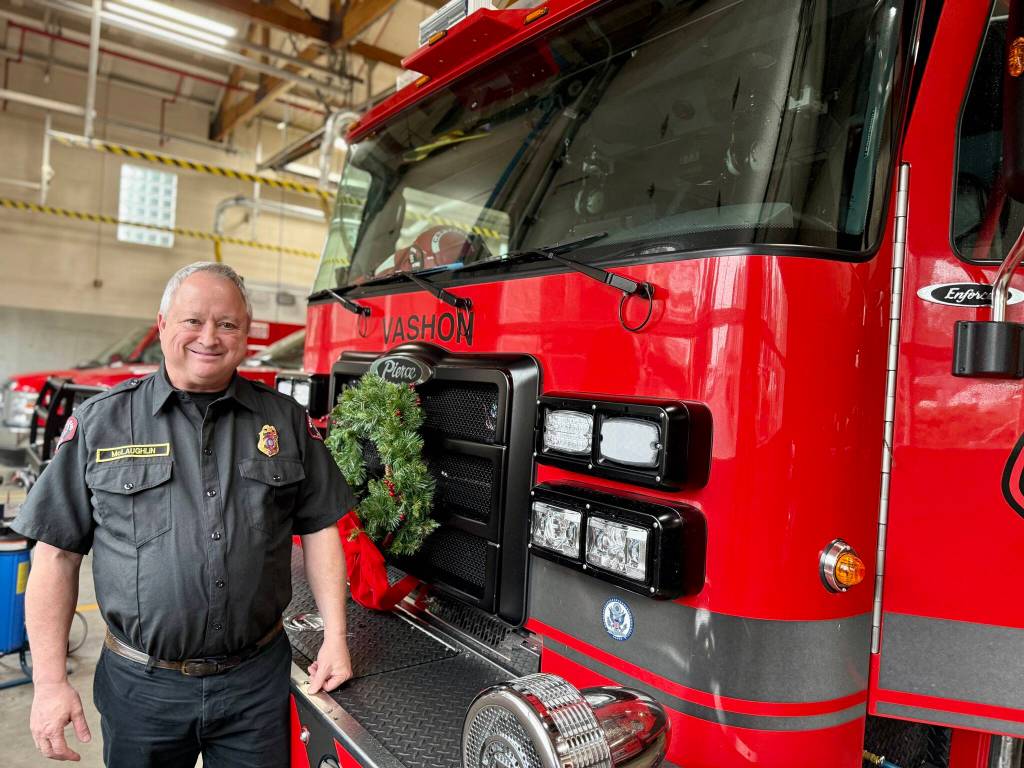
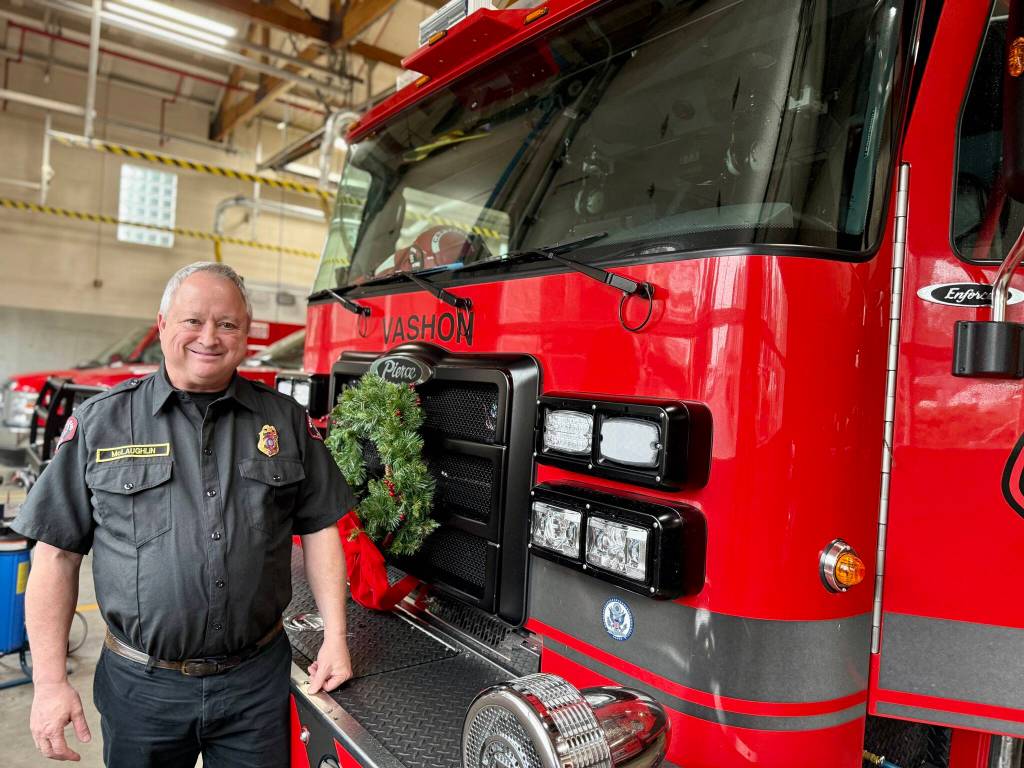
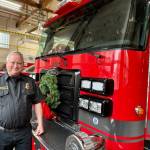
When Bill McLaughlin arrived on Vashon this fall to take over as fire chief, he stepped into a department fresh off years of major capital spending — and into the task of shaping a 2026 budget that looks markedly different from the year before.
McLaughlin, who began his role as chief in September, brings nearly four decades of fire service experience to Vashon Island Fire & Rescue, along with a national background in wildfire mitigation and small-district leadership.
“I just never left the fire service,” McLaughlin said. “It’s the best job there is. It’s a chance to help people. It’s always a challenge — and I love the challenge.”
McLaughlin began his career as a volunteer firefighter in Alaska in the late 1980s and has worked in fire service continuously since 1987. He has served in leadership roles across Washington, Colorado, and Alaska, including stints in Friday Harbor, Whatcom County and Ketchum, Idaho.
For the past 15 years, he has also traveled nationally as an instructor, focusing on wildland-urban interface fires — a growing concern even in places like Vashon, where large wildfire risk is typically low due to the island’s marine climate but consequences of fire and other natural disasters can be severe.
“The island has other risks too — landslides, isolation, earthquakes, tsunamis,” he said. “There’s a lot we need to be thinking about when it comes to preparedness.”
One of his first major responsibilities was guiding the district in planning its 2026 budget, approved unanimously by the fire commissioners at their Nov. 25 meeting.
The result is a $16 million spending plan — down from roughly $18 million in 2025 — that reflects the winding down of major construction and fleet investments, a sharp expansion of emergency medical services, and ongoing pressure around staffing in one of the region’s most isolated fire districts.
McLaughlin said he plans to stay with VIFR for up to five years, with a focus on succession planning and stabilizing staffing.
A smaller budget
The most visible change in the 2026 budget is its size. This year’s budget totals, including reserves, drop about $2 million compared to 2025 — a shift McLaughlin and district officials say reflects planned drawdowns of reserves rather than shrinking revenues or revenue services.
The 2026 budget includes approximately $2 million in cash carried from the general fund from 2025.
In 2025, VIFR completed the major renovation of Fire Station 55, including furniture, necessary information technology upgrades and equipment, office equipment and a fully equipped medical examination room for islanders who come to the station seeking emergency care.
With those projects largely complete, reserves fall sharply in 2026.
“A big chunk of our funding is going toward the station and replacing the fire engines. Which was desperately needed,” he said. “But once we get past that, we have a lower level of capital funding.”
The facilities reserve drops from about $1.9 million in 2025 to roughly $369,000 in 2026. Overall planned expenses are about $500,000 lower than last year.
After completing those major capital projects, McLaughlin said, funding can be reallocated toward staffing and volunteer support.
Staffing pressures remain
Despite years of progress, staffing continues to be the issue that McLaughlin says “keeps me up at night.”
VIFR currently has 25 firefighter positions, with two vacancies. The district aims to staff six firefighters per day — two at the Burton station and four at the uptown station — but typically operates with five, relying on overtime to fill gaps.
It is common, McLaughlin said, for both ambulances to be off island two or three times a week, leaving only one or two firefighters on shift on Vashon.
“The recommendation for a single-room house fire is 14 firefighters in the first 15 minutes,” he said. “We have five. We are always going to be behind, so we have to focus on prevention.”
The district is currently in the final stages of hiring, with more than 250 applicants for two open firefighter positions. Candidates include both entry-level firefighters, who would need academy training, and lateral hires who could start sooner.
The 2026 budget includes cost-of-living and market adjustments for firefighter, deputy chief and chief salaries — aimed at retention. While VIFR cannot compete with urban departments, McLaughlin said its pay is competitive with other rural districts.
The district has three administrative staff members, two employees focused on facilities and vehicle maintenance and 25 firefighter positions, with two vacancies.
Compensation for the district’s 25 uniformed firefighters is approximately $2.8 million, with overtime, cash-outs for leave, payroll taxes and medical insurance.
Personnel costs detailed in the budget include compensation for VIFR’s chief and deputy chief at a combined total of $497,249 in salaries, not including benefits — up from $359K in 2025. The increase reflects a decision to make the fire chief’s salary competitive with comparable positions in Washington, as well as the reclassification of some benefit costs into the salary line item, McLaughlin said.
The district’s full-time administrative staff will receive another $405,695 in salaries and two facilities and maintenance employees will receive another $108,247 in salaries.
Grants, loans and long-term revenue
Several major funding revenue streams shape the 2026 budget.
Tax revenues of approximately $6.7 million, about the same as last year, make up the largest share of revenue of the budget.
The district collects this revenue under a six-year levy lid lift first approved by voters in 2023, which set VIFR’s levy rate at $1.50 per $1,000 of assessed value — the maximum allowed under state law.
A $715,305 grant from the Vashon Health Care District is new this year and accounts for most of the nearly $1 million increase in intergovernmental revenue. The funding supports a major expansion of the district’s Mobile Integrated Health program.
Also new is $630,000 in proceeds from a Washington State Local loan, a low-interest state financing program that allows fire districts to borrow collectively at below-market rates. VIFR plans to use the loan to replace two aging brush trucks.
“If you save up to buy a fire engine, by the time you have the money, it costs more than when you started,” McLaughlin said. “It makes more sense to borrow and get the apparatus in service.”
Federal grant funding continues to play a key role but shows signs of leveling off. Reimbursements from the Ground Emergency Medical Transportation program drop from about $760,000 in 2025 to $500,000 in 2026, reflecting the program’s transition from startup reconciliation payments to steady-state funding and federal funds.
The district is also in the second year of a three-year FEMA Safer grant that funds staffing costs. District officials say future retirements and the completion of capital projects will allow funds to be reallocated to retain those positions once the grant expires.
The budget also projects $117,520 from the Federal Emergency Management Agency, up from $97,124 last year, representing the second year of a two-year grant supporting fitness and wellness programs for all VIFR staff.
“We’re kind of approaching a crisis,” McLaughlin said, referring to firefighter wellness and noting that more firefighters die by suicide than in line-of-duty deaths.
Fees for ambulance transport are also projected to increase by about $50,000 in 2026. Christina Bosch, finance and human resources director at Vashon Fire & Rescue, attributed the rise to a combination of higher expected call volume and more accurate budgeting.
In 2025, the district budgeted conservatively for transport fees, Bosch said, and the 2026 figure is intended to better reflect actual usage.
MIH expansion
The fastest-growing part of the 2026 budget is Emergency Medical Services, which jumps from about $300,000 in 2025 to roughly $939,000 in 2026 — largely due to Mobile Integrated Health.
“There’s a huge need,” McLaughlin said, referring to the MIH program. “It’s taken off.”
MIH now operates as a weekday urgent-care-style service on the island, reducing unnecessary emergency room visits and ferry transports.
Current staffing includes two part-time nurses, one part-time social worker and one full-time physician assistant, hired in September. Beginning Jan. 1, one nurse will move from part time to full time, and an additional part-time social worker will be added.
“Every time MIH keeps someone from needing hospital transport, it keeps our ambulance on the island,” McLaughlin said.
VIFR plans to begin billing insurance for MIH services sometime in 2026, though no one will be turned away for inability to pay. The district is also exploring weekend coverage as demand grows.
Volunteers and what comes next
VIFR currently has about 10 volunteers — a small number for a district as isolated as Vashon, without any close-by partner stations.
Before recruiting more, McLaughlin said the district needs to establish a dedicated training program, something he hopes to address by hiring a training officer in early 2026.
However, the position is not yet included in the 2026 budget, Bosch said, citing remaining uncertainties. Instead, the district budgeted $114,500 for training through the South King County Training Consortium. District leaders hope to begin discussions that would allow a VIFR training chief to teach within the consortium, which could reduce that fee and help fund the new position, Bosch said.
A larger volunteer recruitment effort is planned for mid-2026, with training beginning later next year.
Boosting volunteer staffing could also have financial ripple effects for residents, particularly in Dockton, where the station is currently considered unstaffed, contributing to higher homeowners insurance rates, McLaughlin said.
As McLaughlin settles into his role, the 2026 budget reflects a department in transition — moving from heavy construction and fleet investment toward staffing stability, medical services.
See VIFR’s complete 2025 budget at tinyurl.com/3cf65rdv.