Art Is Essential To Understanding Our Town and Our Times
Published 1:30 am Thursday, May 13, 2021

The Beachcomber’s pages have long reflected that we live in a place filled with art and creativity.
Even during the pandemic, our newspaper has included profiles of painters, sculptors and local authors. Other coverage, including that by “Desert Island Bookworm” columnist Phil Clapham, focused on the safe and solitary pleasures of the literary arts.
We’ve also made sure to remind readers that art doesn’t have to happen in-person, with news about how Vashon Center for the Arts, VashonLIVE, Open Space for Arts & Community and other groups have launched innovative virtual programs during the pandemic.
This week, our newspaper includes an article about an ambitious plan by Vashon Repertory Theatre to bring live local theater back to mostly outdoor spaces this summer. We’re also closely covering the cautious reopening of Vashon Center for the Arts to exciting live performances, and keeping track of all the plans for the summer now taking shape at Open Space for Arts & Community.
But we also intend to keep featuring local art in a different way — right here on our opinion pages.
Beginning last May and continuing until last month, local artist Steffon Moody contributed a weekly cartoon to these pages — though it was hard to call his meticulously drawn works “cartoons.” Rather, Moody created a kind of a visual diary for the long, strange trip of 2020-21.
Looking back on the amazing 47 cartoons Moody created for The Beachcomber, we see a distillation of all the issues and complexities we have recently faced in our community and nation.
When he started drawing cartoons for us, Moody promised to do it for a year, and he was good to his word. His artwork made our newspaper better, week after week, and we can’t thank him enough for lending his time and talent in this way.
But when he left, we wondered what would fill the space he left behind on our editorial pages.
It didn’t take us long to figure out what to put there next.
The light bulb over our heads switched on after a reader wrote to us in the wake of the recent vandalism of one of islander West McLean’s many paintings of Black Americans, hanging in various locations on Vashon. This reader wanted to know more about the people in the paintings. Could The Beachcomber run short profiles of McLean’s subjects in the paper every week, he wondered?
Yes, we can — because McLean, in addition to painting portraits, also memorializes his subjects with brief life stories.
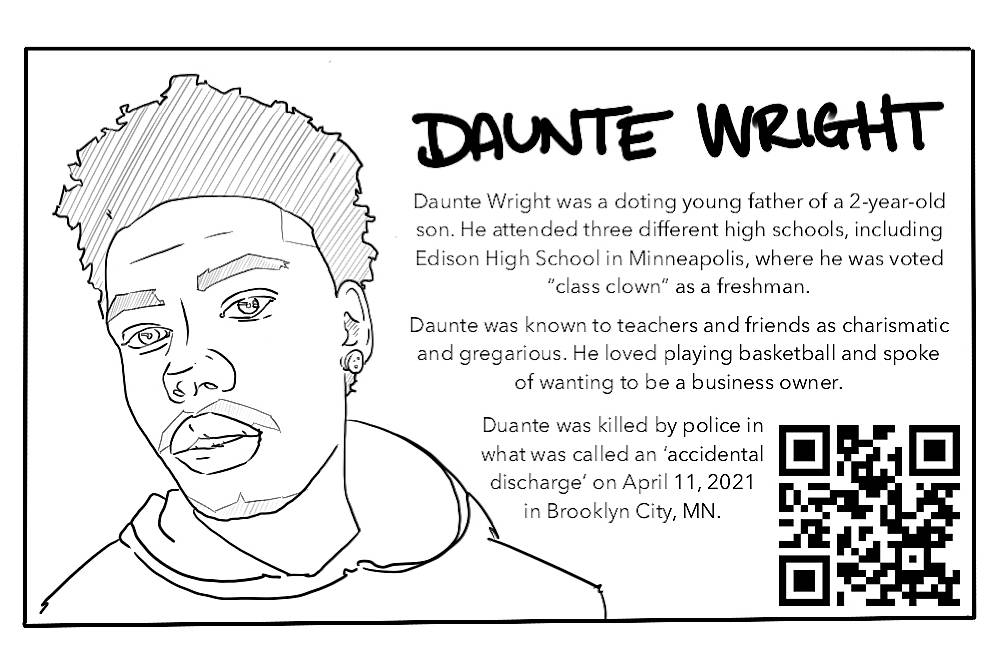
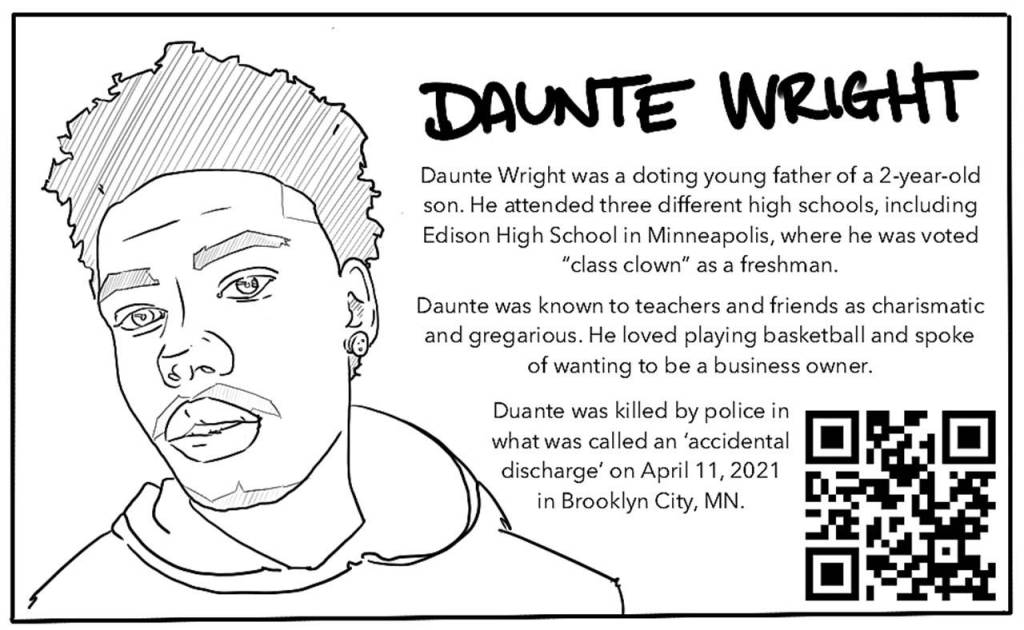
Last week we began a series of new graphics, by McLean, that show not only faces but include brief biographical information about the people in his paintings. The common denominator of all these portraits is that their subjects have been killed by police, but the precise details of their deaths are not included in McLean’s works.
Rather, the humanity of his subjects — their relationships, personalities, dreams and hopes for the future, and all that was lost when they died — are what matters to the artist, because these details are too often left out of news accounts about these people.
But the works also remind us all of a defining fact of the American experience.
Since 2015, The Washington Post has maintained a database detailing all fatal shootings by police in the United States — about 1,000 per year. Black people account for 40 percent of all unarmed Americans who die this way, despite the fact that Black people make up only 13 percent of the population.
That some of the subjects of McLean’s paintings were also caught up in the criminal legal system of the United States in various ways should not be surprising to anyone and it does not, in any way, diminish the other parts of their lives or the horror of their deaths.
The United States incarcerates its citizens at the highest rate in the world, and here too, people of color are disproportionately affected because communities of color are disproportionately policed.
West McLean’s art distills this terrible injustice into something that surely all islanders can understand: faces, names, and the kind of eulogies we would all hope to have after we are gone. We hope our readers see the portraits and the bios that accompany them for what they are: reminders of the rich emotional lives of ordinary people who should have never died in this way.
Their loss is our country’s loss, and our community’s loss as well. We must question and change the complex systems that resulted in these deaths.