Citing environmental concerns, fire chief advocates for ospreys
Published 1:30 am Thursday, February 24, 2022
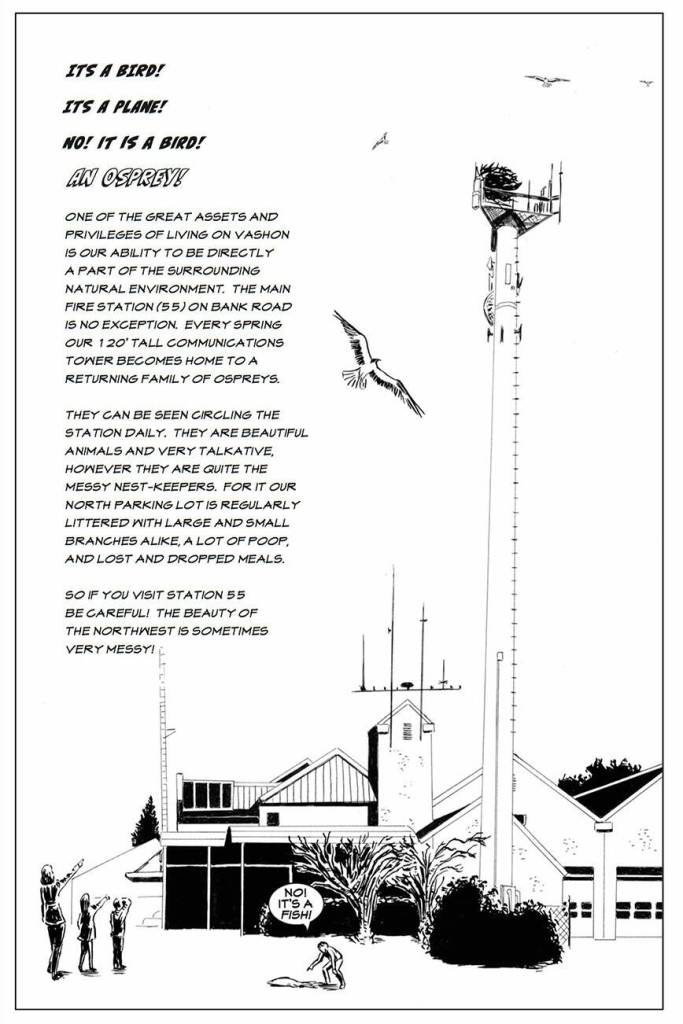
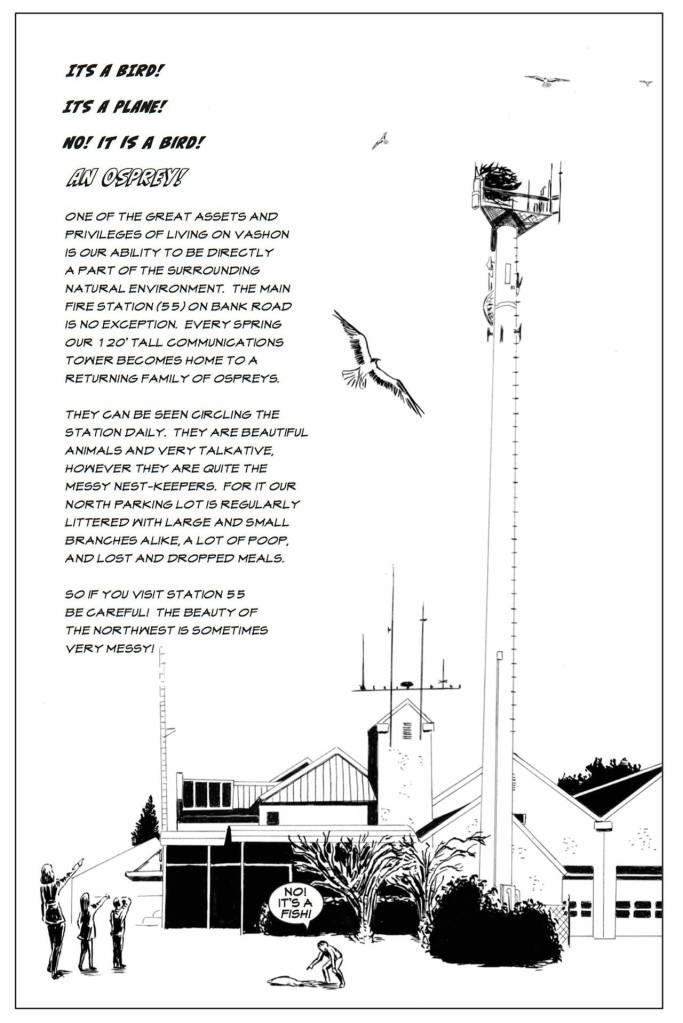

Vashon Fire Chief Charles Krimmert hopes to welcome a pair of migrating ospreys back to their home on Vashon in just a few weeks, but there’s a hitch: the birds’ large nest, perched atop a 120 foot-tall communication tower at the fire station, was torn down a few months ago by subcontractors working on an AT&T project involving the tower.
In a phone interview, Krimmert said that the removal of the nest was not authorized by the fire district and that he believes it should have required permitting from the Washington State Department of Fish and Wildlife since osprey are protected under the Migratory Bird Treaty Act.
Krimmert said that he has been discussing the situation with experts, and intends to ask his board of commissioners for their support in exploring a possible solution: erecting a new utility pole, on the northern end of the fire station property, where the ospreys could build a new nest.
If Krimmert gets his wish, this will not be the first bid to relocate ospreys on public property on Vashon.
In 2018, an osprey nest atop a field light post located on a path that runs between McMurray Middle School and VHS was relocated to the top of a nearby 125-foot tall Douglas Fir on school property.
The work was accomplished by Tom Otto and Shaun Sears — both certified arborists and experienced tree climbers who work on environmental service projects throughout the Northwest.
Osprey nests, as opposed to eagles or any of the other large raptors native to the Pacific Northwest, can be problematic if they are near public places because the birds have an affinity for building them on top of very tall things, and are not particularly discriminating as to what those tall things are — power poles, cellular towers and light poles are as likely nest spots as trees.
Combined with the use of large sticks and branches that can fall and the osprey’s sanitary nursery habits — they will not soil their nests and even the babies are taught to relieve themselves over the sides — an active nest is a potential nuisance to people who might be in the area. There is also a risk of nests catching fire, if they are perched on cell towers or light poles.
Still, Krimmert said he sees the restoration of habitat for the ospreys as directly related to the fire district’s mission, which states that “Vashon Island Fire and Rescue is dedicated to the protection of life, property, our environment, and each other.”
The birds, he said, are unique predators, pointing out that they often mate for life. The fire station ospreys were also celebrated in the district’s 2019 annual report, he said.