Airport commissioners grapple with pavement problem
Published 1:30 am Wednesday, August 2, 2023
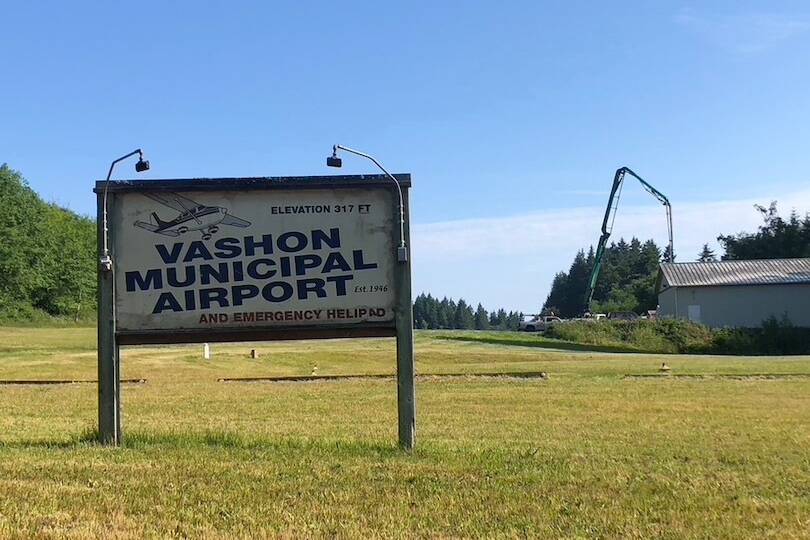


Did you know that the Vashon Municipal Airport is its own “municipality?”
This official designation (see tinyurl.com/2s3pbvmp) is enjoyed by any county, city, town, airport district or port district in Washington State. It makes our airport an independent, self-governing fiefdom in the heart of unincorporated King County — Vashon’s very own Vatican City.
But these last six months or so, being a municipality has caused the airport nothing but grief.
Vashon’s airport has been around since 1946. You’ve probably driven past its 20-acre site on the North side of Cove Road. It has a 2,000-foot-long turf runway and a helipad for emergencies. If disaster strikes, the airport will provide a vital link to the mainland, allowing pilots to shuttle supplies and people on and off the Island.
“It is a huge asset for the community,” according to Truman O’Brien, one of the airport’s three elected commissioners.
The airport is owned by King County Airport District #1 (KCAD#1), which ensures its compliance with FAA requirements and safety regulations.
Airport maintenance is handled by Vashon Air Service (VAS), the association of 43 pilots who currently lease the lots and hangars that line both sides of the airport’s runway.
The troubles began in November 2020 when KCAD#1 approved a VAS member’s request to build a hangar on his lot.
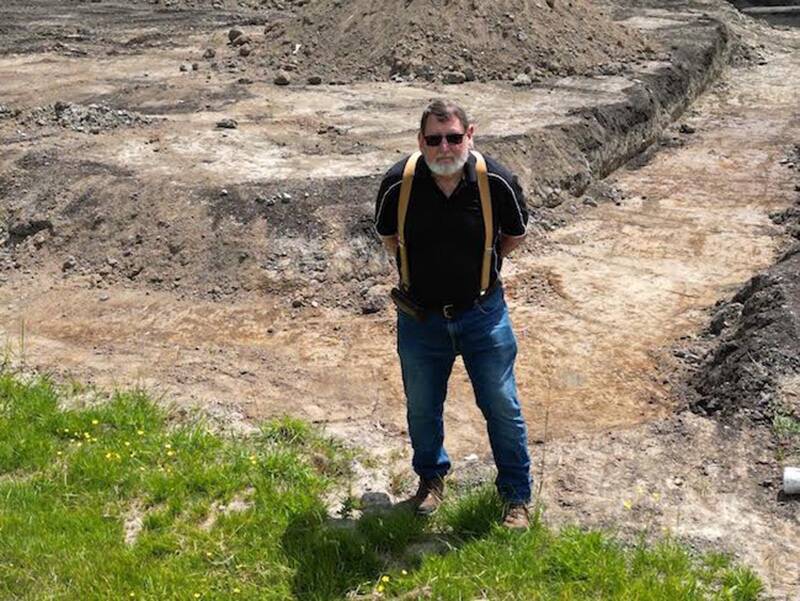
As a Municipality, KCAD#1 —not King County — has the power to issue building permits on airport property. Construction of the hangar in question began in November 2022. That’s when O’Brien and his fellow commissioners discovered that the hangar’s lot had been topped with a layer of Recycled Asphalt Pavement.
RAP, as it is known, is ground-up asphalt from old roadways that are being replaced or resurfaced. The airport RAP probably came from a 12-mile stretch of Vashon Highway that was replaced a few years back.
Because RAP contains toxins such as lead, arsenic, and carcinogenic organic compounds, King County expressly prohibits its use on Vashon: “Recycled asphalt shall not be used in areas subject to exposure to seasonal or continual perched groundwater, in a critical aquifer recharge area or over a sole-source aquifer.” (Title 16, Section 16.82 16.82.100 Grading standards. 4d.)
KCAD#1 never approved any plan to use RAP or to install a 1,500-gallon sewage holding tank, which the VAS member also did. The hangar site sits on the East side of the airport runway, just above Shinglemill Creek.
Airport commissioners were alarmed. “Not only does the airport need to be a good neighbor,” said O’Brien. “We need to be good stewards of the land. That’s very important to us.”
KCAD#1 issued a stop-work order on December 15, 2022.
O’Brien responded with a sarcastic chuckle when asked about what happened next.
For help with the RAP problem, he started at King County’s Department of Local Services and Permitting. Two weeks later, the County prosecuting attorney’s office informed him that since the airport is a Municipality the County had no jurisdiction in the matter.
Translation, according to O’Brien: “‘You’re on your own.’”
Next stop: The State Department of Ecology. O’Brien contacted Dawn Marie Maurer, a facilities specialist for the State Department of Ecology’s Northwest Region. He was referred to Maurer by the island contractor who had applied the airport RAP.
Maurer replied via email: “Commissioner, … there are no state restrictions on the use of recycled asphalt. In fact, it is a very commonly used material in construction as a base layer. I’m afraid that in this case, you have a county code that prohibits a recycled material from being used in a certain way, but without basis in state regulations.”
To be safe, O’Brien checked with Maurer’s boss, the Director of DOE’s Northwest Region Office. He confirmed that the agency, “Has no problem using [RAP],” adding “If you really want the definitive answer you should contact Dawn Marie Maurer.”
The airport considered removing the RAP itself—until it got a $130,000 estimate for the job.
At that point, said O’Brien, “We had two options. We could [sue the hangar owner], go into litigation and leave this stuff exposed to the elements for God knows how long. Or we could come up with a plan to encapsulate it. We took the lesser of the two evils.” Encapsulation.
After lengthy discussions, the hangar owner agreed to contain the threat by pouring a deep concrete footing around the perimeter of the hangar site and covering its RAP-topped surface with a concrete floor.
“Any RAP left outside this encapsulation will be removed from the site,” said O’Brien. The owner also got rid of the sewage holding tank, and installed a French drain around the building to help handle surface runoff. KCAD#1 lifted its stop-work order on May 31. Construction resumed on June 1.
O’Brien has been tracking the work with his drone. So far, so good, he reports.
“I am very encouraged by their effort to mitigate this problem,” he said. In fact, he added, “At our direction, they changed the design to a full wall in order to protect any of the RAP from migrating from under the slab.”
The solution isn’t entirely risk-free. The underside of the concrete capsule will remain unsealed, allowing for the possibility, however remote, that during an especially rainy spell a rising water table could saturate the RAP from below and send any leached toxins down the hillside.
O’Brien acknowledges the possibility but finds it “very unlikely” given the location of the hangar atop a steep slope above Shinglemill Creek. Nevertheless, he added, monitoring drainage from the hangar lot “is certainly something that we’d want to do.”
The Vashon Nature Center already conducts annual surveys of Shinglemill Creek invertebrates.
“We have some baseline water quality data as well as stream bug data that could be helpful in picking up any impacts,” said VNC’s executive director Bianca Perla. “For example, I would expect to see a drop in the pollution-sensitive species if the RAP starts to impact the stream.”
Airport commissioners have also revised KCAD#1’s Rules and Regulations to help prevent a repeat of the incident.
Mitigation aside, the airport RAP case raises two vexing issues.
The first involves King County’s decision to opt out. It is certainly true that the County has no legal jurisdiction over airport land use. But what about the potential threat of toxic effluent flowing onto the adjacent property that is governed by the County?
That land includes the Shinglemill Creek watershed and the Westside Water Association, which supplies drinking water to more than 200 households. Is the County not bound by its own ban on RAP to do something?
“Our service is limited to preventing the placement of potential contaminants, like RAP, to limit environmental impacts,” wrote Jim Chan, Director of the County’s Permitting Division, in an email response.
Asked about monitoring drainage from the hillside, which is within County jurisdiction, Chan explained that, “Permitting does not have monitoring capabilities or resources to perform this level of service.”
Whether Permitting officials would appeal to another County division that does have these capabilities, or engage a private contractor to do the work remains an open question. But, added Chan, “If neighbors of the airport are harmed by airport operations, neighbors could potentially bring a private action against the airport operator.”
There’s an irony in suggesting that neighbors harmed by airport RAP could sue KCAD#1, which the County declined to help deal with the RAP that caused the problem.
The second question concerns the discrepancy between County and State law regarding the use of RAP.
Chan pointed out, “The county recently won a lengthy legal battle over this exact issue involving a Vashon contractor, who sold and spread RAP over many private properties on the island.”
Indeed, in February 2023 the State Court of Appeals, in an unpublished decision, upheld the original October 2021 jury verdict which required that contractor to pay almost $700,000 in damages. In June of this year, the Appeals Court decision, viewable at tinyurl.com/57um68p4, was upheld by the State Supreme Court.
While the appeal was being decided, the very same contractor was spreading RAP at the Vashon Municipal Airport.
This article, first published on June 22 on Vashon Nature Center’s blog site, is part of a series that addresses local water quality topics written by Mary Bruno, Vashon Groundwater Protection Committee member. Find out more about Vashon Nature Center and read the blog at vashonnaturecenter.org.