Green Brief: The next step for reuse on Vashon
Published 1:30 am Thursday, August 28, 2025
![The greenhouse gas values in the Environmental Benefit Bar Chart are approximate midpoints from life cycle assessment studies and Environmental Protection Agency tools. These include EPA WARM [Waste Reduction Model]; EPA (2016) Sustainable Materials Management: Non-Hazardous Materials and Waste Management Hierarchy; WRAP (Waste and Resources Action Programme, UK, 2011) “Environmental Benefits of Reuse” report; UNEP International Resource Panel (2019) Global Resources Outlook; and Geyer, R., et al. (2016) “A Pilot Input-Output LCA of U.S. Waste Management Systems,” Environmental Science Technology. (Courtesy Graphic)](https://www.vashonbeachcomber.com/wp-content/uploads/sites/26/2025/08/40205679_web1_CommentaryBergman-vib-250828-pic_2.jpg?w=1024)

![The greenhouse gas values in the Environmental Benefit Bar Chart are approximate midpoints from life cycle assessment studies and Environmental Protection Agency tools. These include EPA WARM [Waste Reduction Model]; EPA (2016) Sustainable Materials Management: Non-Hazardous Materials and Waste Management Hierarchy; WRAP (Waste and Resources Action Programme, UK, 2011) “Environmental Benefits of Reuse” report; UNEP International Resource Panel (2019) Global Resources Outlook; and Geyer, R., et al. (2016) “A Pilot Input-Output LCA of U.S. Waste Management Systems,” Environmental Science Technology. (Courtesy Graphic)](https://www.vashonbeachcomber.com/wp-content/uploads/sites/26/2025/08/40205679_web1_CommentaryBergman-vib-250828-pic_2.jpg?w=150&h=150&crop=1)

Editor’s note: Green Briefs is a series of commentaries by eco-leaders on Vashon, presented in The Beachcomber in partnership with The Whole Vashon Project.
Granny’s Attic has been the shining star contributing to the reuse economy on Vashon-Maury Island for many decades, thankfully benefiting many health programs.
The Vashon Fix-It Cafe has, for more than a decade, kept hundreds of items in use and out of the landfill for more than a decade. And Mike Urban’s Vashon Island Estate Sales also contributes to the local reuse economy.
Nevertheless, these and other related programs only address a fraction of the potential market or resource on Vashon-Maury.
Zero Waste Vashon (ZWV) is dedicated to turning waste into resource and studying how to fill a reuse gap on the island, starting with construction and building materials.
From 10 a.m. to 3 p.m. Sunday, Sept. 7, ZWV will partner on an event with Seattle’s Second Use to collect a variety of reusable materials at K2’s north parking lot — an effort that help ZWV get a sense of the volume of these collections. Second Use is generously donating 50% of the proceeds from the event to the ZWV’s ReUse program.
Only good condition, resalable items will be accepted. A listing of what is accepted is posted on the ZWV website along with a pre-screening option for items in question. Volunteers are needed to make this event successful. Please consider signing up. Find more information, including the many types of reusuable times being accepted at the event, at tinyurl.com/r7wcxh3h.
Reuse programs provide benefits to communities on four main areas: environmental, economic, social, and systems.
Seattle and Tacoma have Second Use, Goodwill, Earthwise, Habitat for Humanity “ReStores,” and Ballard Reuse; Sequim has Around Again (with a free tool library); Port Townsend has Waste Not, Want Not; Orcas Island has The Exchange; Lopez Island has Take It or Leave It/ReUse Exchange and the ReMakery; and San Juan Island has Community Treasures — each one (and others too numerous to mention here) contributing to a local circular economy and worth a visit.
However, Vashon currently lacks a facility for useful reused materials not accepted by Granny’s Attic.
ZWV continues to look at methods for keeping these materials out of the landfill in a manner that best fits community needs and desires. Environmental benefits include reducing greenhouse gas emissions by avoiding making new products (which is huge for building materials — see chart), conserving natural resources, reducing landfill needs, and lowering pollution due to less extraction and processing.
Economic benefits include saving consumer costs, creating local jobs, and reducing landfill fees. Social benefits include providing increased access to goods, promoting community engagement, supporting local charities, and encouraging creative ways to up-cycle items, turning waste into opportunities.
Systems benefits include building local resilience by reducing dependence on global supply chains and transitioning to the circular economy.
In short, reuse helps the climate, saves money, supports jobs, and strengthens communities. The best reuseable items are durable, resource-intensive to produce, and/or hard to recycle. They are often built from better materials than are currently available.
Reuse can provide greater net benefits than recycling because the energy and resources invested in a product are preserved, not destroyed. And the items stay on island with only local transport involved. Many potential models are possible, ranging from a reuse store with minimal refurbishment, to a “ReMakery,” perhaps partnering with local craftspersons. We welcome your ideas on a reuse model and location at info@zerowastevashon.org.
The circular economy is globally gaining traction due to the increasing pace of natural resource use, the risk of scarcity of some resources, and its environmental, social and economic benefits noted above.
The shift from a linear economy — where products, once used, are discarded — to a circular economy, where products and materials continue in the system for as long as possible, contributes to a more sustainable future. Thanks for contributing to this transition on Vashon-Maury Island.
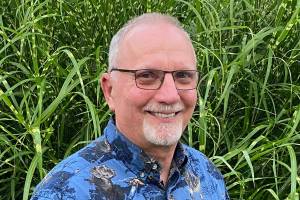
Steve Bergman is a geologist, Zero Waste Vashon board member and Whole Vashon Project advisor.