The summer the bees saved me
Published 1:30 am Tuesday, March 24, 2026
My journey with bees started in a garden more than a decade before I met the Vashon Island Beekeepers Association (VIBA). Though the garden wasn’t truly mine — it was a rental that I nurtured while I lived there — I planted beautiful roses, lilacs and fruit trees.
I can’t take credit, however, for the crown jewel of the garden: a row of lavender along the front walk. Old, lush, established bushes that burst with purple blooms and perfume every summer, the bees loved them just as much as I did.
That particular summer, the garden nurtured me. I’d suffered a grievous injury that left me relearning how to walk, talk and get dressed, among many other basic and not-so-basic functions of independent living. While traumatic brain injury left me with various gifts that keep on giving, including seizures, it also gave me bees.
Unintelligible and barely mobile even with a cane that summer, there was little I could do beyond sitting around and crying. But there was one thing that brought me joy and took me away from my couch imprisonment: the bees on that lavender.
I could get outside, sit on the concrete and watch the bees. Listen to them. Hear their individual voices. Imagine their lives. Feel the breeze of their flight on my skin as they worked. I could smell the lavender and feel the warmth of the sun. This soothed me like nothing else did.
Observing their bee business transported me away from my situation. In my head, I was my own George Page from “Nature,” loquacious and smooth. And since bees only say “Bzzz!,” my not talking didn’t make things awkward like it did with people.
They didn’t care that I was silent to avoid the effort of dealing with my speech disfluency and frequent aphasia. All I had to do was think of stories about their lives and listen to them singing to me in the soft summer wind.
That comfort, in such difficult times, is unforgettable to me. I spent hours simply being present with the bees in my garden, healing.
It was then that I decided that somehow, I would become a beekeeper someday. I persisted.
On a cool morning in early spring 2023, nervous, I stood unaided in a small circle of people I’d never met: beekeepers.
To get there, I had to graduate from years of therapy, learn a new field, get a job and with generous help from my parents, finally become a homeowner where I had support here on the island. The last piece of hard work required to get me to that bee meeting was asking for transportation. Lacking independence as an adult is rough. I almost said nothing and surrendered my dream because asking for help was so hard. But that tiny bit of joy in that faraway garden was a furious little buzz that could not be silenced.
In an apiary for the first time in my life, the VIBA members went around the circle, offering introductions and sharing our backgrounds with bees.
I briefly told them my story and then added, “I want to save the bees. I’ve read that they’re in trouble. I don’t really care about honey, I just like bees!”
One of the founding members, Annie Myers of Vashon Island Honey Co., patiently explained a few things — to paraphrase: Honey bees aren’t native to North America.
When people say they want to save the bees, what’s really at stake are human agricultural practices. The beekeeping industry does have a problem, and honey bees provide pollination for a lot of what we eat. When we take good care of honey bees, we’re really saving our own food supply. Native bees are in trouble because of habitat loss, including monoculture, human sprawl, climate change and of course, pesticides.
Feeling a little foolish, I shrugged. I still loved bees.
But something was wrong. Some of the faces around me looked excited for a new bee season to start, but others were long and somber. The sense of fatigued inevitability was heavy in the air. With introductions complete, they laid it on the line: The club was about to disband because of low membership and a lack of anyone to do the work of keeping it alive.
Not if I had anything to say about it. There was no way I had come this far for nothing.
Heart pounding, I spoke up: “I’ve never kept a bee in my life and I have no idea what I’m doing, but what do you need?”
In short, Theo Eicher, another founding member, explained that everyone hated Facebook and they needed someone to do the basic work of running an organization. They had been planning to fold the club that day after almost 20 years.
I said, “You need help with Facebook? I can do that. No problem. But, uh, I need a ride to meetings because I can’t drive, if the club is willing.”
“Congratulations, madame secretary,” Theo smiled. Maybe the first smile I’d seen so far.
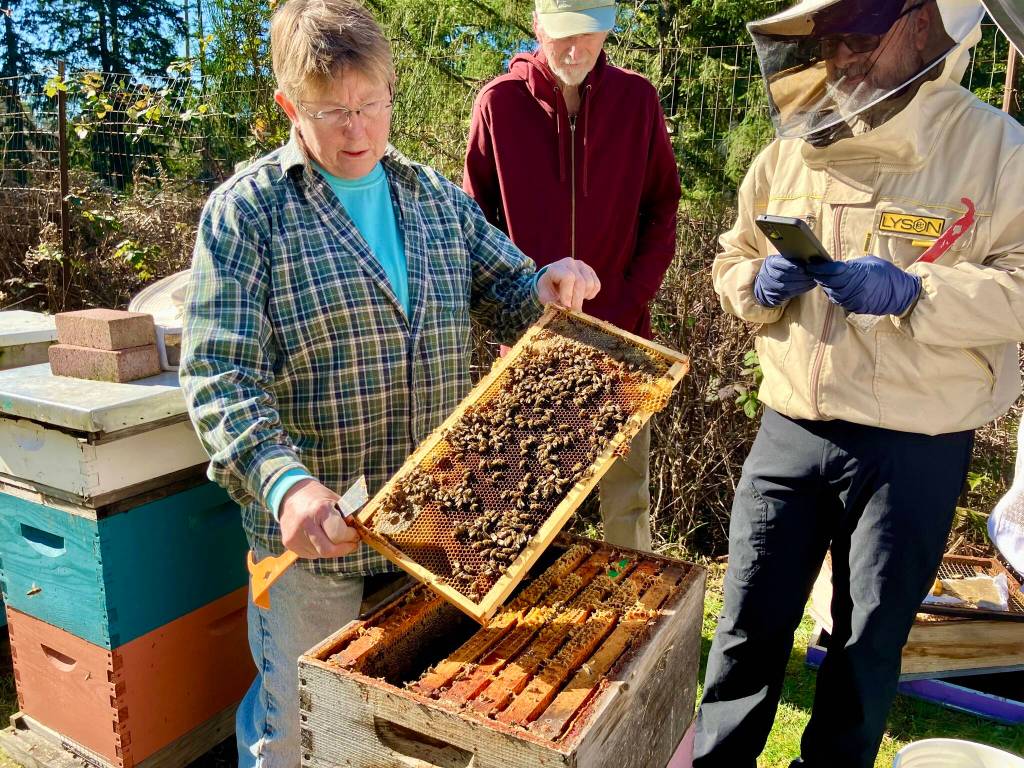
Then the magic started. The next thing I knew, I was standing next to Annie with my head in a beehive, listening to her smooth southern tones as she narrated her way through an inspection. The bees were everywhere in a buzzing swirl of honey-sweet wonder, coating my jacket and my hands, their tiny little feet tickling me. The warm scent of the beehive filled my nose. Enchanting.
My senses and heart were full, and I didn’t feel lonely. As some know well, disability is isolating. It’s hard to make friends on the island without being able to drive. I had been a bee without her colony for too long.
That autumn, the club elected a newbee to be its president.
A bee club is like a beehive: a superorganism made up of individuals who, in isolation, could not continue a colony. A honey bee colony only exists so long as it has sufficient bees and a queen to support it. Lack either of those, and the hive dies. Just so with a club. Small colonies take care and feeding to become rockin’ hives and survive winters.
Together, we have taken on growing the club to continue this educational resource and keep the community alive. Our members work hard for the good of the club and to care for the bees at the teaching apiary. The board does what I refer to in my head as the “adulting” the club needs to function.
Keeping the hive alive
Since 2023, the club’s active membership has approximately tripled, and our Beginning Beekeeping class this year has as many newbees as there were total club members when I arrived. The teaching apiary has gone from one hive to four. We even had a honey harvest for the first time since my arrival. A colony working together.
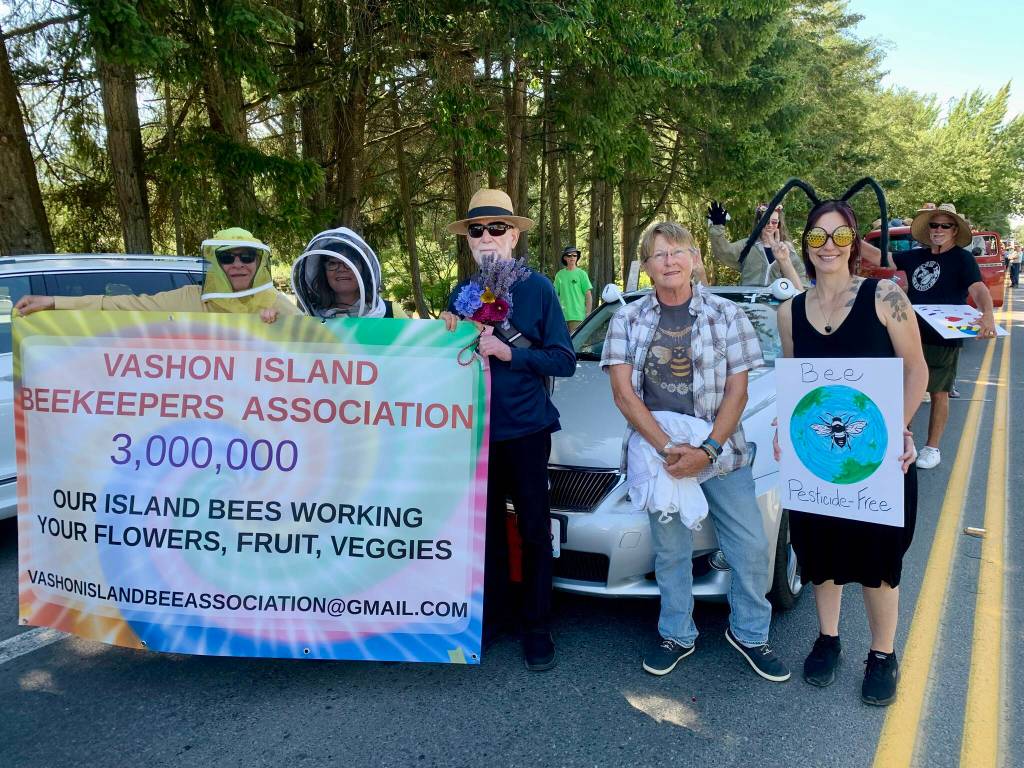
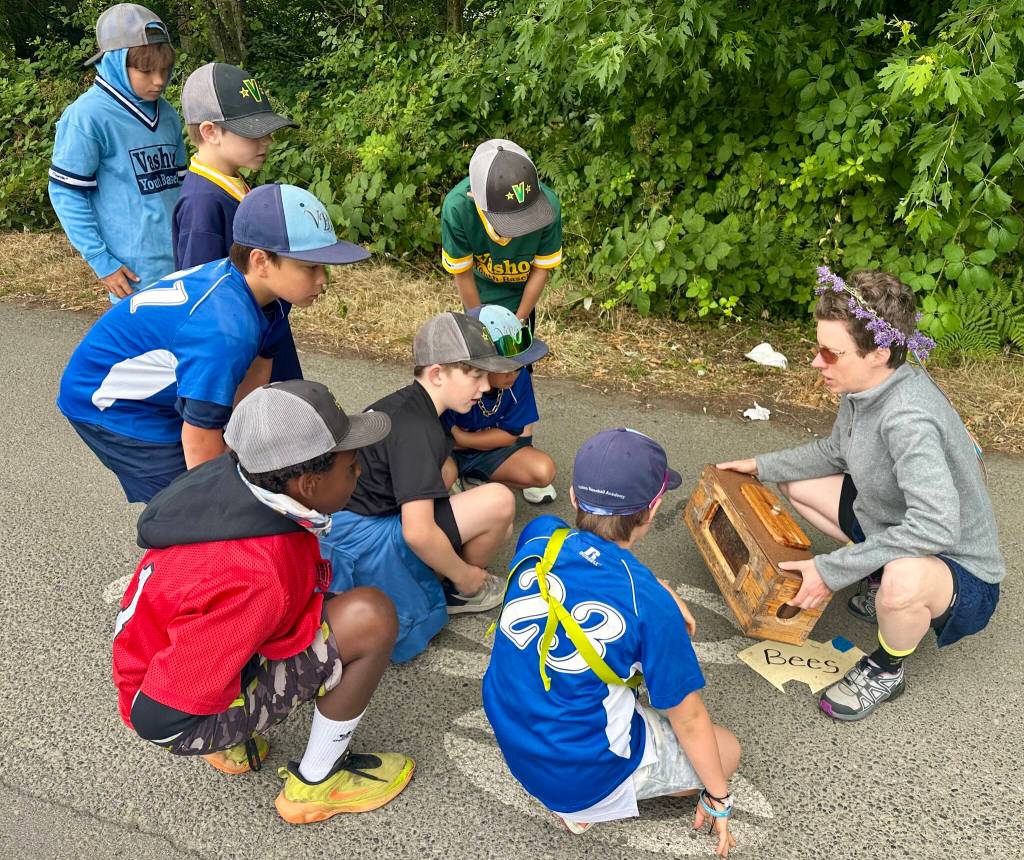
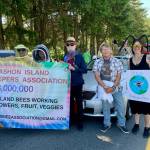
I hope you’ve seen us around with our bees in the Strawberry Festival parade or at the Pride Street Dance. VIBA is a vital part of Vashon’s agricultural tradition, and providing educational opportunities isn’t just fun — it’s essential for the health of our farms, communities and all pollinators on the island, not just honey bees.
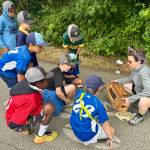
In addition to offering the Beginning Beekeeping class, we assist our beekeepers with getting their hives set up, finding their bees, seasonal care of their colonies, mentoring, pest control, overwintering and honey harvest. We use our teaching apiary as a classroom for ongoing beekeepers while continually teaching the basics to new hive members.
Accessibility is important to us. If you want to be a beekeeper, you don’t have to be able to afford to keep bees. Start-up costs are $1,000 to $1,500, plus ongoing maintenance costs. We have club members who participate fully by helping maintain the club apiary and adopting our club bees into their hearts. Bee owners and beekeepers are not necessarily the same thing.
And you can start at any time of the year. We teach through all the seasons at our Saturday meetings by caring for our bees at the apiary. However you would like to participate, there is always a way to contribute. Yearly dues are $35 per individual or $50 per family, but if that is an issue, talk to us and we’ll figure it out. So long as you can be safe around the bees, follow directions and remain calm, you can be a beekeeper. We absolutely do accept children who are ready as club members.
You can also donate. We happily accept equipment in good, usable condition as well as monetary contributions. This time of year, newbees especially benefit from hand-me-downs.
If you regularly get honey bee swarms, the club would love to place traps and adopt those colonies. When a swarm does arrive, you can also get ahold of us by email or on Facebook for swarm collection, even if we didn’t place a trap. Swarms are unlikely to survive in the wild because of a parasite called a Varroa mite, so it is best if a beekeeper can adopt them and manage the parasites.
Safety first, always, so keep that in mind: We don’t do cutouts, swarms more than about 15 feet up or any other kind of insect removal. We take newbees on swarm calls for teaching purposes, too.
You may also be looking for a beekeeper to put hives on your property for your garden or farm. There are people who would like to keep bees but can’t afford it on their own and/or lack their own space, whom you could sponsor. If that intrigues you, reach out and we will try to connect you with a would-be beekeeper looking for that possibility.
Our interconnection is broad and deep. The whole island needs our bees, and all pollinators, for our gardens, farms and forests. The pollinators depend on our stewardship for their survival.
All those years ago, I needed the bees to help me face a difficult healing process. Here, the bees saved me again, this time from loneliness.
As much as VIBA needed my energy, I needed it, too. I need my beekeepers, my bees and my community. Human bee-ings aren’t meant to live life separated from one another; we all live interdependently. Just like honey bees. As hard as it is for me to admit, independence is a myth. Yes, I hate needing rides to participate in island life, but the island needs me, too, and there is so much I can contribute, disabilities and all. So ask for help — you never know what it could lead to.
As your gardens grow on this island, reach out with pollinator questions, keep the buzzlings in mind with your plans, and may they sing to you all the summers of your life.
Contact us by email or on Facebook to join the club at vashonislandbeekeepers.info@gmail.com. Facebook group: Vashon Island Bee Association.
Barbara MacDonald is the VIBA President.