Kuni Mukai’s fight for freedom
Published 1:30 am Wednesday, April 22, 2026

Over a century ago, Japan possessed one of the highest divorce rates globally. Only men could initiate a divorce during that period. Upon entering the marriage, the woman was obligated to forfeit her individuality and adhere to the regulations set by her husband and in-laws.
The primary cause of divorce was the wife’s failure to adhere to her husband’s family traditions, unlike in America, where the reasons often involved cruelty and insufficient support. Moreover, the divorce process in Japan did not require judicial intervention, unlike the court-based procedures customary in America.
In Japan, a man only needed to write a letter to start the divorce process with his wife. Subsequent to her divorce, the Japanese wife did not receive alimony and relocated to reside with her parents or brother. The husband maintained custody of the children, denying the ex-wife visitation rights.
The Meiji Civil Code of 1898, which established the principle of familialism over individual interest, resulted in a substantial decline in the divorce rate.
The new law granted the patriarch paramount authority and power over the family members and decision-making. Males controlled the family’s wealth, housing arrangements, marriage and divorce policies, and inheritance. This development, in conjunction with the Japanese people’s newfound recognition of the sanctity of marriage and the disgrace of divorce, was a precipitating factor in lowering divorce rates.
In general, women were expected to obtain their husband’s consent for divorce and faced significant obstacles when attempting to pursue legal action for divorce.
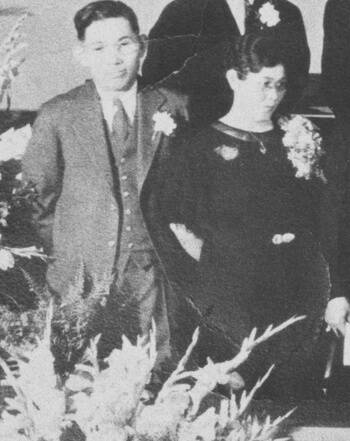
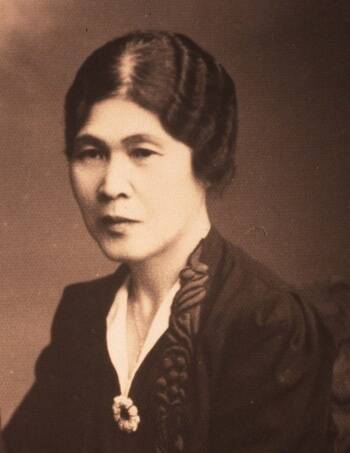
Kuni Mukai (Nakanishi) is the subject of this article, which investigates her divorce and the purported domestic violence she endured.
Kuni was born in Japan on August 13, 1881, and arrived in the United States in 1903. On June 2, 1939, Kuni Mukai filed for a divorce and temporary restraining order against her husband, Ben Denichiro Mukai, alleging domestic violence and adultery. Richard Ward, Kuni’s attorney, handled her divorce proceedings in the King County Superior Court of Washington.
The court was unaware that Kuni and B.D. Mukai had first tied the knot in San Francisco on February 11, 1907. Nevertheless, the marriage was short-lived, and Mukai wed Kuni’s younger sister, Sato, on March 16, 1914, in Tacoma, Washington. Sato and Mukai had a son, Masahiro (Masa) Mukai, born on April 10, 1911, in Vashon, Washington, situated in the Puget Sound of Washington. Sato succumbed to TB on May 1, 1921, in Vashon. Kuni Nakanishi and B.D. Mukai married for the second time on February 20, 1925, on Vashon Island.
Since their second marriage, Kuni and B.D. Mukai maintained farms on Vashon Island, farming, packing, transporting, and selling strawberries, currants, loganberries, and other fruits and berries. They owned all of the necessary machinery, tools, equipment, property, and a packaging plant to run the business. They owned a home, a Lincoln Zephyr, bonds, securities, and cash. The net worth of the property exceeded $60,000, and the company generated more than $10,000 in profit. The business was run in partnership with Masa Mukai, B.D. Mukai’s son.
Kuni claimed in her divorce and temporary restraining order petition that Mukai had mistreated her during their marriage, making her life burdensome. Mukai had frequent contact with another lady for significant periods of time prior to the start of these divorce proceedings, and he funded her living expenses. He told Kuni that he disliked her, was uninterested in her, and preferred the company of the other woman.
Mukai had demonstrated animosity, contentiousness, and violence. Recently, he had often struck and beaten her with considerable violence without any provocation from her side. Mukai’s rhetoric had been harsh and abusive to an intolerable degree. The circumstances made it difficult for her to live with him as his wife or in any other capacity.
Mukai had threatened to liquidate all communal movable property and assets and relocate them outside her reach and the jurisdiction of the courts. He stated he could borrow more than $30,000 in cash for harvest expenses in the name of the partnership, and the funds would be under his sole control. Mukai would harvest, pack, and ship approximately 4,000 barrels of fruit and berries to a value of $115,000 prior to the divorce settlement. He would ensure that the proceeds of fruits and berries were beyond her control.
Kuni petitioned the court requesting $200 monthly for living expenses. Furthermore, all her legal bills should be covered. Mukai was also requested to bring and produce all books, records, memoranda, documents, and instruments that showed income and profits. A temporary restraining order was sought to prohibit Mukai from disposing of, squandering, or encumbering any asset or property.
Additionally, he would be barred from borrowing or acquiring funds on behalf of himself or the company. He was prohibited from harming, accusing, or otherwise molesting her, as well as from visiting her residence. Kuni asked the court to be granted a just and equitable share of the property and assets.
Judge Calvin Hall deliberated on Kuni’s divorce petition. Richard B. Ward, Kuni’s counsel, represented her in court. B.D. Mukai never appeared in court, either in person or with legal representation. Deputy Prosecuting Attorney Evangeline Starr represented the State of Washington.
A deputy state prosecutor could show up at a divorce hearing if public interests are at stake, such as cases involving violence, abuse, or violations of court orders. Judge Hall evaluated the testimony of Kuni and her witness in court and scrutinized the property settlement agreement from July 1, 1939. Judge Hall granted Kuni Mukai an interlocutory divorce on August 10, 1939.
Numerous newspaper pieces were published about Kuni’s divorce. As reported in the Shin Sekai Asahi Shimbun article, “Seattle Japanese Sued for Divorce Infidelity,” published on July 2, 1939, “The local Japanese community, which has seen only a few divorce proceedings among its members over the last several decades, witnessed another case yesterday when Mrs. Kuni Mukai of this city filed for divorce citing infidelity and sought $200 in monthly alimony (Shin Sekai Asahi Shimbun and Hoover Institution).”
It is noteworthy that although all newspaper articles regarding the divorce addressed the Mukais’ wealth, none referenced the purported maltreatment. At that time, the public perceived domestic abuse as a private familial issue that did not necessitate external legal intervention.
During that period, the small percentage of Japanese immigrants who sought divorce was due to a variety of factors, including the desire to maintain the family unit, even in adverse circumstances, to prevent the family from being brought into disrepute. Furthermore, Japanese immigrant women encountered difficulty in initiating a divorce due to their upbringing in a patriarchal society, where males primarily exercised control over family wealth, property, marriage and divorce policies, and domestic customs.
In her divorce petition, Kuni asserted that she had experienced cruelty from the moment she entered into her second marriage with Mukai. The extent of the abuse and violence escalated toward the conclusion of their marriage, following Mukai’s affair. Kuni’s upbringing was in a patriarchal society, where men are in command and revered, which may have contributed to her decision to remain in her marriage for many years despite the abuse she endured.
The cruelty became intolerable at one point, and she instigated a divorce in America, a feat she would not be able to achieve easily in Japan. Kuni was successful in acquiring a portion of her husband’s assets through a divorce. Kuni subsequently helped in the management of the company for an extended period.
Conclusion
Kuni exemplified a Japanese female immigrant who attained her freedom by divorcing her husband, who allegedly subjected her to verbal and physical violence. Notwithstanding the stigma and shame associated with divorce in Japanese culture, she successfully secured a share of her husband’s property and assets. She successfully transcended the patriarchal culture dominated by men and progressed toward an improved future.
Dr. David Perley is a Yonsei (fourth generation) Japanese American whose grandparents, Pauline and Dan Sakahara, operated a 69-acre berry farm on Vashon Island before being imprisoned in concentration camps during World War II. He conducts research and shares the history of the Japanese community on Vashon through the Vashon Japanese Presence Project and Discover Nikkei.
This article was first published in DiscoverNikkei.org, a project of JANM on March 30.