One tire at a time, volunteers restore island beaches
Published 1:30 am Wednesday, April 29, 2026
They go out in the rain. They haul rubber. And they say they’re just getting started.
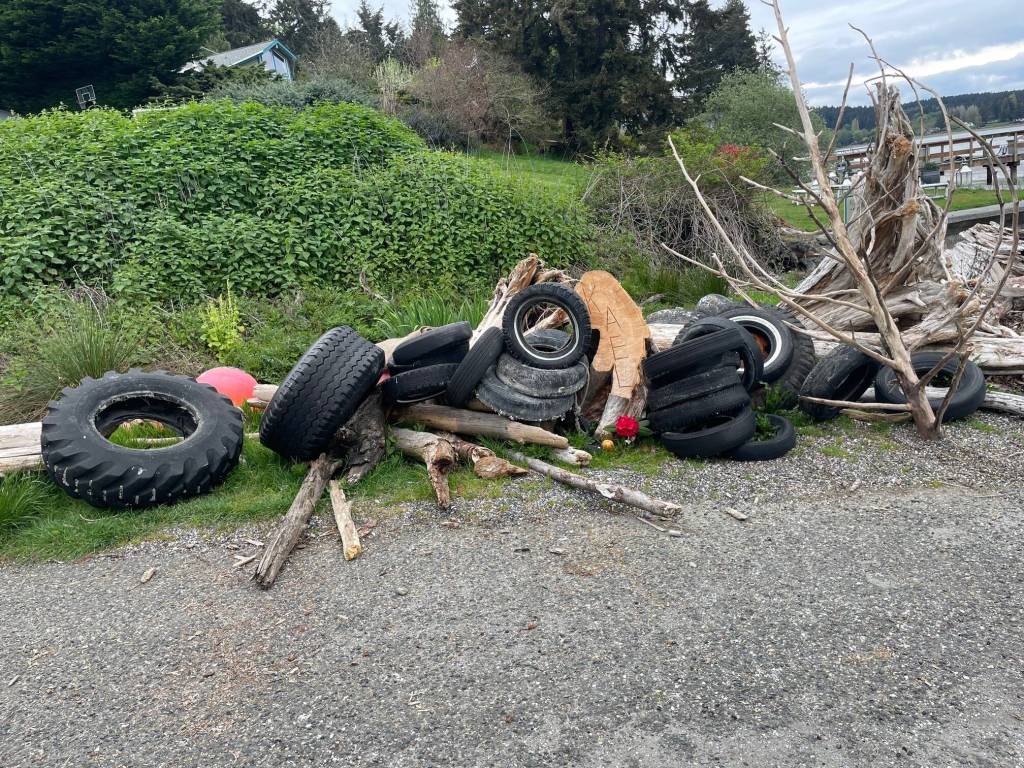
Volunteers with the Vashon Rotary Club, Zero Waste Vashon, the Harbor School and neighborhood activists have removed 22 passenger tires and four truck tires from Vashon beaches so far in 2026.
It’s part of an ongoing effort to strip what organizers call a rapidly evolving environmental hazard from the shores of Puget Sound as more tires get detached from the tire reefs on the seafloor.
One final collection day is planned for Saturday, May 16, next to the Jensen Point Boat Dock.
Steve Bergman of Zero Waste Vashon said the effort has already revealed the scale of the problem. After November and December storms, volunteers found 14 previously buried tires along south Tramp Harbor, east of Portage, alone.
“Our goal this year is to exceed the 127 tires we removed last year,” Bergman said.
He recommends walking the beaches at low tide as the best way to spot tires still buried beneath the surface.
Rich Osborne, a Vashon Rotarian helping to lead the effort, says the stakes go well beyond aesthetics.
“Every tire that we remove from the beaches improves the health of all of us,” Osborne said. “Each tire creates a lethal stew — harming or killing coho salmon, fingerlings, clams, oysters, mussels and all the other inhabitants of our ecosystem. But not just them. It is us, too.”
About 50 years ago, many tens of thousands of tires were originally placed in Puget Sound as artificial fish habitats, a practice long since discredited.
Scientists studying tire-based artificial reefs have concluded that tires are not suitable reef material and, where already deployed, should be removed to prevent physical damage to natural habitat and reduce related biological impacts.
The concern goes beyond structure. Researchers have identified 6PPD-quinone — formed when a common tire preservative reacts with ozone — as a highly toxic tire-derived chemical linked to coho salmon deaths in urban waterways.
In an April 2026 OPB/KUOW report, Tanya Williams of the Washington Department of Ecology said placing a single drop of the chemical in an Olympic-sized swimming pool would kill at least half the coho salmon in that pool.
The EPA has also taken notice. In 2024, the agency published acute freshwater aquatic life screening values for 6PPD and 6PPD-quinone under the Clean Water Act, citing the chemicals’ short-term toxicity to freshwater species, especially coho salmon. The screening values are not legally binding regulations.
Those toxins don’t stop with fish. Through a process called bioconcentration, chemicals absorbed by small organisms accumulate as they move up the food chain — to larger predators, and ultimately to humans. Osborne says that’s the part people tend to miss.
“You have all seen the cartoon that shows an ever-increasing size of fish eating their smaller neighbor,” Osborne said. “At the end of the cycle, there we are — eating from the top end of the food chain with gusto.”
Osborne draws a parallel to a battle already won. For decades, he said, expired pharmaceutical medications — including common pain relievers — were routinely disposed of in bulk into Puget Sound, accumulating in the food chain to the point that local bottom fish carried trace concentrations of the drugs in their tissue. The practice eventually drew legal and political pressure.
“We had the political will to tell the manufacturers ‘Stop it,’” he said. “Quite a few lawsuits later, they did.”
The tire removal campaign is a partnership between Vashon Rotary and Zero Waste Vashon. Bergman and Osborne credited John Burke, George Spano, Kim Richards, Greg Simmons, Harbor School students and a broad contingent of Vashon neighborhood activists for the hands-on work.
Organizers say new tires continue to surface as tides and erosion shift the shoreline, and they are asking island residents to help locate them. Anyone who spots a tire on the beach is asked to photograph it, note the GPS location and report it to steven.bergman@zerowastevashon.org.
With an estimated 15,000 people on the island during summer months, organizers believe community awareness could dramatically accelerate the cleanup.
“Imagine that we remove 150 tires a year,” Osborne said. “Think how much healthier we all will be. Think of all the health-care dollars we can save by getting the toxic chemicals out of our food stream.”