The legacy of the late Vashon artist Catalina Quinn Colwell
Published 1:30 am Tuesday, May 19, 2026
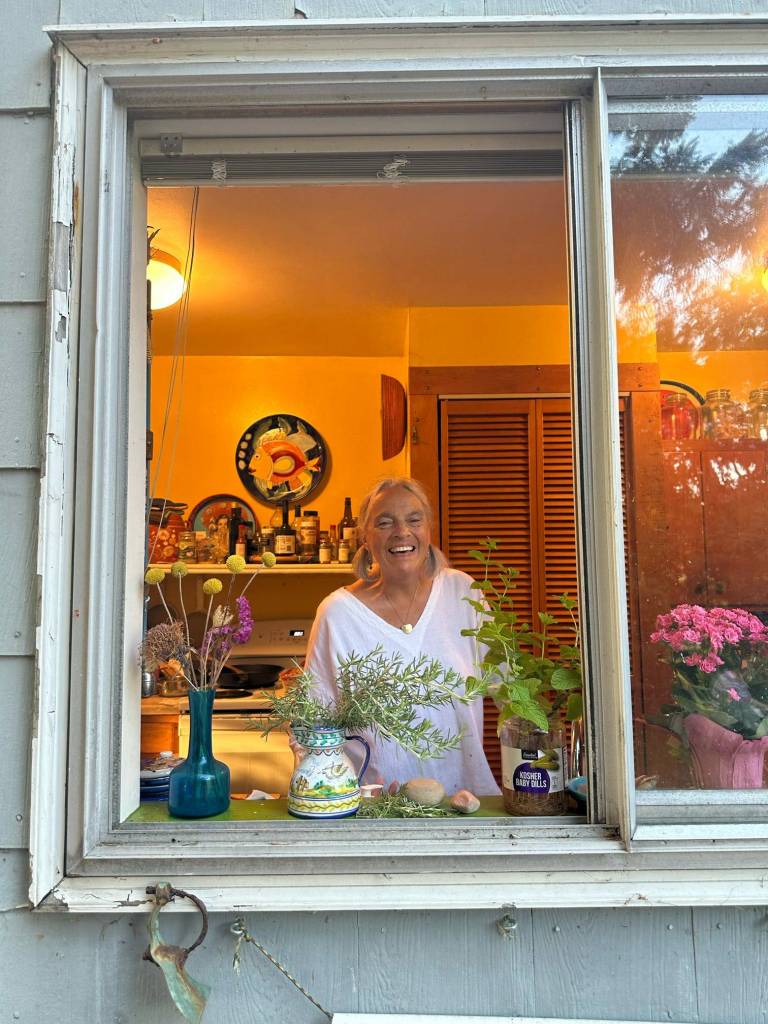
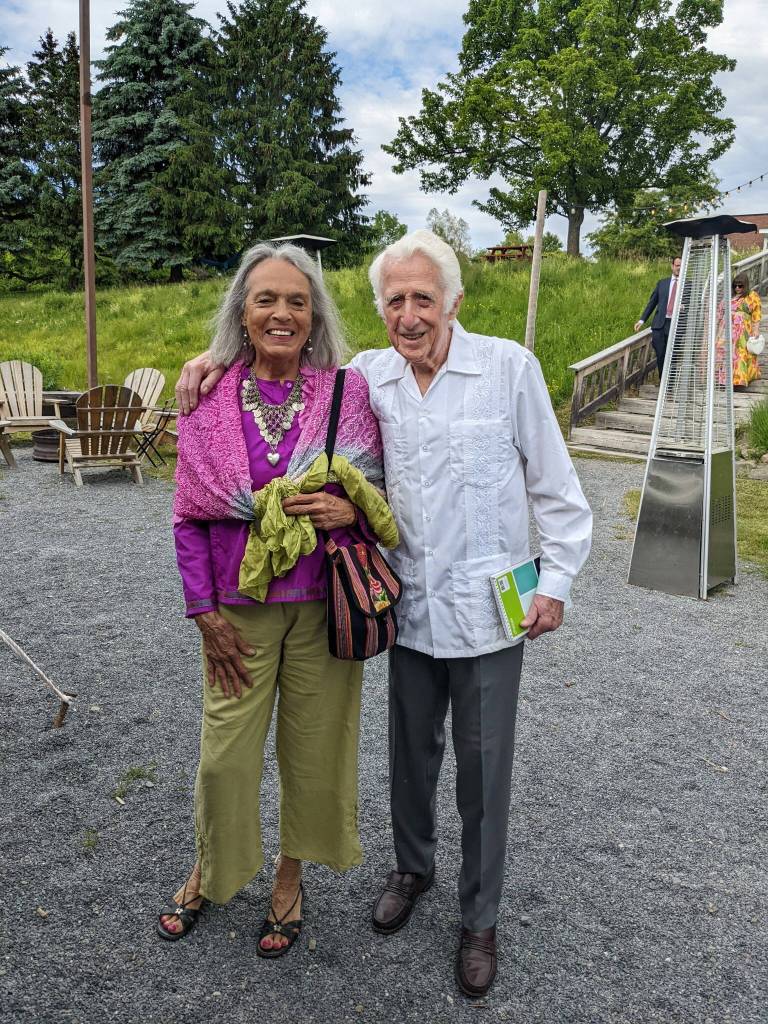


Island artist Catalina Quinn Colwell’s art was rooted in her Indigenous Mexican-American heritage, but her family said that motherhood is what gave it life.
Catalina, a longtime islander who lived on Vashon until her death, often spoke about family as a source of inspiration for her art, according to her son Wade Antonio Colwell. Throughout her life, she created work that her children said helped them connect with their own heritage.
“She really did make that art for her and her family and for the spirit of love,” Wade said. “It was just something that came out of her, the center of her humanity being so widely understood as being such a compassionate, caring, extremely intelligent, but more than intelligent, a wise person.”
Catalina died Feb. 14, at the age of 83, surrounded by her loved ones at her island home, leaving behind a legacy of acrylic paintings, hand-crafted recycled sculptures, and life-sized murals.
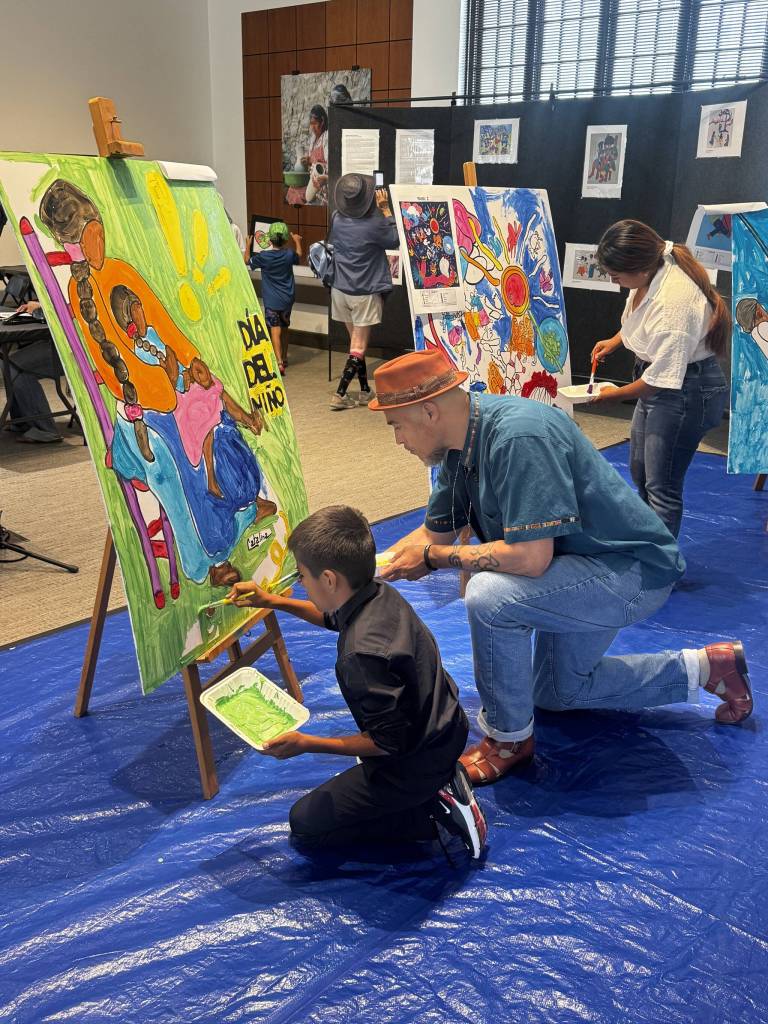
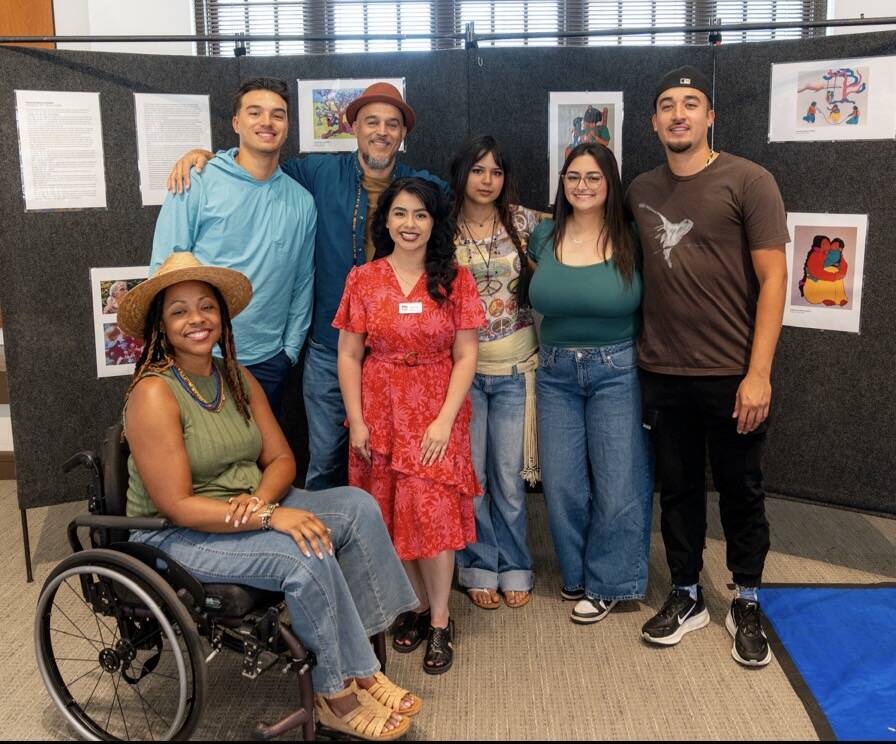
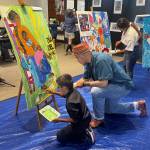
After a lifetime of creating art, Catalina’s work appeared in a museum for the first time in 10 years on April 26 at the Heard Museum in Phoenix as the highlight of their Día del Niño event.
Día del Niño is an annual event celebrating children, and the Heard creates a space for families to engage with art. This year, they honored Catalina.
“While guests were in, working on the artwork, they got to read about her and see her work and read about her history, her legacy, the way that her work embodied this very sacred and secular experience of being a mother,” said Angélica Blanco, the manager of family engagement and learning programs at the Heard Museum.
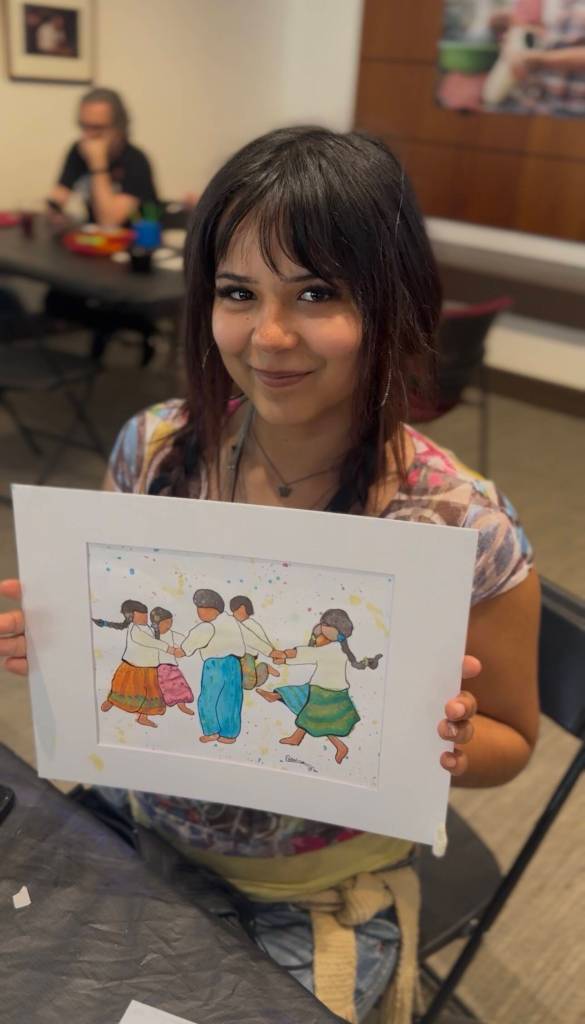
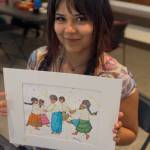
On display at the museum were a variety of Catalina’s best works, and at the center of it all were three panels — Mi Cariño, Sueños de Tucson and Children on a Swing.
These panels showcased different scenes of childhood and family — braiding hair with a mother, dreams, and swinging. While viewing the originals, museum guests were tasked with recreating the art using a paint-by-number setup.
“Let’s have something where all children and families can contribute and can be an artist like her for a day,” Blanco said, “and have something that is made together in unity with our community.”
Catalina grew up surrounded by artists. Her father, Anthony Quinn, was the first Mexican-American actor to win an Oscar. Her mother, Katherine De Mille, was an actress. Her grandmother, Manuela Oaxaca, also known as Neli, helped raise Catalina and told her about her life in Mexico, Wade said.
Between the three of them, Catalina’s love for art grew. Catalina met her husband, Paul Colwell, a songwriter & co-founder of Up With People and retired Vashon school teacher, in Switzerland in 1961 while Paul was on tour with his brothers.
Catalina and Paul traveled the world together, bringing music and art to people in over 50 countries. When they eventually settled down in Arizona, the two raised their family to foster that spirit of art.
“There was artistry in the way she mothered,” Wade said.
Catalina’s art was not limited to framed pieces or gallery walls. In the homes where she raised her children in Tucson and, later, on Vashon, where she lived for the last 20 years of her life, her creativity spread across doors, rooms, and everyday spaces.
Every door, Paul said, every room, became part of a living mural.
“She had a sense of wanting her way of being in the world to be unique and original and colorful,” Wade said.
Among her most unique works, according to her family, are her barrio dogs. Each one is different, crafted with her husband and inspired by the colors, textures and street life of Tucson and Mexico.
Barrio is Spanish for “neighborhood,” and each dog represents the culture of Mexico’s barrios. Carved from recycled wood, Catalina created dogs a foot tall, colorfully decorated like the Oaxacan Mexican art they are inspired by.
Catalina first got into creating carved animals when she moved to Vashon in the early 2000s. The island’s artistic spirit inspired her wood art, Paul said, and the island encouraged her to pursue it.
A glass table with legs made of barrio dogs was displayed on Vashon in 2013 at Arts in the Alley.“It’s her own creation, I don’t think I’ve ever seen anything quite like it,” Paul said. “She was colorful in her spirit. She was beautiful inside and out.”
Catalina did not create art for commercial success. She created it for herself and her family, building a unique, colorful world around them.
“By keeping her art alive, it keeps her spirit alive,” Wade said. “With her passing, there’s this sense that even though I can’t catch her on the phone, she’s actually with me here.”
The showcase at the Heard Museum is just the beginning of keeping Catalina’s art alive, Wade said.
Addie Stoterau is a journalism student at the University of Washington.