Through his lens, Ray Pfortner teaches others to see
Published 1:30 am Tuesday, May 26, 2026
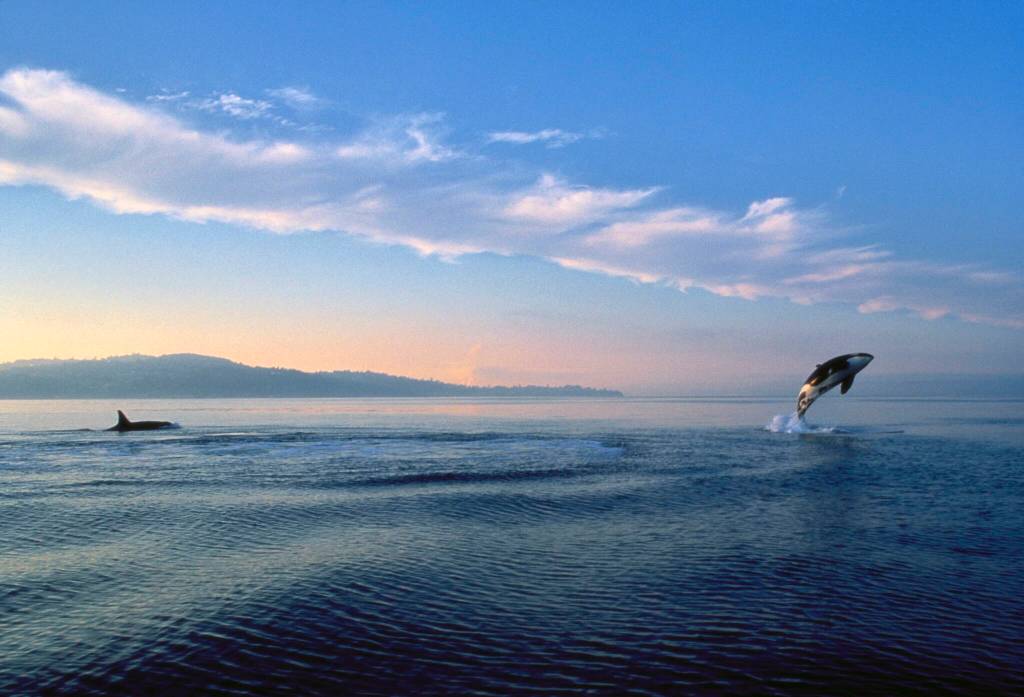


On a misty morning in 1994, Ray Pfortner stood on the gravelly shore of a Vashon beach with his camera in hand. The quiet morning broke when a black dorsal fin exhaled through the surface of the Salish Sea yards away.
This moment resulted in the shot of a lifetime for Pfortner, a Vashonite who provided the scientific evidence (tinyurl.com/WA-Department-of-Ecology) against a proposed gravel pit in the month of September where scientists believed orcas were not present during that month, allowing industries to freely extract gravel from ecosystems nearby.
Decades later, that same J-Pod breach image remains as a reminder of the importance of preserving the island.
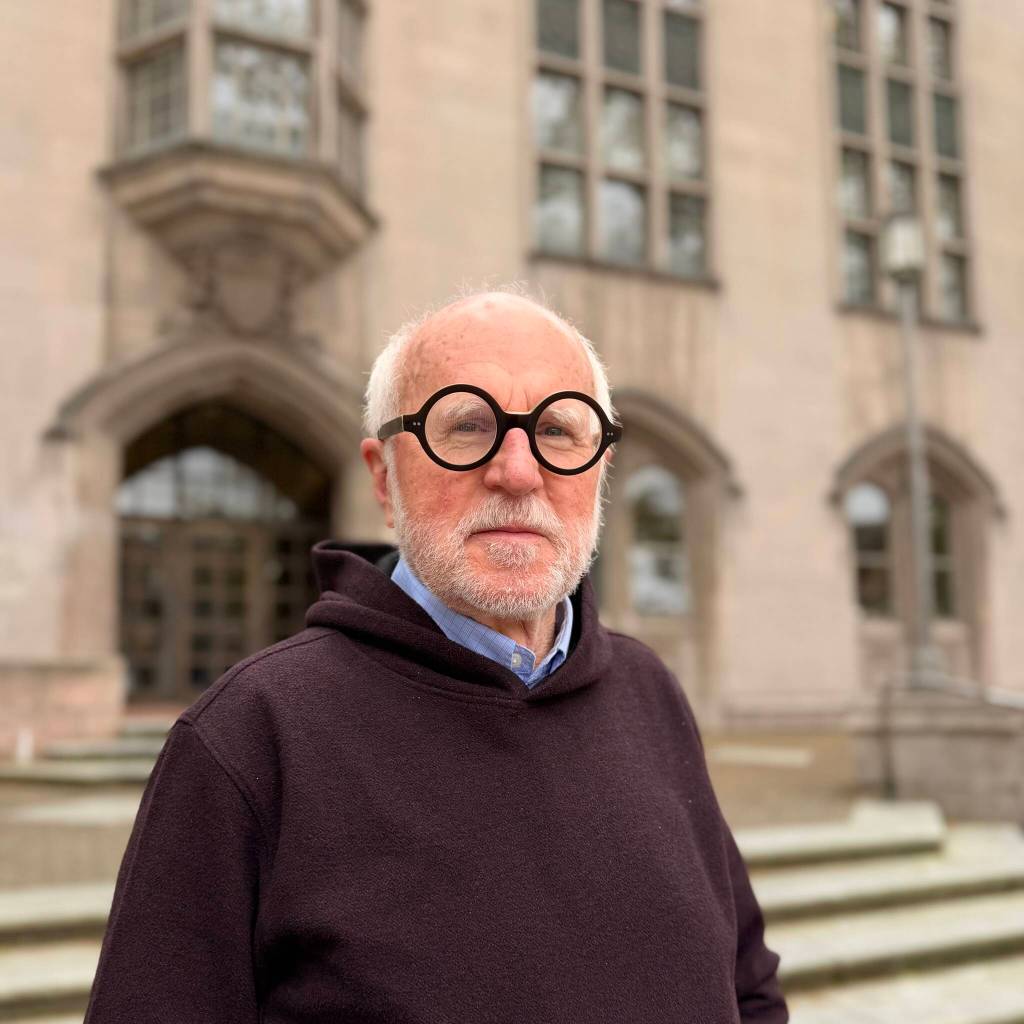
“Just a weekend ago, somebody said to me, ‘aren’t you the guy that took those orca photographs?’” Pfortner said, noting that even though the image was captured back in 1994, he still gets stopped by residents today.
Bringing a unique background as a scientist for the U.S. Environmental Protection Agency more than 30 years ago, Pfortner left his hometown of New York City to move to Vashon. By combining his background in science and art, he transitioned into the academic world, where he has taught for nearly a decade at the University of Washington Continuum College.
For Pfortner, teaching photography is more than the technical settings and compositions behind the lens. It’s about embracing discomfort in artistic practices.
“With a lot of my students, when they get outside their comfort zone, they don’t like it, but boy, do they produce interesting work like they’ve never done before,” Pfornter said. “And I think we all need to do that to be provoked.”
Recently honored with the 2025 Legacy in Teaching Excellence Award (tinyurl.com/UW-2025-Legacy-in-Teaching) by the University of Washington, Pfortner has evolved from a biologist with a camera into one of the region’s primary creative mentors.
Pfortner’s teachings have reached multiple generations, from middle and high schoolers in UW Youth & Teen Programs to adults in Professional & Continuing Education and retirees in the Osher Lifelong Learning Institute at the UW.
His impact influenced UW’s media team to spend a year documenting his classrooms. A project that resulted in a newly released documentary in the 2025 Impact Report (tinyurl.com/UW-2025-Impact-Report).
Through his photography teachings, his students use their own perspectives to capture powerful images. This intentional way of inspiring students is precisely why his courses at Vashon Center for the Arts remain at capacity year after year.
“I find that pushing myself and my students to tell stories is about interpreting what’s in front of their lens, not just recording it,” Pfortner said. “Photography has always had the power to record accurately what’s out there.”
Wendy Finkleman, the Education Director for VCA, who has worked alongside Pforner for 16 years, notes that finding an instructor who can connect with people of different ages is rare in the arts.
“It’s both Ray as an instructor and photography as a medium that appeals to all age ranges,” Finkleman said. “Ray does a great job of tailoring the content and the experience for the specific age group he is working with.”
Pfortner puts this into practice during his two-week youth camps on the UW campus. There, he takes his students to the UW Biology Greenhouse, up the Tower Urban Garden and even down into the historic steam tunnels to photograph everything in sight.
What Pfortner is most excited to teach his students this summer is a unique, hands-on technique he calls “photo styling.” A concept that traditional photographers don’t teach, where he challenges students to take a creative leap of faith by rearranging elements in front of the lens.
Whether it is arranging flower petals or adjusting leaves on the ground, he teaches them that ethical, imaginative arrangements are a powerful tool for storytelling.
Pfortner’s creative lessons are what kept students like Elise Sherry coming back for years. Now a high school freshman at Vashon High School, Sherry has been a student in Pfortner’s youth photo camps since she was just 8 years old. In the classroom, she is a trusted leader, serving as an assistant for Pfortner. Her journey first began at a camp session that inspired her to continue practicing photography.
“I remember Ray talking about the ‘Dutch angle’ and how important it is to get low down on the ground,” Sherry recalled. “He told us the point of photography is to show other people the way you view the world through your own lens.”
Having spent nearly a decade learning from Pfortner, she has gained skills in the craft, acknowledging Pfortner for expanding her perspective on what it means to be an artist.
“He helped me grow a lot as a person in understanding the different forms of artistry,” she said. “I carry that with me in why I choose to continue to do photography, and why it’s actually something worthwhile.”
On Vashon, Pfortner’s approach is shaped by his long-running “Shoot to Show” class, where up to 20 students of all ages come together to choose a theme or location to photograph as a group.
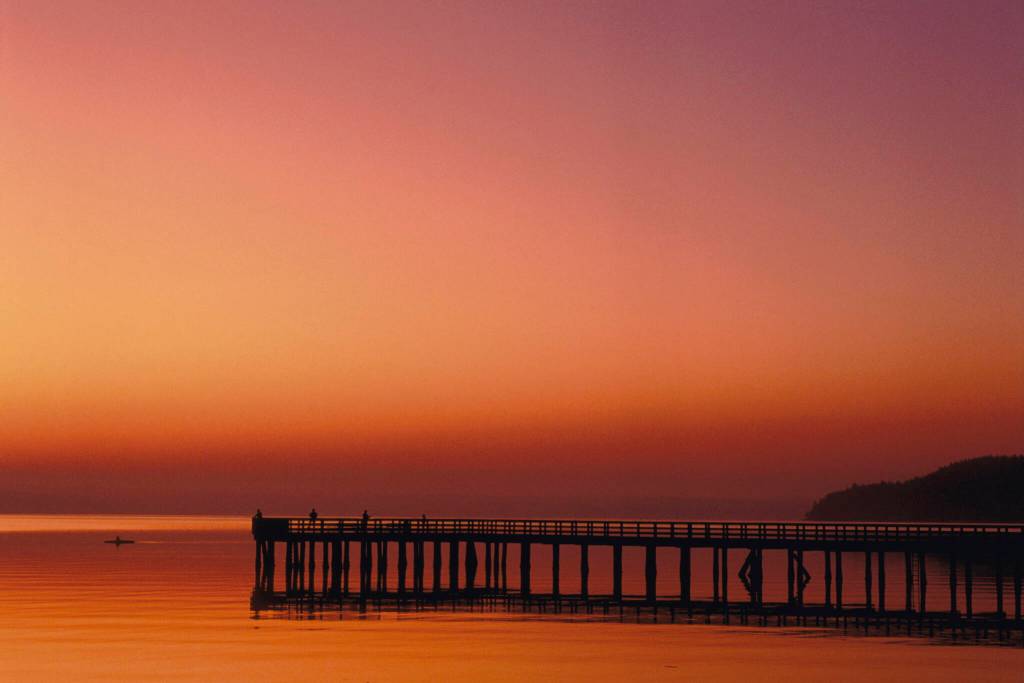
This year, for his 25th session of the class, Pfortner shifted his focus toward a local landmark that is especially meaningful for him: the Tramp Harbor Pier.
“On Vashon, it’s my favorite place to photograph,” Pfortner said. “And in the world, one of my favorite places to photograph.”
Because the aging pier is currently leaking creosote, a wood preservative pesticide, into the water, the site has been closed off due to safety hazards. Pfortner aimed his workshop at the pier to raise community awareness for its replacement and rebuilding.
During his workshops, Pftorner led his students out in the mornings to document the pier and brought guest speakers to educate them on its ecological and historical significance.
Instead of hosting a traditional gallery exhibition, Pfortner reserved a spot at the island’s historic movie theater to showcase his students’ work during its weekly community night, dedicated to promoting awareness on the island.
“We had the theater pretty full, and each student got up and presented their work on the big screen,” Pfortner said. “The groups that are trying to get the pier rebuilt were just thrilled.”
As Pfortner stood in the back of the theater his photography career seemed to come full circle.
Decades after one of his photographs helped protect Vashon’s orcas, he is now teaching and inspiring his community to protect their island using their own lenses.
“To me, that was an entree that my photography gave me to be standing there with a big audience applauding and cheering, and students all excited,” Pfortner said. “It was just fabulous.”