‘The easy cut’: School workers describe human toll of budget reductions
Published 10:30 am Thursday, July 23, 2026
One employee spent a year trying to convince herself to leave a job she loved. Another received a phone call before 8 a.m. telling her that she had been terminated.
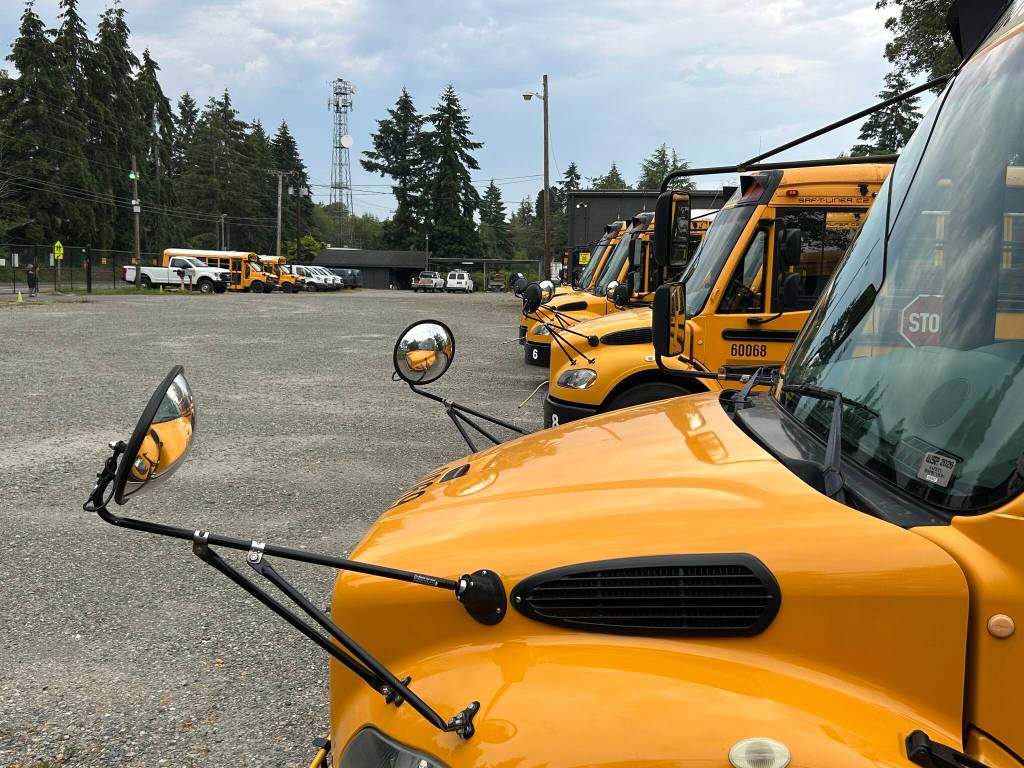
Their jobs sit at different ends of the Vashon Island School District — one inside Chautauqua Elementary classrooms, the other behind the wheel of a school bus. But in two emotional meetings, paraeducators and bus drivers described the same fear: Budget cuts drawn on paper will ultimately be absorbed by some of the workers closest to students, and then by the students themselves.
The Vashon Island School Board adopted its 2026-27 budget June 25, approving about $30.5 million in general fund spending, up from approximately $29.3 million the previous year.
Despite the larger overall budget, declining enrollment and rising costs have forced reductions throughout the district.
Interim Superintendent Jo Moccia said the paraeducator and transportation changes are part of a districtwide restructuring that began last winter.
“All of our people are valuable,” Moccia said. “This isn’t about people; it’s about aligning resources to student need.”
The district began with administration. A restructuring approved by the board in March eliminated approximately 1.6 full-time equivalent positions and is projected to save nearly $287,000.
The district eliminated or reduced several administrative positions and reassigned responsibilities for athletics, career and technical education, facilities, technology and food service.
It also reviewed teaching assignments based on enrollment, course requests and educators’ endorsements. Twelve provisional teachers initially received reduction notices before most were rehired into available positions, Moccia said, resulting in a net reduction equivalent to two full-time teaching positions.
At the same time, some positions and hours increased based on student interest and workload. Moccia said the district tried to limit the impact on classified employees but ultimately determined that further reductions were necessary.
“Nobody wants people to lose work or hours,” she said. “But we also have to have our revenue match our expenditures, and it doesn’t right now.”
Even after the reductions, the district expects to draw from its fund balance — money carried over from previous years and held in reserve — to cover spending next year, Moccia said.
Among the latest changes are cuts to paraeducator hours and a restructuring of the district’s bus system that will reduce general education routes from seven to five.
The transportation changes are expected to save approximately $149,000 and reduce the district’s projected payment to contractor First Student from about $1.6 million to approximately $1.45 million.
For the employees affected, however, the numbers tell only a fraction of the story.
‘The nervous system of the school’
Four special education paraeducators from Chautauqua recently met with The Beachcomber to describe how the reductions could change their work.
Liz Nicolino has worked at the elementary school for 12 years. Michele Palermo is preparing to begin her sixth year, and Krista Battrick has worked there for about a year and a half.
The fourth, Sunder Khurana, recently resigned after four years.
“It took me an entire year to leave my job because I love it so much,” Khurana said. “It’s the best job I’ve ever had. Hardest job.”
Khurana told the School Board in June that her monthly wages did not cover her rent. She said the job did not pay her basic housing costs, much less utilities, groceries, clothing and expenses for her children.
Paraeducators serve as a school’s “nervous system,” Khurana said, carrying information between classrooms, students, teachers and specialists.
Paraeducators work throughout the school, providing individual and small-group instruction, academic support, social-emotional coaching and personal care. Special education paraeducators also work directly with students who may be autistic, nonspeaking or otherwise require individualized assistance.
If paraeducators are doing their jobs well, Khurana said, their work can be nearly invisible: Students remain regulated, lessons continue and a student receives help before a difficult moment becomes a crisis.
That invisibility can also make paraeducators “the easy cut” when districts search for savings, Khurana said.
“Lots of people don’t realize that special education paraeducators actually support the whole school, regardless of your student’s designation,” Khurana said.
Paraeducators generally work six to 6½-hour days during the nine-month school year. Their shifts begin shortly before students arrive and end shortly after they leave, offering little paid time for preparation or conversations with teachers.
For the coming year, each paraeducator’s annual schedule will be reduced by approximately 37½ hours, largely through the elimination of late-start Friday work periods, Moccia said. The reduction is expected to save the district about $40,000.
Those Friday periods have been used for training, preparing and modifying instructional materials and meeting with teachers and specialists about individual students.
The district retained one 90-minute, district-directed Friday session this is a little confusingeach month for mandatory training and meetings. “It’s not that they didn’t work or they didn’t find it helpful,” Moccia said of those meetings. “It’s just it’s not essential.”
Building administrators and special education teachers will continue working with paraeducators to ensure they have the information and support necessary to serve students, she said.
The paraeducators said the meetings are not optional extras.
A student may work with five paraeducators during a single day. Staff members must use consistent words, visual cues and strategies, particularly for students who rely heavily on routine or have limited verbal communication.
Without time to coordinate, employees said, they may enter a classroom without knowing that a student’s plan has changed, which strategies have worked or what caused a student to become distressed the previous day.
“It is not humanly possible,” Battrick said of doing the work without that coordination. “It’s not safe at all for anybody.”
Their schedules are already arranged minute by minute, the paraeducators said. Several described struggling to find time to use the restroom because they cannot leave a student unattended.
The paraeducators predicted they will continue meeting because students’ safety and education require it — but may end up doing so without pay or seeking approval for additional paid time.
“The consequence is that we’re going to work without getting paid, because we already do that,” Khurana said.
Employees will be paid whenever the district requires them to attend a meeting or complete work outside their scheduled hours, Moccia said.
The district has not yet determined whether Khurana’s position will be filled.
Paraeducator staffing is driven by students’ individualized education programs and other demonstrated needs, she said, and may be adjusted once the district knows which students arrive in the fall.
Chautauqua’s special education teaching staff has increased from 2.5 to three full-time equivalent positions for the coming year. If the district does not have enough staffing to fulfill students’ individualized education programs, Moccia said, it will add support.
Battrick said she loses sleep worrying that reductions in staffing and preparation time will fall hardest on students with the greatest support needs.
“Without those valuable hours, our most vulnerable and higher-needs kids are going to get less,” Battrick said.
Longer routes, fewer backups
Several drivers who spoke with The Beachcomber asked not to be named because they feared that publicly criticizing the changes could affect their future employment.
The drivers raised many of the same concerns as the paraeducators: a lack of consultation, savings they believe may be difficult to achieve in practice and the loss of relationships that cannot be captured in a spreadsheet.
The district contracts with First Student to operate its transportation system, and the drivers are employees of the company rather than the district.
Moccia said she asked First Student to find efficiencies because transportation costs were increasing while every district department faced reductions.
First Student concluded that two of the district’s general education routes could be eliminated and absorbed into the remaining routes, based on an analysis showing buses operating at an average of approximately 40% capacity, Moccia said.
The revised system will operate 11 daily routes, including unchanged special education routes, with 12 drivers. One will serve as the dedicated standby driver.
First Student’s analysis warned that some students may have longer rides, the system will have less flexibility during traffic, weather or ferry disruptions and school start or dismissal times may need to shift by several minutes, Moccia said.
Drivers disputed the 40% figure, saying ridership fluctuates based on athletics, after-school activities, custody arrangements and whether students travel into town rather than directly home.
Some routes already require drivers to move students between buses when one fills, they said, and consolidating routes could make that more frequent.
One driver who reviewed a proposed route map said the changes could add 20 to 25 minutes to a run, although routes had not yet been driven and timed when the group met with The Beachcomber.
Moccia said First Student is responsible for designing and testing the routes. The company has promised the district that families will receive route and estimated timing information by Aug. 1.
Drivers also worried that longer rides and changed pickup locations could push more parents to drive their children to school.
They said parent drop-off traffic already congests the areas around the schools, at times backing up Vashon Highway and delaying buses entering or leaving Chautauqua. Drivers described motorists speeding through school zones, failing to yield at crosswalks and making unpredictable turns while children walk or bike nearby.
More vehicles during arrival and dismissal could increase the risk of collisions, they said, while disproportionately affecting working families who cannot drive their children. Drivers also worried that declining bus ridership could eventually be used to justify further route reductions.
Drivers also questioned how the system will operate with only one standby driver.
Standby and substitute drivers cover routes when a regular driver is sick, has an emergency or is assigned to an athletic event or field trip. Several drivers said substitutes have been used nearly every day during portions of the school year.
First Student has told the district that drivers from its Tacoma operation may provide backup coverage. The contractor acknowledged that ferry schedules and travel time could occasionally prevent them from arriving before a route begins, Moccia said.
The reduction in backups could make it harder for drivers to take sick leave or schedule medical care, they said.
One driver said she postponed shoulder surgery for four months because no one was available to cover her work. Another described driving while ill because a substitute could not be found.
“They’re going to be scrambling in September when two of us are sick,” one driver said.
So far, two bus driver positions have been eliminated, making the impact immediate for the affected employees.
Denise Alberthal and Joe Matter were notified on the morning of June 22 that their employment had been terminated. Alberthal drove school buses for the district from 2002 to 2016 before returning as a substitute in 2025. Since returning, she had spent the past school year covering a route for a driver who was on medical leave.
“I’m hurt. I’m angry,” Alberthal said. “Before 8 o’clock in the morning, I get a phone call: ‘Sorry, terminated.’”
Matter, who also drives Metro buses on Vashon, had worked as a substitute school bus driver since March. He said he was recruited and completed the required training because the transportation system needed additional drivers — only to lose the position a few months later.
Moccia said communication surrounding the changes could have been better but emphasized that the district does not supervise First Student’s employees.
“Could the communication have been better? Of course,” she said. “But regardless, it’s this necessary process that we went through.”
Drivers also emphasized that their role extends beyond moving students between two points.
They are often the first school employee a child sees in the morning and the last one they see in the afternoon. They learn which students need a quiet greeting, which families need information relayed from the school and when a child’s behavior seems different from usual.
“Kids feel safe when they have a relationship with their bus driver,” one driver said. “Some of these kids, the bus driver is the first person they see in the morning, and that kind of makes their whole day.”
Palermo, who attended the meeting, described the relationship between her sons and their driver, who held end-of-year pizza parties and continued checking in after one of the students graduated.
Another driver said giving up his route and the relationships he had built with families “breaks my heart.”
“I love my job,” he said. “I love the kids. I’ve made friends with their parents.”
Workers seek a voice
Both groups said they recognize that the district faces a genuine financial problem and are not asking the district to spend money it does not have. They are asking why employees with direct knowledge of the work were not brought into the conversation before the reductions were selected.
Paraeducators said they learned of their reduced hours through annual assignment letters after hearing rumors that cuts were coming.
Moccia said district officials consulted paraeducator union leadership before making the reductions but acknowledged that individual paraeducators were not included in detailed discussions and that conversations with the union occurred near the end of the process.
After employees received their assignment letters, Moccia sent them a message apologizing for how the information was delivered and explaining the district’s reasoning.
“In fairness, I didn’t have a conversation with paras,” Moccia said. “We were trying not to impact our classified staff to the maximum extent possible. We started with administrators. We moved through teachers. But it got to the point where we had to.”
Bus drivers similarly said they were not consulted about whether the proposed routes were practical before jobs were eliminated and maps were redrawn.
Moccia said she worked with First Student throughout the spring but would not have directly consulted its drivers because they are not district employees.
The district’s financial challenges are unlikely to end with the coming school year, she said. Enrollment has declined from more than 1,600 students about a decade ago to approximately 1,300, reducing the state funding the district receives.
“It’s going to get harder to meet student needs with our enrollment continuing to dwindle down and inadequate state funding,” Moccia said. “This, to me, was a hard year, and I think next year is going to be harder.”
Federal funding is not driving the district’s current reductions, but proposed changes add another layer of uncertainty. The Trump administration’s fiscal year 2027 budget request would reduce overall discretionary funding for the U.S. Department of Education while maintaining Title I funding, increasing special education grants and consolidating or eliminating a number of other K-12 programs.
Palermo said employees might have helped the district identify savings that could work in practice, had they been asked.
“Why not bring us into the conversation,” she said, “and maybe we can figure out a way to make it sustainable?”