Amanda Knox performs ‘Cartwheel’ on Vashon
Published 1:51 pm Tuesday, July 28, 2026

How do you explain something as adult as a wrongful murder conviction to a 4-year-old?
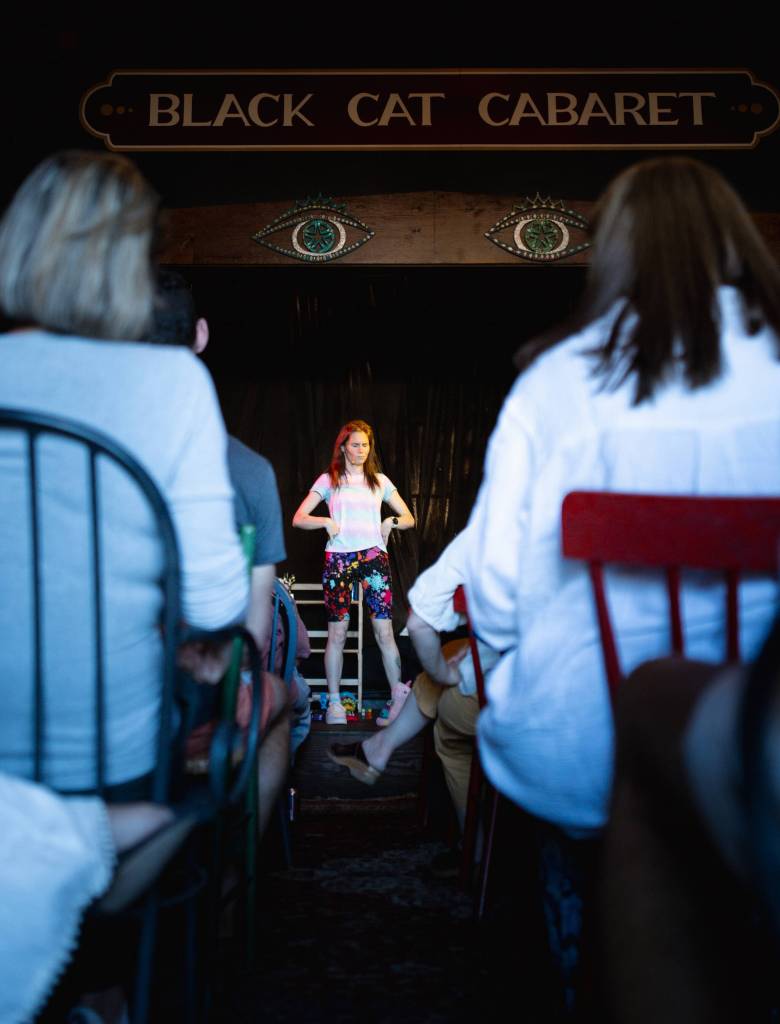
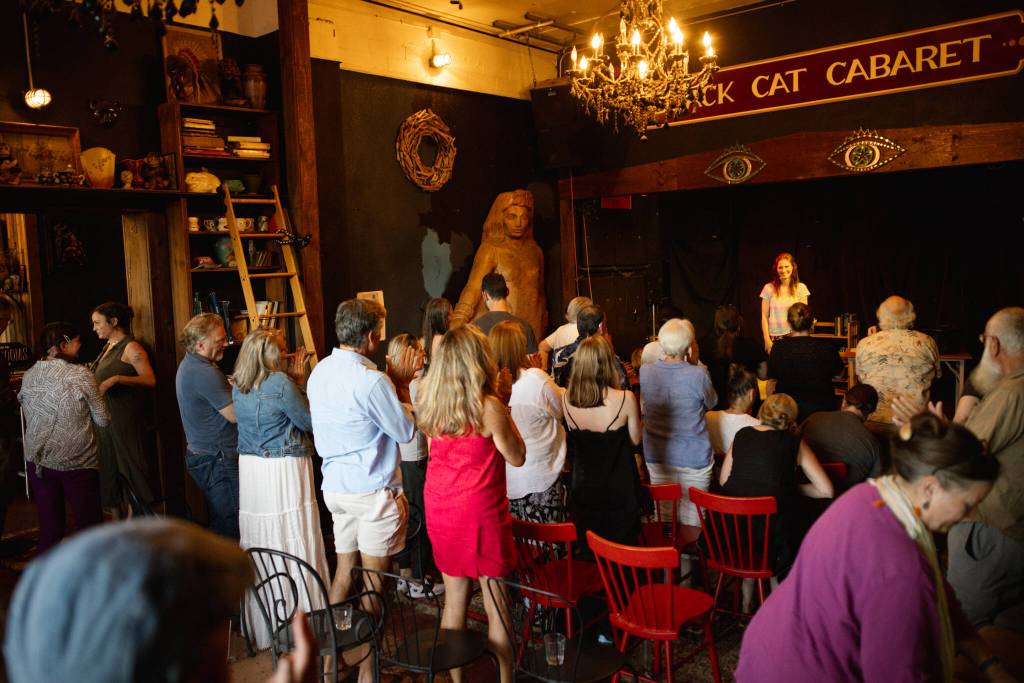
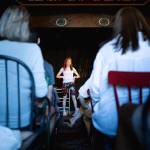
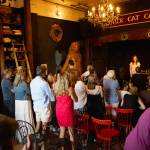
That’s the question that guides islander Amanda Knox’s new comedy show, “Cartwheel,” which she performed to audiences Friday and Saturday at Snapdragon’s Black Cat Cabaret.
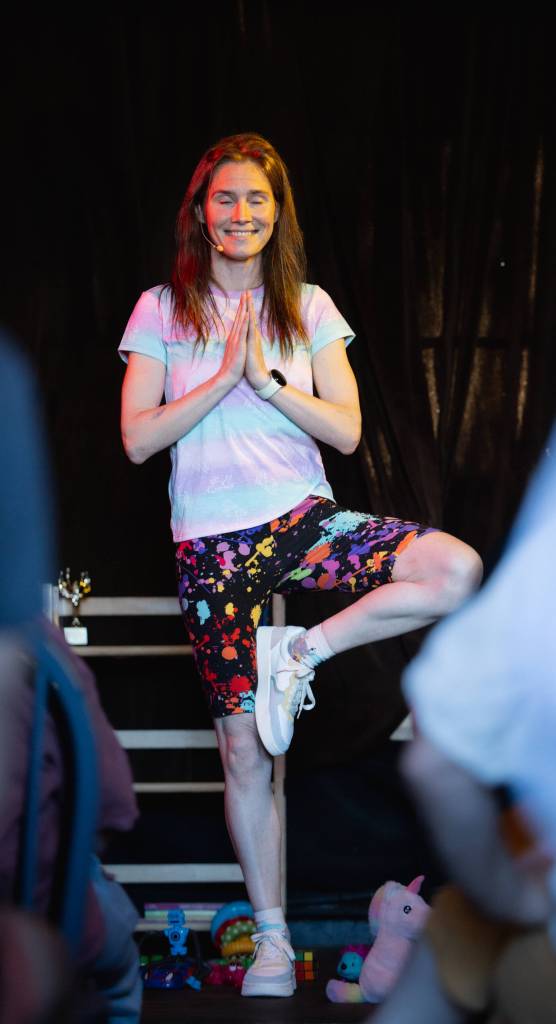
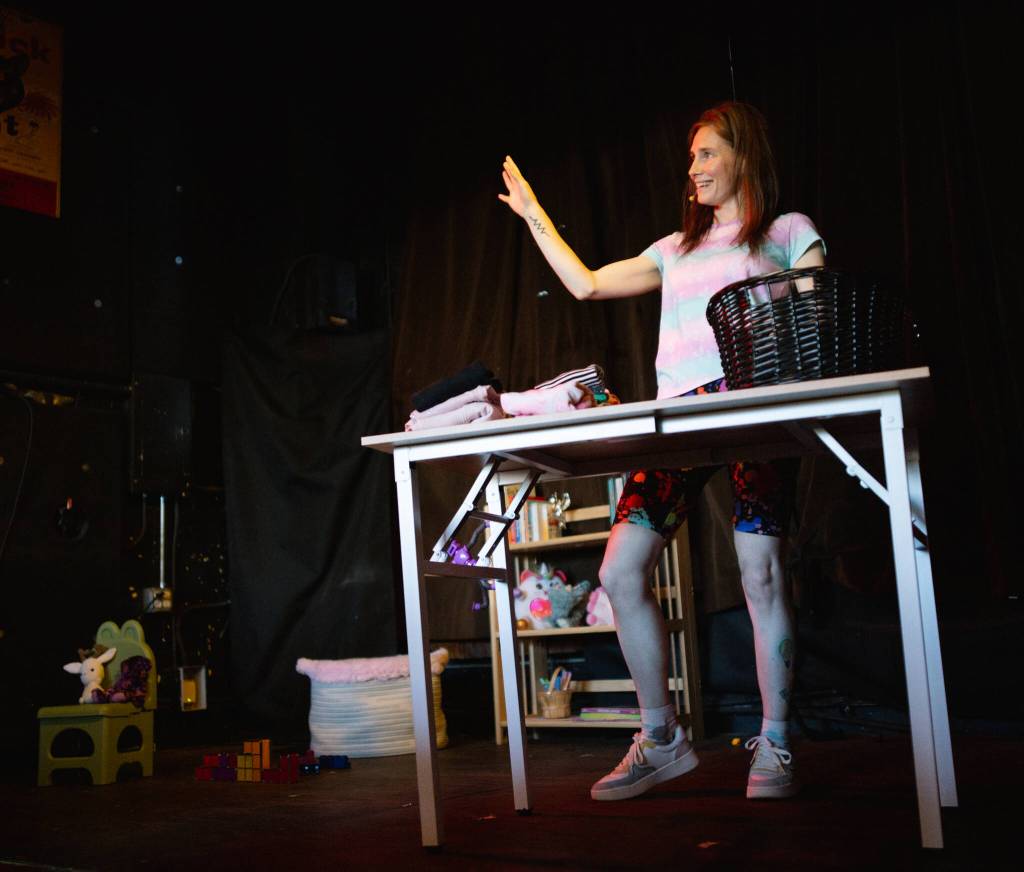
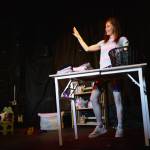
Surrounded by kids’ toys, books and clothing on a living-room-inspired stage, Knox traced her journey from a quirky Seattle theater kid to a 20-year-old thrust into the Italian legal system, and ultimately, a mother reflecting on it all through her similarly-spirited daughter.
Over the course of the hour-long show on Friday, the audience of about 30 people oscillated between bursts of belly laughter and attentive silence as Knox unpacked complex questions about motherhood, media scrutiny, her legal battle and the aftermath of experiencing a prolonged and public trauma.
In just over a week, Knox will perform her show at the Edinburgh Festival Fringe in Scotland.
Much of Knox’s show recounted the extraordinary and sometimes nonsensical circumstances she faced after being convicted in 2009 of murdering her roommate, Meredith Kercher, while studying abroad in Italy. Knox was later acquited by Italy’s highest court in 2015.
In long stretches during which audience members hung on her every word, Knox didn’t shy away from brutal honesty and emotion.
But nearly 20 years later, she’s also ready to laugh.
Throughout the show, Knox leaned into any awkwardness in the room, treating her notoriety as something absurd and using it for laughs.
Right off the bat, after taking the stage in a colorful, 1990s sitcom “Clarissa Explains It All” inspired outfit, Knox wasted no time breaking the ice.
“I know you’re all thinking it, so let’s just get it out of the way,” she said. “I’m on Wikifeet … It’s not exactly what I thought I was signing up for when I decided to study abroad.”
While the crowd was initially timid, Knox’s relaxed cadence and confident stage presence established her as unafraid of discomfort, giving the audience permission to be right there with her.
As she described the “guilty look” people often get when they recognize her in public, or the doctor who read her medical chart aloud and said, “too bad that other one ruined your name,” the crowd’s temperament quickly slid from apprehensive to playful.
And throughout the show, playfulness seemed to be a tool for building connection — placing others in her world, and allowing them to see the unexpected humor in it.
That same openness carried into Knox’s reflections on parenthood, where she explored the complex yet relatable questions every parent faces: How does one explain the world to children and prepare them for its dangers?
While folding tiny kids’ clothes pulled from a wicker laundry basket, Knox spoke of her daughter’s whimsical and friendly personality — similar to her own — and her many “irrational” fears about her safety.
Following this thread, she delivered a gut-punching realization.
“Stop catastrophizing, stop projecting, she’s four. She’s probably not gonna be kidnapped or murdered or imprisoned for a murder she didn’t commit,” Knox said. “But actually, I don’t know.”
Interrupting Knox’s train of thought, her 4-year-old daughter Eureka’s voice echoed through the crowd, asking “Mama, who’s that?” referencing the audience.
At one point, the adorably high-pitched voice asked if she could have spaghetti for dinner, to which Knox replied, “No can do kiddo … Mama has post-traumatic spaghetti disorder.”
Knox’s back-and-forth with Eureka’s tiny voice — that asked why she can’t fit into her Elsa dress anymore or why her brother bit her — set up Knox to use the little injustices of childhood in explaining some of the most extreme wrongs of adulthood.
This buildup leads to a birds-and-the-bees-like conversation, where Knox recited a Dr. Seuss-style rhyme scheme about the case to the audience.
As Knox contemplated how to approach these conversations with her daughter, she points to the tension of raising a child to be original and fearless, while reckoning with how the media used those same qualities against her.
Digging into the accusations that she did a cartwheel in a police station — referenced by the show’s title — that she acted “odd,” and the headlines that painted her as sexually deviant, Knox asked the audience to consider how women are put on trial by the media.
“Even if I was doing a cartwheel, is that evidence of murder?” Knox said. “I feel like I could have been juggling bowling pins and pulling scarves out of my cleavage, and that wouldn’t make me a murderer.”
In an emotional segment of the show, Knox reflected on how the media’s incessant scrutiny of her ultimately left Kercher and Rudy Guede, the man ultimately convicted of the murder, out of the story.
Pointing to headlines such as the New York Post’s 2020 story titled “Man Who Killed Amanda Knox’s Roommate Freed on Community Service,” Knox argued that “names matter.”
Knox chose her own daughter’s name, Eureka, “because I wanted her to be an unapologetically unique person.”
As the show wound to a close, Knox wrote a “contract” where Eureka’s voice promised to be both sweet and tough, and “make it weird.”
Knox then described to her daughter’s voice how to do a cartwheel, before cartwheeling offstage.
“Here’s the secret,” Knox explained. “Everything is going to feel upside down. You’re not going to know up from down. And that’s exactly when you have to throw yourself forward, because it’s the only way you’re gonna end up on your feet.”