Time & Again: The Virginia V circumnavigation
Published 1:30 am Tuesday, August 5, 2025
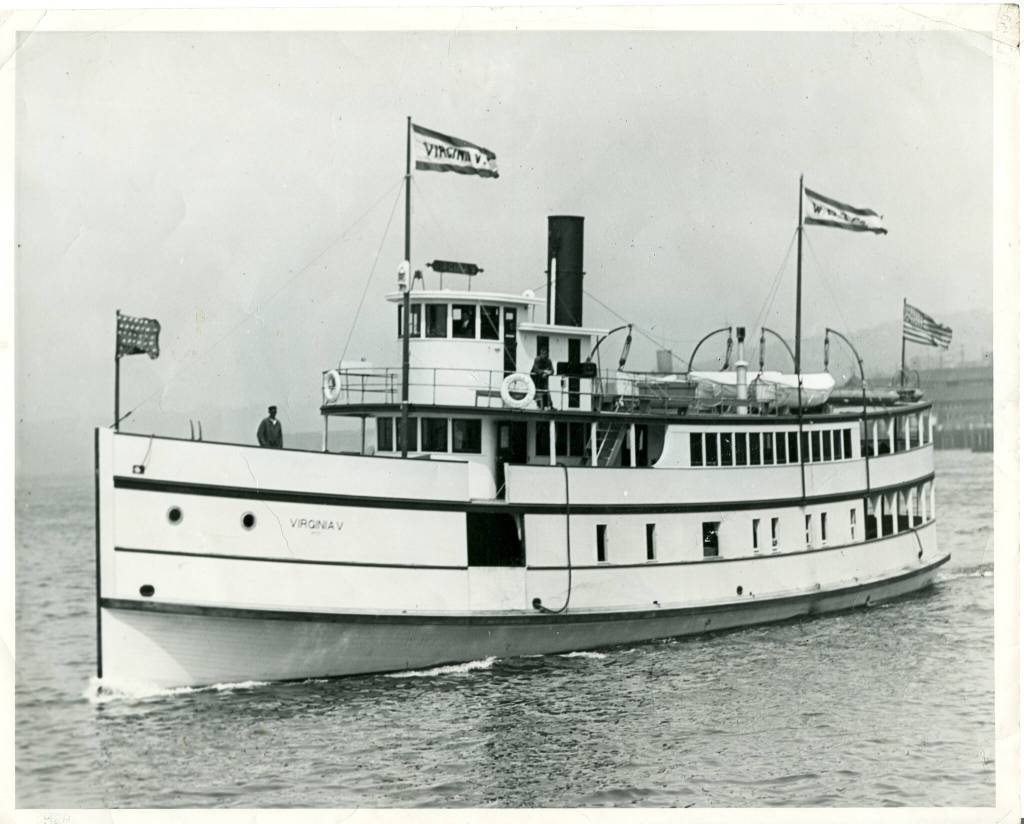


The steamship Virginia V will make its annual voyage around Vashon-Maury Island on Sunday, August 24, sponsored by the Vashon Heritage Museum. An example of living naval history, the story of the Virginia V is a story of changing transportation preferences and national needs amid the last two centuries.
The last operational example of a Puget Sound Mosquito Fleet steamer, the Virginia V was once part of a large fleet of small passenger and freight-carrying vessels that linked the islands and ports of the Salish Sea in the late 19th and early 20th centuries.
The Virginia V is both a City of Seattle Landmark and a National Historic Landmark; her original route was between Tacoma and Seattle, along the West Pass (also known as Colvos Passage) between Vashon Island and the Kitsap Peninsula.
In 1910, Captain Nelse “Nels” Christensen and John Holm formed the West Pass Transportation Company to serve the west side of the island. They purchased the Virginia Merrill, a 54-foot gasoline-powered tug, converted it to carry passengers, and renamed it Virginia, the first in the series of five Virginia boats.
The Virginia was replaced in 1912 with the Virginia II, which was built on Vashon just south of Lisabeula. In 1914, the steamer Typhoon was added and renamed Virginia III, and in 1918 the steamer Tyrus was added and renamed Virginia IV.
In 1921, Christensen hired Matt Anderson of Maplewood, across Colvos from Lisabeula, to build the Virginia V. The ship was built of local old-growth fir, was launched March 9, 1922, christened with water from Christensen Creek, and its homeport was registered at Lisabeula home of Christensen.
More than just the name ties these boats together. The Virginia III and V are linked by the distinctive sound of the “West Pass Whistle,” which came to the West Pass when Christensen purchased the Typhoon from the Lorenz brothers of Lake Bay in 1914. The whistle was passed to the Virginia V when it was built at Lisabeula in 1922.
But the whistle was lost in the October, 1934 wreck of the Virginia V at Olalla when 80 MPH winds smashed the steamer against the dock. The hull and upper decks were severely damaged, but the boat was rebuilt and returned to service by early December, without its whistle.
Christensen had divers futilely search for the whistle, but that next summer, kids diving off the dock spotted the whistle and recovered it. They were rewarded with a crisp new $5 bill, and the West Pass Whistle resumed its place on the Virginia V.
Join the annual voyage around the island on August 24, and you’ll hear that sound of that same storied whistle. The skipper will blow the whistle at each of the former Mosquito Fleet docks as the steamer passes them, and it is worth visiting the pilothouse during the voyage to watch as the captain pulls the whistle cord.
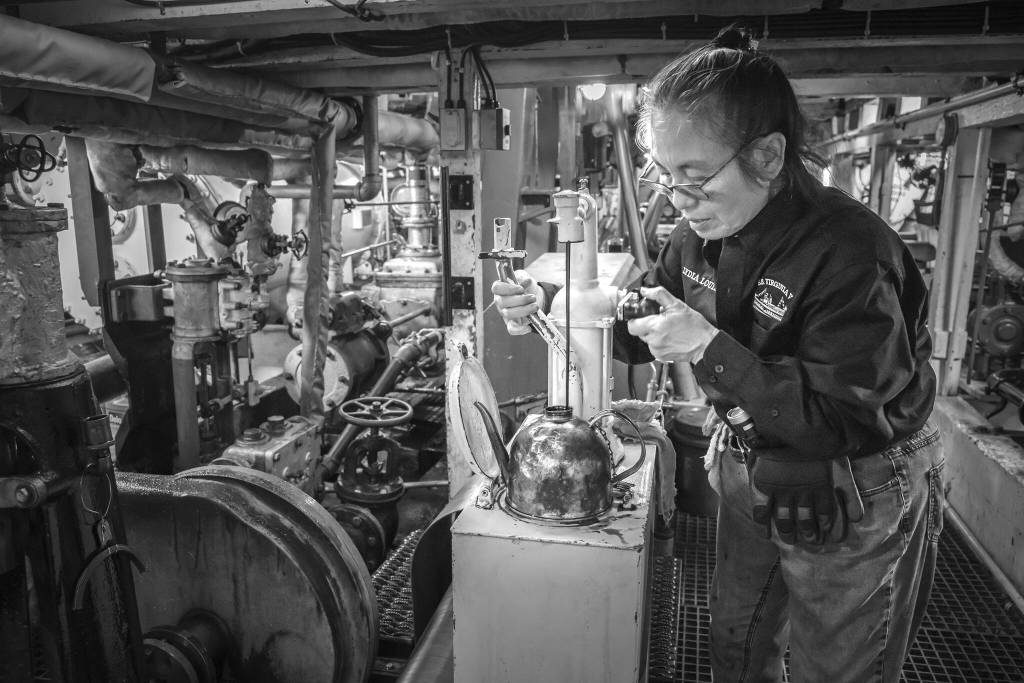
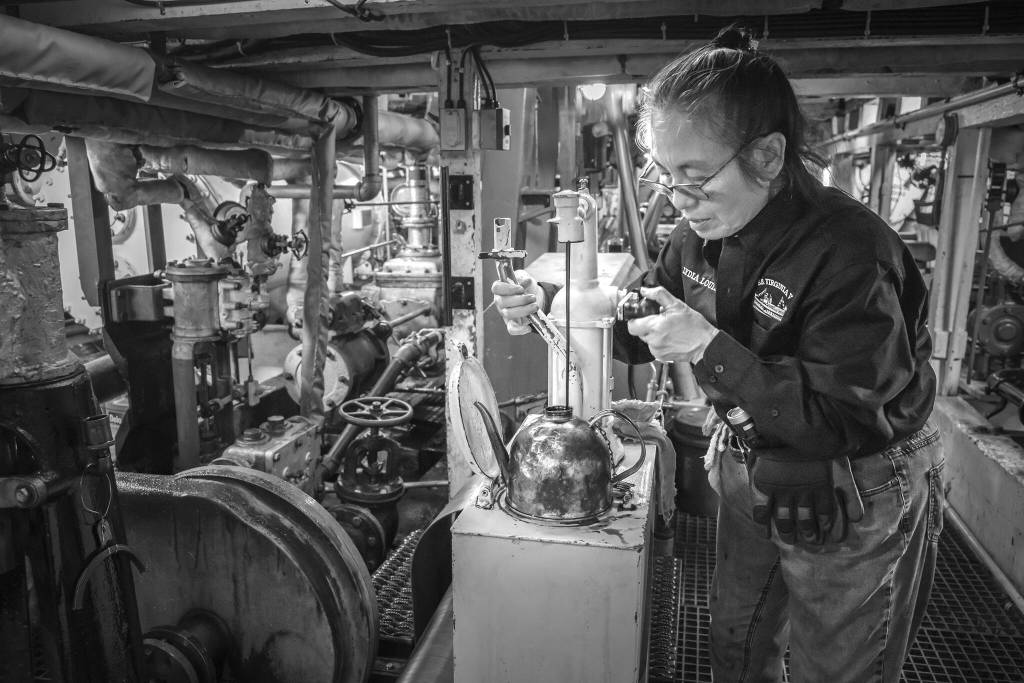
Meanwhile, the engine of the Virginia V is a marvel to behold, and worth a visit to the engine deck to see it at work during the cruise.
The engine parts were cast in 1898 at the Heffernan Machine Works in Seattle as one of two identical steam engines built for the Army. The first engine Heffernan built was installed in the U.S. Army Quartermaster Steamer Evan Thomas, and the second engine was sold to the Lorenz brothers and installed in the steamer Tyrus in 1904.
When Tyrus was purchased by Christensen in 1918 and renamed the Virginia IV, the engine became part of the West Pass Transportation Company. The construction of the Virginia V in 1922 and the retirement of the Virginia IV provided the opportunity for Christensen to have the motor taken out of the Virginia IV and placed in the Virginia V, where it still powers the steamer.
The Virginia V served the West Pass from 1922 to 1931, making one 70-mile roundtrip from Tacoma to Seattle each day and covering a total of 25,550 miles each year. From 1931 to 1939, a mid-day express run was added that increased the mileage to 126 miles each day for an annual total of 49,900 miles.
During the 17 years the Virginia V served the West Pass, the vessel traveled nearly 650,000 miles.
Each summer from 1922 to 1970 (with a few interruptions around World War II), Virginia V carried girls to and from Seattle to Camp Sealth on Vashon for the Camp Fire Girls. Thousands of women in the Northwest can recall a ride on “Virginia Vee” (as she was affectionately called) as the beginning of a camping adventure.
Island historian Roland Carey has told the story of Henry Larson, a deckhand from Lisabeula aboard the Virginia V who grew up around livestock.
Carey was handy to have aboard if a bull needed calming or a cow needed milking. Once, a bull, encased in a crate, was brought aboard, dragging the gangplank one too many times until the crate exploded and the bull decided to chase Henry full-speed down the deck.
When Henry reached the rear of the ship, he made a U-turn around the curved stern railing and headed up the other side. The bull, running full bore, was unable to make the sharp turn and plunged off the stern into the Sound.
“Retrieving a chastened bull, and delivering him, sans crate, made for a normal day on the West Pass,” Carey noted.
The West Pass Transportation Company went out of business in 1942. The Virginia V briefly made the Seattle-Fort Worden (Port Townsend) run, then was moved to the Columbia River to make the Portland-Astoria run. Later, she returned to Puget Sound and served during World War II carrying war workers between Seattle and the Keyport Naval Torpedo Station.
The Puget Sound Maritime Historical Society (PSMHS) was formed in 1948 to preserve the Northwest’s marine history and they sponsored the Great Steamboat Race, which, in 1948, the Virginia V — by then an excursion boat — won by a small margin with the Grayline Sightseer (formerly Vashona) in a celebration of National Maritime Day.
In 1968, a group of steamboat enthusiasts formed the Northwest Steamship Company, raised money to buy the, Virginia V, and placed it on the National Registry of Historic Places in 1973. In 1976, the non-profit Steamer Virginia V Foundation was formed to preserve Virginia V and purchased the vessel in 1980.
After more than a decade of operating the Virginia V, the Foundation organized a six-year, $6.5 million stem-to-stern restoration project, which included a rebuild of the steam engine, construction of a new boiler, and a rebuild of the superstructure using traditional tongue and groove fir planking.
The Virginia V returned to service in 2002 and has been cruising Puget Sound since.
In 2021 and again last year, the Virginia V was hauled out for maintenance and replacement of many of the large, framed timbers on the starboard side. The Coast Guard recertified the Virginia V in 2024, and this month, the boat will once again voyage out on the Museum’s annual cruise around Vashon-Maury-Island.
As Nels G Christiansen, the owner of the West Pass Transportation Company, once said of the Virginia V: “The boat, to me, is a living thing.”
For more information about and tickets to the upcoming sailing of the Virginia V, visit vashonheritagemuseum.org/events.
Bruce Haulman is an island historian. Terry Donnelly is an island photographer.