New signs urge islanders to protect Quartermaster’s ecology
Published 2:47 pm Wednesday, September 3, 2025
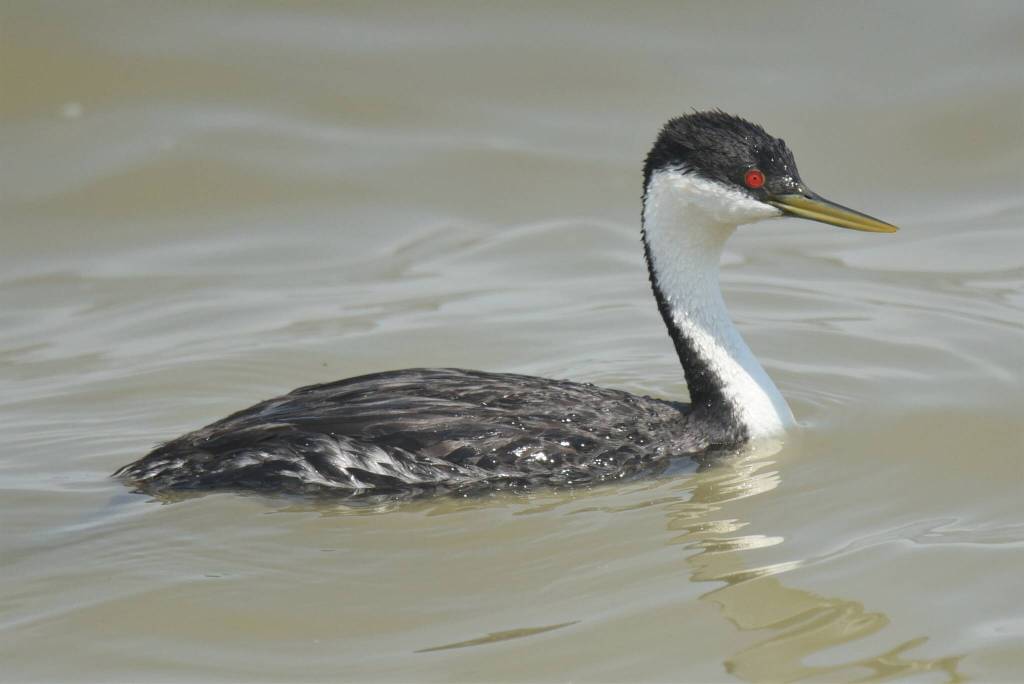


Western grebes — long-necked birds with a graceful, head-held-high profile — were once so abundant in Quartermaster Harbor that the National Audubon Society and the state Department of Fish and Wildlife named the inland bay an “Important Bird Area.”
Signs were erected and placed around the harbor, noting its role as a winter refuge for the grebe, a stronghold in Puget Sound. The western grebe’s presence was a kind of badge of honor for Vashon, a source of both pride and joy among the island’s small birding community.
But then herring, a staple for these diving birds, started to disappear. Eventually the grebes stopped returning to the bay. Even the signs gave way to wind and weather.
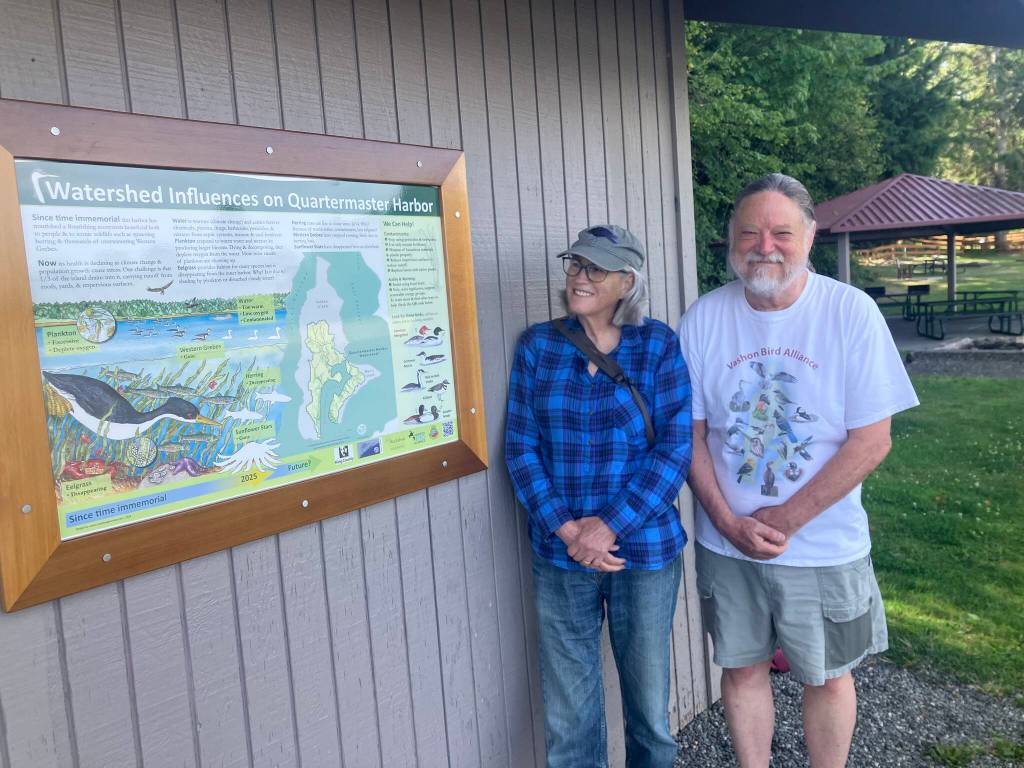
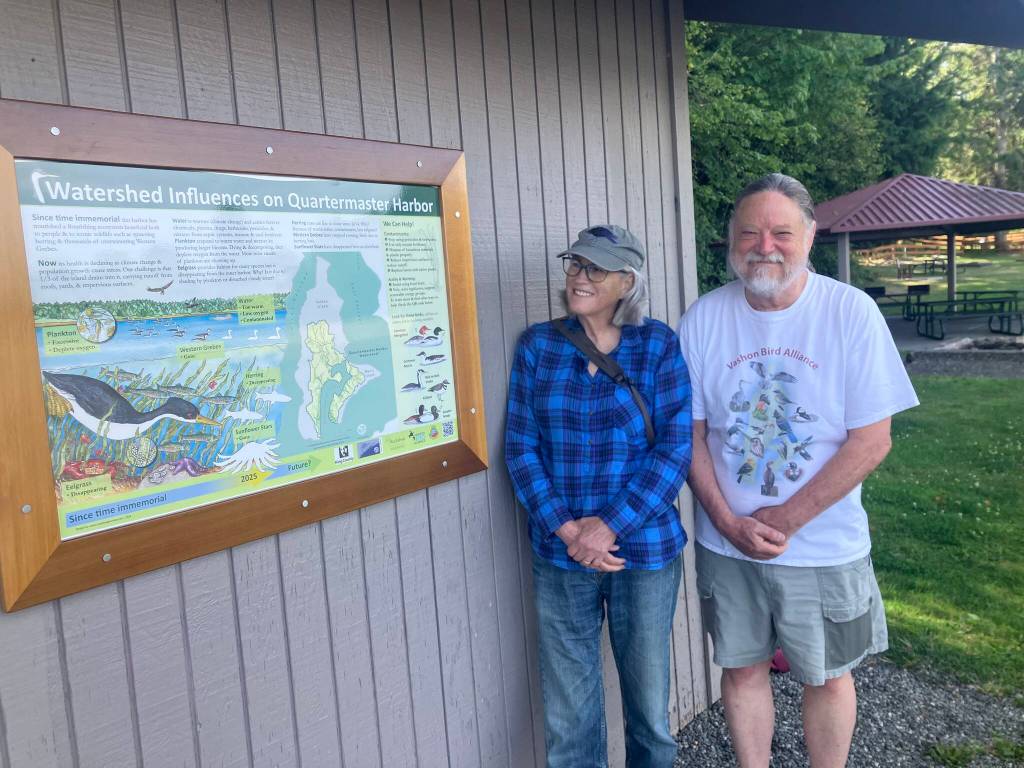
Now, two new signs have been erected — these noting the disappearance of herring, grebes and sea stars and actions that need to be taken to address Quartermaster Harbor’s ailing health.
“We had the largest wintering flock of western grebes in Puget Sound, largely because of herring,” said Sue Trevathan, a retired environmental consultant who led Vashon’s Christmas Bird Count for years. “For whatever reason — changes in water quality or something else — the herring left. And when the herring left, the grebes left.”
Trevathan worked on the signs with Rayna Holtz, a long-time Vashon naturalist, and Steve Hunter, president of the Vashon Bird Alliance. Sandra Noel, a Vashon resident and well-known nature illustrator, designed the signs.
What stood out for them, Trevathan said, was what they learned about Quartermaster Harbor in the process: Its watershed encompasses nearly a third of the island, suggesting that thousands of Vashon residents are affecting the runoff that flows from their homes into the bay.
The signs — headlined “Watershed Influences on Quartermaster Harbor” — capture the outline of the bay’s large watershed.
“I want people to look at the map and see if they’re in the watershed,” Trevathan said, standing at Dockton Park after working with Hunter to erect the second of the two signs. “I want them to have some sense of responsibility … and to think about what they’re putting on their grass or gardens.”
Hunter gazed at the Dockton Marina and the open waters beyond. “You look out there, and everything looks great,” he said. “The problem is beneath the surface.”
The grebes’ decline has been precipitous. In 2001, when Quartermaster Harbor was named an Important Bird Area, a national designation, Vashon’s wintering western grebes numbered between 1,500 and 2,000. During the 2007 Christmas Bird Count, birders counted 366 grebes. The next year, there were 17. Since 2012, Trevathan said, no one has counted a western grebe on Quartermaster Harbor.
The state lists the western grebe, one of six grebe species in Washington, as a “species of greatest conservation need,” with a moderate-to-high sensitivity to climate change. Researchers have detected a southern shift of the birds during the winter months; they now overwinter in California, according to WDFW.
The bird — heavily dependent on fish for its diet — faces numerous threats, WDFW says, from water drawdowns for agriculture to boater activity that destroys nests. Plus this, according to a WDFW webpage devoted to the bird: “Prey base appears to have declined in the Salish Sea.”
The two signs — one at Dockton Park, the other at Jensen Point — were created with funds from the Vashon Bird Alliance and Vashon Beach Naturalists program. Public agencies contributed support as well, including King County and the state Department of Natural Resources.
Artful and dramatic, the signs show the western grebe as a presence in the winter, then becoming a white shadow, suggesting its disappearance. Sunflower stars and herring are also white shadows in the water. A timeline shows the decline, with an arrow leading to an uncertain future.
But the message is also meant to inspire action, and about a quarter of the sign offers hope — listing what individuals who live in the watershed can do to help improve the bay’s health.
Stop using pesticides. Replace lawns with native plants. Support renewable energy. All this and more, Trevathan and Hunter said, are the kinds of actions that could improve the health of Quartermaster Harbor.
The decline of a once-abundant species can be lost on people over time because of what’s called “shifting baselines,” Trevathan noted — a failure to see that the health of the ecosystem has been diminished over time and a belief that current conditions are the way things have always been. “You don’t see the absence of grebes.”
Both Trevathan and Hunter said they hope the signs remind people of what was once here, why it matters and what they can do to help.
“We want people to be aware of what’s going on and of our impact on this incredible natural place,” Hunter said. “It’s not a simple issue. It’s complex. But it starts with awareness.”
Leslie Brown is a former editor of The Beachcomber.