Vashon health systems brace for federal cuts
Published 4:42 pm Wednesday, October 1, 2025



Vashon’s health care system — already stretched thin — faces new strain as federal funding cuts take effect next year, a shift that local providers say could disrupt everything from clinics to long-term care, rippling through the island community.
The cuts
Under the One Big Beautiful Bill Act, Congress rolled back several Affordable Care Act (ACA) and Medicaid provisions. Enhanced ACA premium subsidies are set to expire in 2026, and some Medicaid eligibility will be restricted in 2027.
As of press time Tuesday, Congress was nearing a possible government shutdown, with Democrats and Republicans at odds over health care funding. Democrats, whose votes are needed in the closely-divided Senate, insist on including extensions of ACA subsidies and changes to Medicaid cuts in the One Big Beautiful Bill Act.
The Congressional Budget Office predicts that cuts to Medicaid and the ACA will result in 17 million Americans losing medical coverage over the next decade. In Washington state, 14 hospitals are considered at risk of closure as Medicaid reimbursements shrink, Cascade PBS reported. Safety net programs, including the Substance Abuse and Mental Health Services Administration, could face severe cuts — reducing help for families dealing with serious mental illness.
Washington’s Medicaid program, Apple Health, has some capacity to shield Washingtonians from national health care shocks. According to Washington’s State Health Care Authority, the federal government will cut their spending on $11 million annually from Washington’s family planning healthcare. In a statement earlier this month, Apple Health said Washington “remains committed to funding services for these critical providers with state resources.” Still, Apple Health cannot fully insulate residents from coverage losses. Apple Health reported that over 620,000 Washingtonians will face loss or delay of Medicaid coverage due to changing federal eligibility requirements.
Local experts weigh in
On Vashon, members of the Medical Reserve Corps are raising concerns and organizing a community response. Wendy Noble, member of the Medical Reserve Corps and a Vashon Health Care District commissioner said the cuts could be catastrophic.
“It’s going to affect everything from surgeries to clinics to the physicians who want to work there,” Noble said. “It’s going to be devastating to rural health.”
Noble said that Medicaid isn’t limited to low-income populations — it also supports long-term care facilities, children and disabled residents.
“Rural hospital systems are already fragile, dependent on Medicaid to stay afloat and recruit physicians,” she said.
John Osborn, a member of the Vashon Medical Reserve Corps, echoed the urgency. Osborn and Noble are helping to organize a medical conference Nov. 22 hosted by VashonBePrepared to assemble a roadmap for navigating the cuts.
Osborn said that fostering connections with other health organizations in the region is one of the most important aspects of the meeting.
“This is a time where people need to build relationships and strengthen or create the teams necessary to protect the vulnerable,” he said.
For Osborn, the loss of federal support represents a dangerous setback for public health. He pointed out that the ACA helped recognize the value of preventive care — managing conditions like diabetes, high blood pressure and mental health before they became emergencies.
“We are reverting back to a paradigm where we’ll just wait for problems to fester and get worse. Some people will die before they get to an ER, but those who make it to an ER are going to require very expensive care,” Osborn said. “We’re watching this incredible unraveling of public health that will kill people.”
While Vashon is wealthier and closer to urban medical centers than many rural areas, local providers still worry. Clinics and behavioral health services already struggle with staffing and funding. The looming cuts will only add pressure, Noble says.
The upcoming medical conference aims to rally health professionals, civic leaders and residents. Noble and Osborn stress that protecting vulnerable neighbors will require cooperation, creativity and advocacy.
Vashon Youth & Family Services
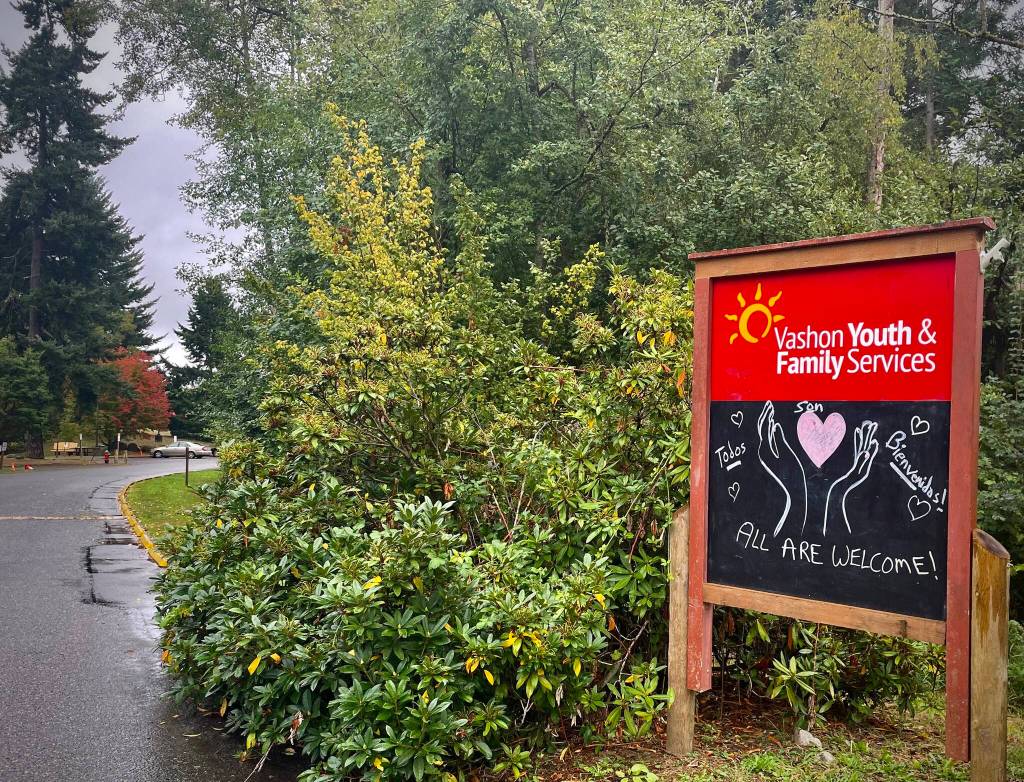
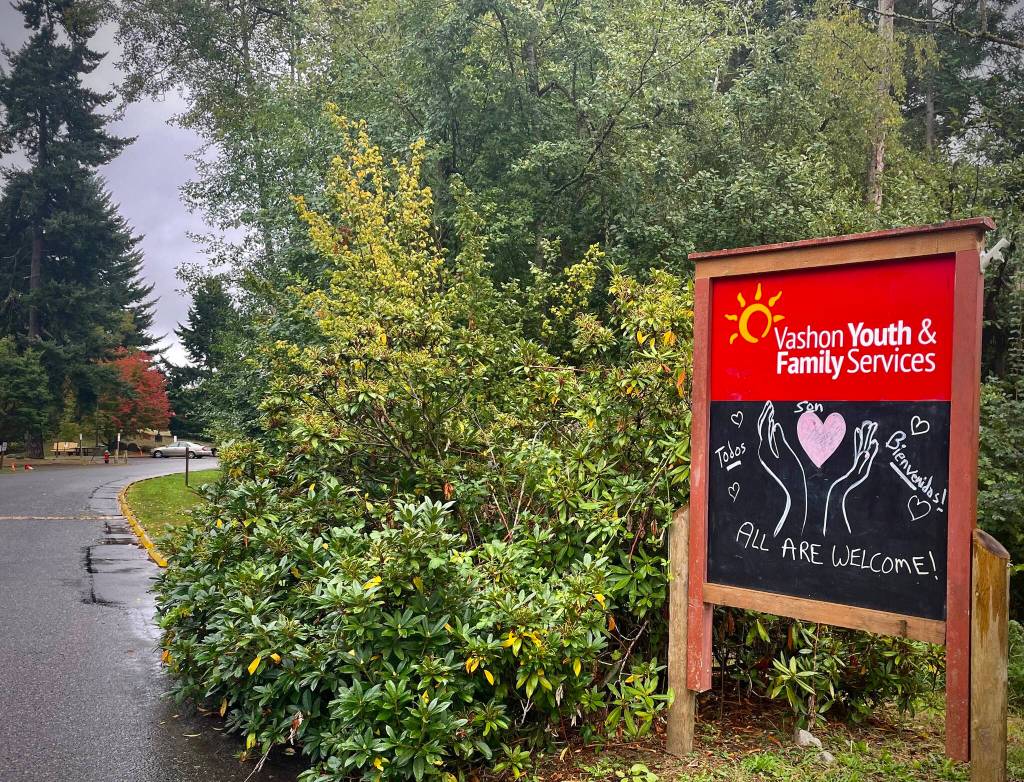
For Vashon Youth & Family Services, Medicaid makes up about 45% of its budget — $1.46 million out of $3.26 million, according to Executive Director Jeni Johnson.
Expansion plans for disability-focused youth groups have already been paused, with resources redirected to at-risk youth counseling.
Johnson said the challenge is planning without clarity. With the enhanced ACA subsidies set to phase out at the end of 2025 and new Medicaid work and redetermination rules slated to take effect in 2027, the full impact on enrollment, state budgets and provider payments remains uncertain.
“How do we prepare for these cuts without undercutting critical services without the full picture?” Johnson said. “We’re trying to prepare for the worst while continuing to operate with confidence and support for our staff and clients.”
In addition, VYFS will lose King County Youth and Family Services funding in 2026, a program created in the 1970s as a countywide youth safety net. The funds were cut from the county’s general budget for 2026, due to deficit issues not related to the federal funding cuts.
The Vashon Schools Foundation and Vashon Health Care District may help to offset funding cuts, Johnson said.
Sea Mar Community Health Clinic
Sea Mar Community Health Care Centers, one of the state’s largest providers, gets 65% of its revenue from Medicaid. On Vashon, however, only 15% of Sea Mar patients use Medicaid.
Still, administrators expect an increase in uninsured patients. The clinic will continue to offer its sliding fee scale, but expects uncompensated care to grow.
Kristina Hoeschen, senior vice president of supportive services, said Sea Mar’s top priority is to maintain services and avoid job cuts. Construction of a new Vashon clinic will move forward.
The state’s Apple Health Expansion program — covering 13,000 uninsured adults, including undocumented immigrants — remains capped. Sea Mar has more than 1,000 patients enrolled in the program statewide, including six on Vashon.
Vashon DOVE Project
DOVE, which supports survivors of domestic violence and provides mental health care, describes the current atmosphere of health care as similar to the early days of COVID: uncertain and tense.
New grant rules proposed by the U.S. Department of Commerce could require some grantees to frame domestic violence strictly as a criminal issue, rather than a systemic one. DOVE Executive Director Heidi Jackson criticized the approach, saying it goes against DOVE’s entire framework for understanding and addressing violence.
“The heart of violence is a power control dynamic,” Jackson said. “Coercion and manipulation and fear are huge tenets in abuse.”
Jackson added that federal grant applications could require applicants to sign agreements affirming compliance not only with federal program rules but also with specified frameworks on how domestic violence is defined and addressed. She said that if a grantee is later found in violation, funders could seek recoupment or terminate the award.
“It prohibits you from applying. Period. Unless you want to sacrifice your values,” Jackson said.
DOVE does not currently rely on any federal grants, though it relies heavily on county-level funds tied to Medicaid. Jackson fears these sources could weaken, pushing nonprofits back into what she describes as a “scarcity mindset.”
It’s an especially uncertain time for undocumented people. Jackson said DOVE may hesitate to advise undocumented clients to seek a protection order at the courthouse, for example.
“It’s very gray, it’s gray for everyone,” Jackson said.
Vashon Natural Medicine
Vashon Natural Medicine (VNM) is an independent primary care clinic serving up to 5,000 patients. VNM solely receives federal funding through Medicare Advantage plans.
Owner Kelly Wright said these reimbursements are inadequate. Even so, Wright is confident in the clinic’s resilience.
Still, she said, “It’s a profoundly sad state of affairs. I think people are going to be really surprised a year from now when they find out really how all of this is gonna affect them.”
The clinic is developing a sliding fee scale for the newly uninsured and has urged patients to schedule preventive care before year-end. “There are so many obstacles from insurance companies to get care, and we’ve had to keep up with that, and now there’s this impending doom on top of it,” Wright said.
Neighborcare Health
Neighborcare Health runs the clinic at Vashon High School. So far, the clinic has not seen federal cuts, but administrators expect tighter budgets as state and local partners absorb federal losses.
The clinic gets 36% of its funding through the King County’s Best Starts for Kids levy, according to Candace Jackson, chief of community engagement at Neighborcare Health.
Neighborcare has pledged to continue serving students regardless of insurance. But new Medicaid rules — especially work requirements and re-certification every six months — could disrupt care. Patients may lose coverage mid-treatment, making health problems worse, Jackson said.
These hurdles punish families not for failing to work, but for failing to navigate confusing rules, Jackson said.
Thunderbird Treatment Center and Seattle Indian Health Board
Construction of the Thunderbird Treatment Center is ahead of schedule, supported by diverse funding streams and protections for American Indian and Alaska Native health services.
Health Board President Esther Lucero credited proactive planning to the board’s stability. “We’ve always been very proactive about funding to make sure that we’re not dependent on solely one thing,” Lucero said.
At the City of Seattle’s Tribal Nations Summit earlier this month, Seattle Mayor Bruce Harrell proposed a $1.8 million investment toward the Thunderbird Treatment Center.
Urban Indian Health Institute, the data and research division of SIHB, faces a greater risk of being impacted by federal health funding cuts than Thunderbird. Lucero warned that public health work like harm reduction and prevention is what’s at stake.
She echoed a sentiment shared by health systems experts across the island: cuts to public health systems ripple outward, with consequences the community cannot ignore.
Mari Kanagy is a contributing journalist to The Beachcomber.