New Dockton bike trail aims to ‘bridge the gap’ for riders
Published 1:30 am Tuesday, February 24, 2026
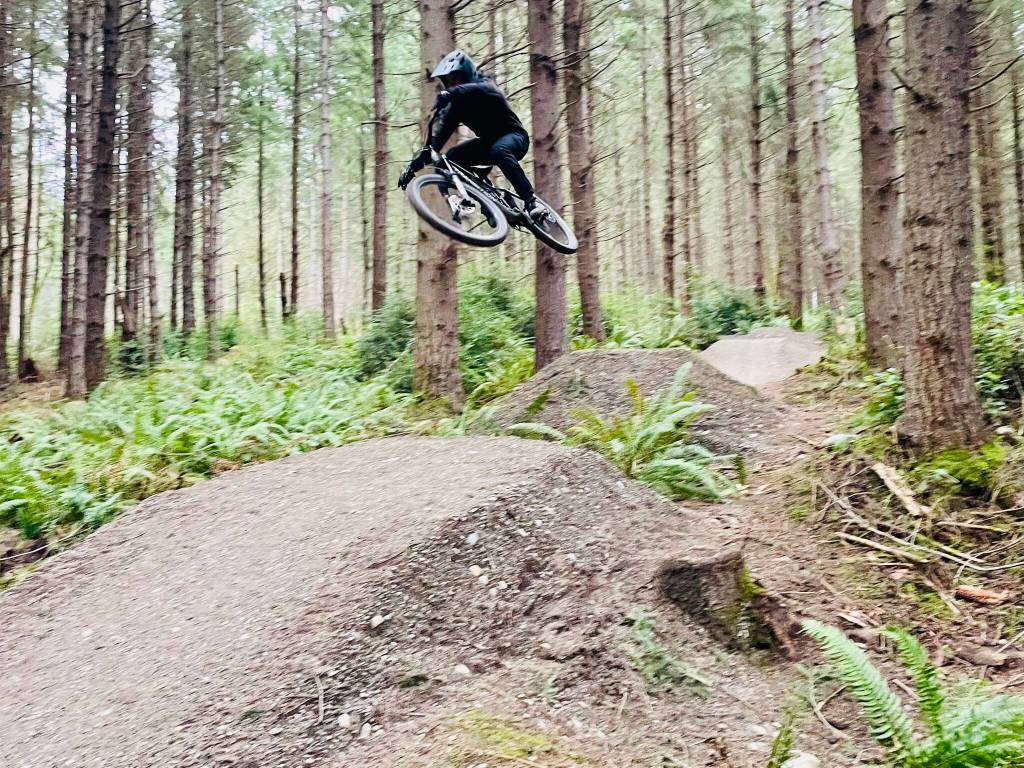
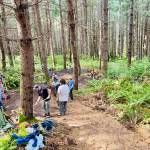
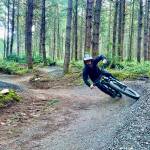
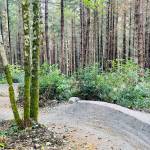
A ribbon of groomed trail now threads through Dockton Forest — a new mountain bike line built by hand, tested in the rain and designed, its lead volunteer says, for riders who are still building confidence.
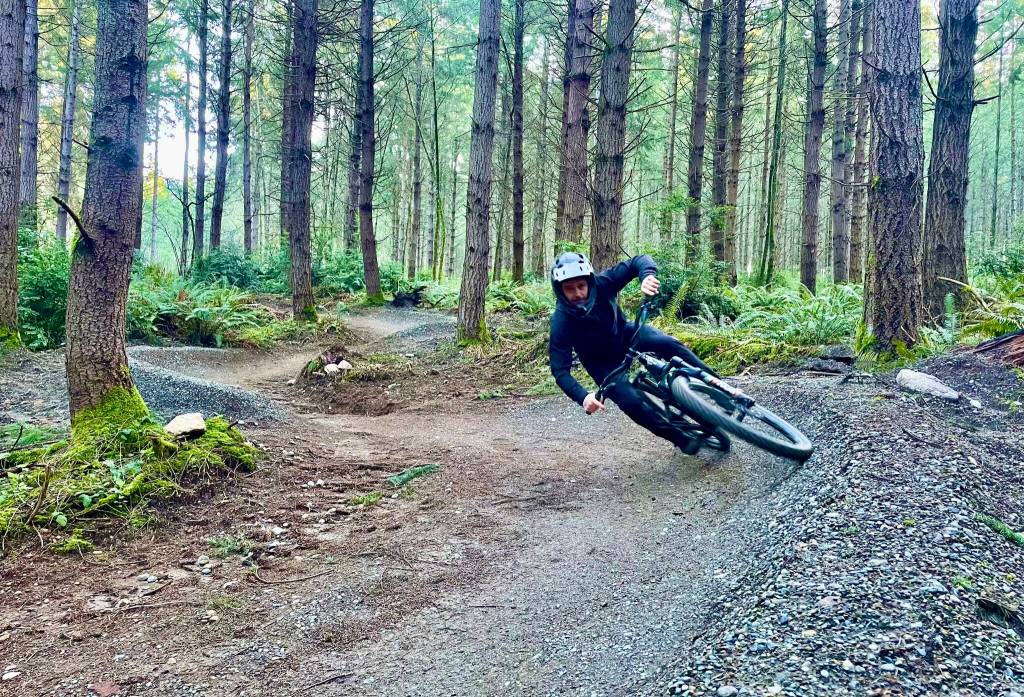
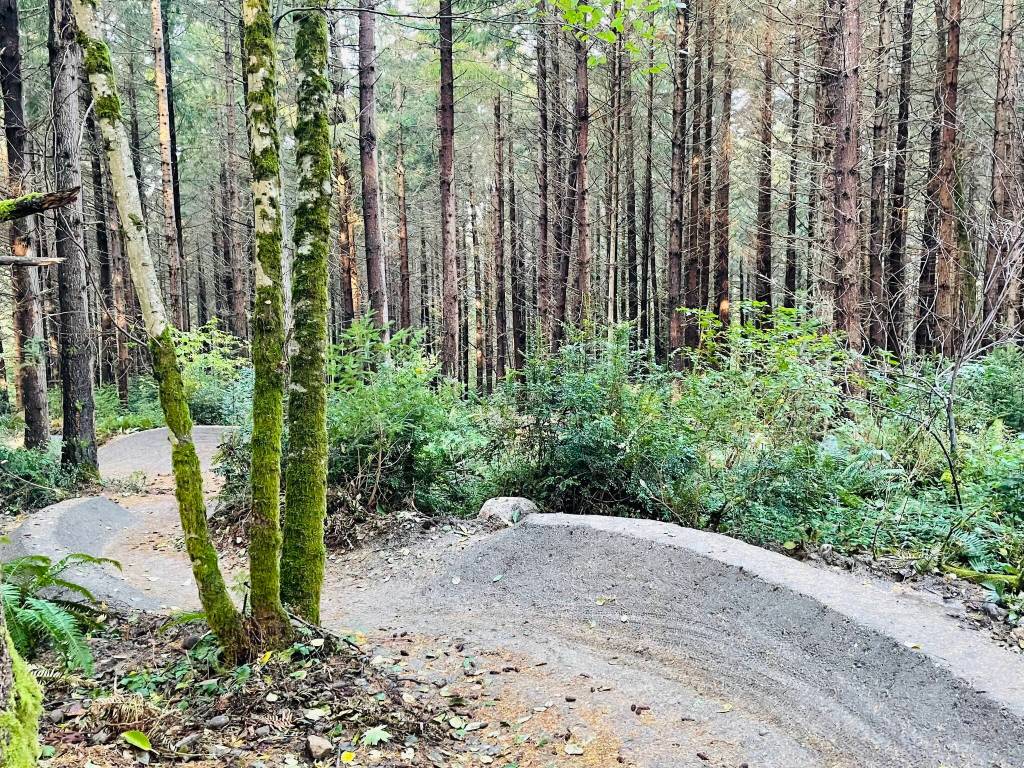
The new trail, called BTG — short for “Bridging the Gap” — opened around the turn of the year after months of volunteer work and a permitting process with King County Parks. At 0.31 miles long, the trail adds a short but feature-packed descent inside the existing bike-only trails south of Southwest 260th Street, where riders can lap downhill runs without crossing paths with hikers or equestrians.
“It’s really trying to bridge the gap,” Bryan Ripka, a Vashon Islander who led the concept, county coordination and on-the-ground build, said. “I wanted to make something that was fun for every level of rider in the community.”
The opening of BTG is the latest milestone in decade-long, community-led push to create sanctioned mountain bike trails at Dockton — a project that began with kids building unsanctioned features in the woods, grew into public meetings and county grants, and has now evolved into a small, dedicated trail system maintained largely by volunteers.
Supporters say the new trail reflects a guiding promise that helped win approval from the start: keep mountain biking clearly marked, contained and separate from other users, while building something local riders of all ages can actually use.
Ripka credits the trail’s quick turnaround — concept in spring, permit in late summer, construction through fall — to a core group that showed up beyond the scheduled work parties.
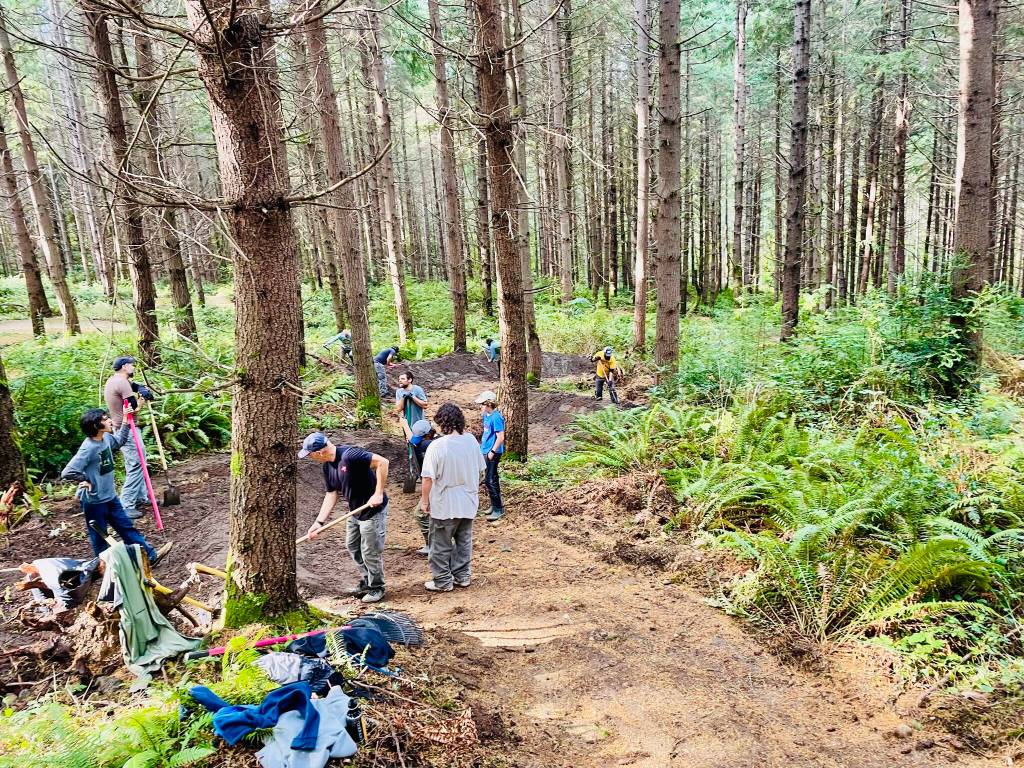
Volunteers logged well over 100 hours total, Ripka said, with much of the consistent labor coming from Corey McIntyre. “Volunteers come and go, but Cory was with me from the start to the end,” Ripka said. Cade Roggenbuck, he added, was instrumental early — helping “rough in” the corridor by clearing the route and shaping the initial line through the forest.
Monthly work parties continue on the first Sunday of every month from 10 a.m. to 2 p.m., with volunteers meeting at the trail map kiosk inside the bike area.
The gatherings focus on maintenance — drainage fixes, rebuilding worn features and addressing erosion — but Ripka said they’re also a gateway for newcomers to learn trail work and stewardship. High school students can also use the hours toward graduation requirements, he said.
Ripka, a lifelong skateboarder and surfer, said he didn’t become a mountain biker until Dockton’s first sanctioned trails opened nearly a decade ago.
“The creation of the bike trails … was my real first time finding my passion for it,” he said. “Living there is a little restrictive with getting out quickly and without committing a day to some sort of activity.”
That first sanctioned build — and the community groundwork behind it — started much earlier.
In the 1990s, Dockton Forest riders, many of them kids, began carving unofficial lines and building jumps that county crews routinely removed. That repeated cycle helped spark a new approach: rather than tearing out features, work with the county to make a small, legal system that would be “essentially invisible” to other forest users.
A key early advocate was Dave Warren, then connected to Dockton Forest management work and later known for stewardship efforts through local nonprofit work. Warren and others helped convene riders and community members, including Larry Dubois, a longtime McMurray Middle School teacher whose students underscored the access problem: many Vashon kids couldn’t get off-island for major riding destinations.
Those early meetings, paired with grant funding and county oversight, led to the first phase of dedicated mountain bike trails contained within a small portion of Dockton Forest — designed not to replace multi-use trails, but to avoid them.
That separation remains central today, Ripka said — and it’s part of why the trails have avoided the conflicts that sometimes flare when bikes share narrow paths with walkers and horses.
“There’s something to knowing you’re not going to interfere with somebody else’s day,” he said. “You can literally go into a flow state … and not worry that there’s going to be someone with your dog around the turn. Or a horse.”
While BTG is short — Ripka estimated roughly a 400-foot descent over its 0.31-mile length — he said it demanded the kind of meticulous trial-and-error that most riders never see.
The trail forks shortly after it begins. On the left: an easier option intended to be rideable for a wide range of skills. On the right: a progressive line with bigger jumps that increase in difficulty — but with “case pads,” a built-in safety margin for riders who come up short.
Features were rebuilt three or four times to dial in the distance between jump lips and landings, he said, and he repeatedly checked drainage during heavy rains to make sure water would sheet off the trail rather than carve ruts down it.
“You want to work with the land and not against it,” Ripka said. “You want to be as least impact as possible.”
That “least impact” ethic — first articulated by teens and volunteers in the earliest planning era — still shapes how the trails are maintained, supporters say: keep the system compact, keep it clear, and keep it from spilling into spaces used by others.
BTG is one more piece inside a multi-phase buildout associated with Dockton’s mountain bike area. In 2016, King County Parks approved a proposal for a community partnership grant supporting the broader project, which includes trails for different skill levels and styles, plus features like a pump track and advanced lines built in later phases.
Future phases — including a longer cross-country loop north of SW 260th Street — remain conceptual and dependent on funding and volunteer bandwidth, Ripka said. For now, he’s focused on what opened this winter: a new descent meant to feel inviting, not intimidating.
“A beginner can cruise down the easier option,” he said. “Intermediate riders can build skills on both options, and an advanced rider can rip all of it and have a blast.”
And for Ripka, the best feedback hasn’t come from any formal opening — but from the riders the trail was built for.
“Hearing young riders say it’s their favorite trail in the park makes that all worth it,” he said.