The flow between us
Published 1:30 am Wednesday, April 1, 2026
I recently read a letter from someone in Gen Z, and it caused me to wonder: In today’s world, can younger generations even begin to accommodate themselves to what is happening?
They have inherited an unraveling world — climate, ecosystems, work, housing, politics — with systems that once offered stability now tottering all at once. The bargain once offered to their parents — get an education, work hard, and you can succeed — no longer holds. That old social contract comes from a distant era, and its promises dissolve with each new disappointment. For many, precarity has become a way of life rather than a transition, and happier futures often seem foreclosed.
Who they are is part of who we are as a whole, and their prospects are woven into our shared interdependence here. How can we shape a future they will look forward to living in — a world into which some of them will wholeheartedly bring children? Is there a more important question?
Quartermaster Harbor has been relatively isolated, with limited recharge and throughflow from the greater Salish Sea. Silt accumulates, and excess nitrogen from runoff feeds problematic algal blooms. Friends of the Harbor seeks to restore its water quality, in part by cultivating oysters there. For more information, see v-mcc.org/shellfish. Every island community carries its own accumulation of silt — fears, habits and histories that slow the living flow between us. Our shared future is, in a sense, a work of remediation.
Here on Vashon-Maury Island, the most meaningful forms of power have never been about wealth or hierarchy. They have rested instead in competence and care: the person who knows how to mend a roof before the next storm, who checks on an elder when the power goes out, who starts a food drive or recycling event, who mends clothing for a friend or writes a song that reminds us who we are. These acts never appear on economic registers, yet they keep the island alive.
When we help a neighbor, grow food, repair a trail, organize a dance, or teach a youngster a skill, the future tilts toward possible again. Shared energy multiplies. Among ourselves, across generations, we can still shape a local economy and a shared life that make homes available and livelihoods possible. Piece by piece, we can build the world we want to live in — working side by side in mutual confidence.
The challenge for younger generations now is not how to succeed under the old rules but how to imagine new ones that fit the reality we face. The social contract was never carved in granite; it was an understanding among people standing on the same tide line of history. The earlier contract served awhile and then failed. The next will need to be written in daily practice rather than declaration — a commitment with new consciousness, a pledge to leave no one sacrificed and no one left behind.
When the internet insists that the future is already lost, we might remember that islands have always lived by a more elemental law: endurance through mutual care. Survival here has never been a solitary achievement. Every meal shared, every skill taught, every shoreline cleaned or neighbor checked on steadily redefines what “security” means to us now. Each act of connection sketches a different kind of social contract, one founded not on transaction but on trust, reciprocity and flow.
To live on Vashon-Maury Island is to be a steward not only of the land and waters but also of the people who share them. That care — of place and of one another — is what makes us who we are. It is what keeps us human, and humane, as we shape a future still worth looking forward to, together.
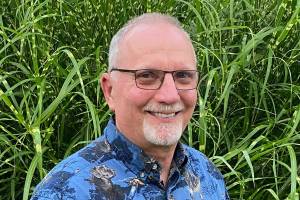
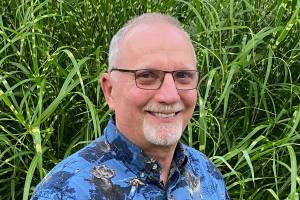
JC Graham has lived on Vashon Island since the turn of the century. JC can be reached through Permessos Press at permessos@proton.me and at President.v-mcc@proton.me.