Remembering Israel Shotridge, a beloved Vashon artist
Published 1:30 am Wednesday, April 29, 2026
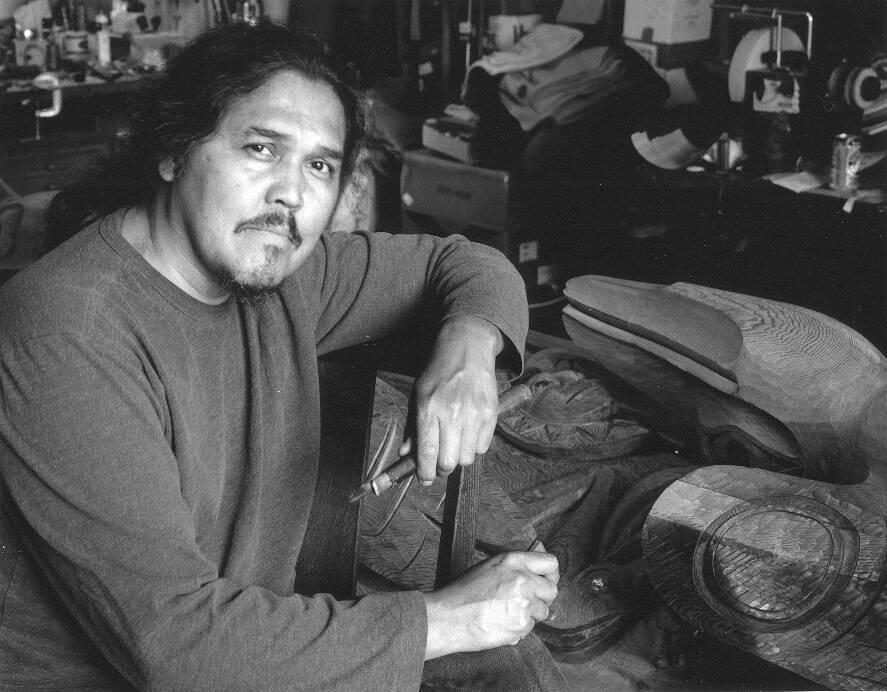
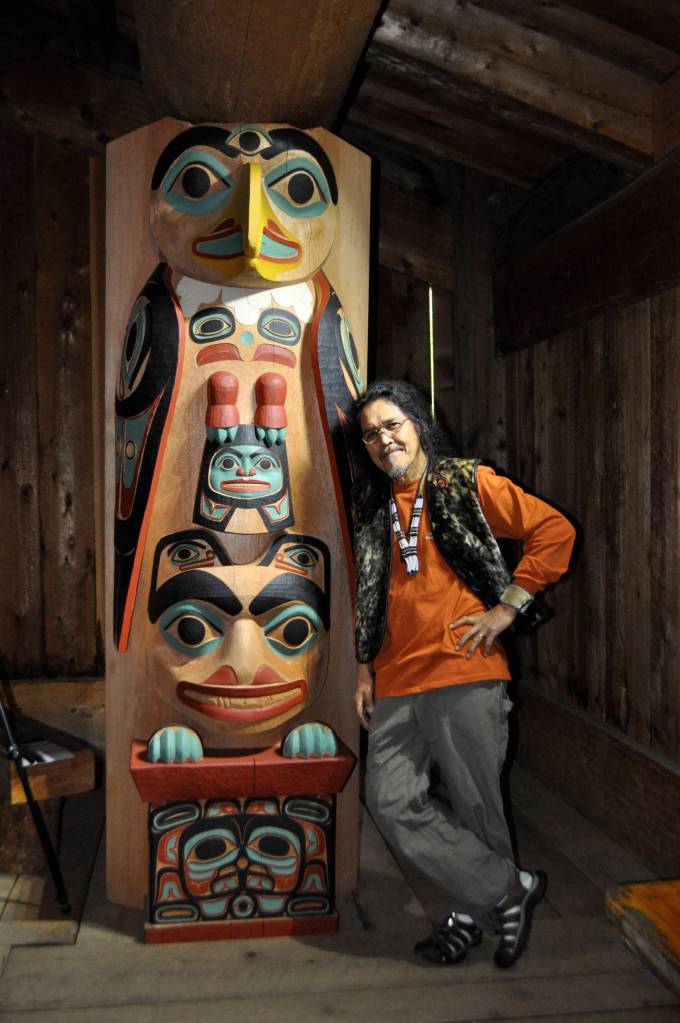
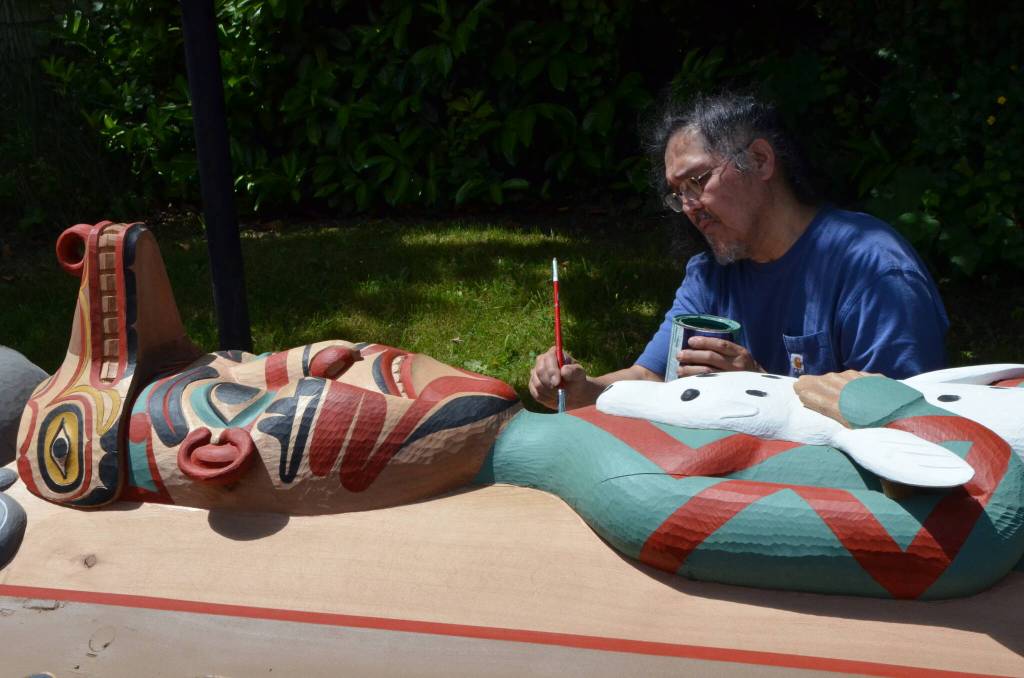
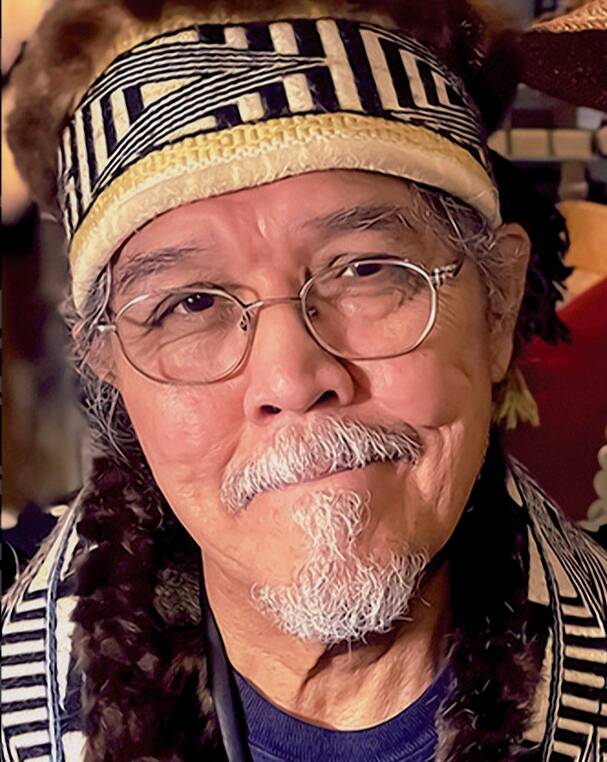
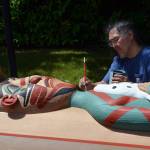

Israel Shotridge, a master Tlingit artist and beloved longtime islander, died on April 13 at his Vashon home, in the arms of his wife, Sue Shotridge, after a long battle with dementia and complications requiring three head surgeries that had left him increasingly fragile. He was 75 years old.
Israel was my sensei.
Every time we met, every time we played together, worked together and suffered through a tragedy together, I called him sensei. And each time I called Israel sensei, in his distinctly humble way, he would smile, laugh with a subdued chuckle, and nod at the recognition of the mastery of his art that the term endowed.
The very last time I saw Israel was the night before he died. When his wife Sue whispered in his ear that I was there with a small group of close friends, he raised his arm and gave us a wave.
Sensei is a Japanese word that means teacher, mentor, or master. And Israel was that and so much more to me, and to the numerous students he taught, to the many young emerging Native artists he worked with on his monumental carvings, to the Ketchikan Tlingit community. He also played the roles of teacher, mentor and master to his many Vashon friends.
Israel was a loving father for his daughters Holly, Leigh and Autumn, his son Jaki, his grandchildren Tyler, Michael, Jourdan, Aria, Zeleigh, and a devoted husband to his wife, fellow artist and business partner Sue.
Israel was born into a large, extended Tlingit family in Ketchikan, Alaska, on March 11, 1951.
He did not know he was Tlingit until he was a young boy because of the suppression of Native Culture by the residence schools and the erasing of Native culture of that time. Because of that suppression, Israel’s grandmother chose to teach him about the culture, songs, stories and meanings of the totem poles. She was instrumental in teaching him about his Tlingit Culture and who he was as a Tlingit.
Ultimately, he and his family became deeply involved in practicing, teaching and preserving Tlingit Native culture and arts.
His mother, Esther Shea — Taa’lyei (her Tlingit name means “the basket with the sun shining through it”) was a highly respected Matriarch of Teikweidi (Brown Bear Clan) of Taantakwaan (Tongass Tribe) from Ketchikan. Israel was one of fourteen children with numerous cousins, nieces and nephews.
His Tlingit name is Kinstaádaál (Bear that is standing up), and his Tlingit linage is Ch’áak’ (Eagle), Teiḵweidí (Brown Bear) of Taantakwaan (Tongass Tribe).
Israel never intended to become a carver — he studied marine engineering. But while waiting for a job with the Alaska Ferries, he had an opportunity to apprentice with a master carver and his life changed. What emerged from these early carving experiences and the years of work that followed was the gifted designer, master carver and cultural treasure we know as Israel Shotridge.
He was also a lover of music who deejayed his own radio show in Ketchikan, a rabid Mariner’s fan, and he amassed an amazing collection of recordings, music magazines and comic books.
The significance of Israel’s work and his place in Tlingit culture was best captured by the Ketchikan Indian Community and Tribal Health Clinic when they described Israel on their website.
Israel carved a pole in 2004 that stands in front of the Health Clinic in Ketchikan, and the clinic’s website description of his artistry captures his significance as a Tlingit cultural leader, artist and storyteller.
“Through his carvings, designs, and storytelling, he shared the values, history, and identity of our people,” this biography said. “His work reflects the strength of our matrilineal traditions, the importance of family and clan, and the stories that guide us from past to present and into the future.”
Israel and Sue came to Vashon in 1996 and developed their Shotridge Studio and Raven’s Nest Gallery into an important and distinct part of the island’s arts community.
Israel’s work encompassed the full range of Northern Northwest Coast Art from monumental carvings of poles and screens to smaller carvings of masks and bentwood boxes. He also designed a series of 65 original art prints, jewelry and a wide range of traditional and contemporary Northwest Coast gift products.
Many of his pieces can be found on Vashon in private homes and collections and Israel and Sue regularly performed and drummed at island ceremonies, including ones held when Lucy Gerand’s headstone was dedicated at the Vashon Cemetery, in 2008, and when carvers brought the Lummi Whale People Pole and the Red Road Pole to the island as part of a cross-country journey in 2021.
Israel regularly taught design and carving classes for emerging carvers and artists through the Vashon Island Northwest Coast Arts School and through the many fellowships and grants he was awarded.
Israel’s work is widely displayed around the country and in the Ketchikan area where he began his artistic journey by re-carving the original 1902 Chief Johnson Pole. The pole had been taken down in 1982 because of its deterioration and was recreated by Israel in 1989. The raising of the new Chief Johnson Pole marked an important cultural milestone for the Ketchikan Tlingit community.
From that time until his death he never stopped designing, drawing, carving and fabricating his art. Two of his most important works are the U.S. Forest Service Pole he carved in 2005 for the agency’s Hall of Tribal Nations exhibit at Forest Service headquarters in Washington, D.C., and the Quileute Gate he designed and carved in 2011 for the entrance to the cemetery in La Push, Washington, where the Quileute ancestors are buried.
The Forest Service Pole recognized the partnership between the Forest Service and Alaskan Native People during the Civilian Conservation Corps’ Totem Restoration Project (1939-53). The project involved more than 200 Alaskan Native carvers and laborers who restored and replicated totem poles throughout Southeast Alaska.
The Quileute Gate featured two 15-foot welcome poles and a 30-foot canoe façade that connected them into an archway entrance to the Quileute Cemetery. The welcome poles feature a male and female figure, one holding a seal and the other a salmon — animals that have provided for the Quileute people and represent the cycle of life. The canoe featured in the facade symbolizes not just the Quileute’s traditional mode of transportation, but how the people, according to tribal beliefs, are transported to the next world after death.
Israel will be celebrated in two memorial services: one in Ketchikan on June 20 and the other on Vashon Island on August 1 at the Vashon Center for the Arts.
You can see the full range of Israel’s work on the website israelshotridge.com.
Gunalchéesh, (thank you, it would not be possible without you), Israel. You will be missed and never be forgotten.
Bruce Haulman is a writer and island historian.