A time for reflection and conversation
Published 1:30 am Tuesday, June 30, 2026
The 250th anniversary of our nation’s founding is upon us. Commemorations are underway to celebrate the founding, our nation’s values and its many achievements.
A small group of islanders, convened by Bruce Haulman, our resident historian of Vashon, has been discussing how we might generate community involvement in reflecting on the anniversary and its meanings. (Bruce has already been recounting events related to the founding and their relevance to the present every Tuesday, 11 a.m. to noon, on Voice of Vashon, KVSH-FM 101.9.)
We have agreed that the one valuable approach would be a community conversation about what it means to be an American. We recognize that each of us have thoughts and feelings about our relation to the nation. We could all derive a deeper understanding by careful listening to each other.
With the cosponsorship of Vashon-King County Library, we are planning two conversations in the evenings of Tuesday, Sept. 15, and Tuesday, Sept. 22. After a brief introduction, our time will be devoted to talking together.
I imagine that I am not alone in coming to this historical marker with some apprehension. Every nation has its national holidays and its sacred rituals of affirmation and remembrance. Yet precisely what is it that we want to celebrate? What story of the nation will be told? Who will do the telling? What will be concealed, glossed over or reframed? What voices will be silenced or ignored? Where are our voices? Might the accolades reinforce an unthinking, self-serving and unprincipled nationalism? Or might the anniversary present an opportunity for honest reflection?
How any one of us understands the meaning of America depends on what we each bring to the effort — our situated experience in hierarchies, such as race, class, gender, sexuality and citizenship; how the larger society defines and labels our identities; and how people respond to those attributions and redefine themselves. Think about the relevance of religious affiliation or its absence, age, generational differences, levels of education, geographic variations, newcomer status and much more.
An honest reflection strives toward understanding lived histories of the people who make up the nation. Such an effort is not an easy task. There are textbook histories and critical, academic histories; “people’s histories”; Indigenous histories; and personal and cross-generational memories, all marked by a plurality of values and experiences.
An honest history would not ignore the genocidal removal of the Indigenous inhabitants of the land; the brutality of slavery and its enduring aftermath; trajectories of violence, injustice and environmental damage; the World War II incarceration of Japanese Americans, recently remembered by the Vashon community; the concentrations of economic and political power with all their harmful consequences. Nor could we avoid a clear-eyed assessment of how the government has acted toward racialized “others,” or how it has used its military and economic power in the larger world, acts that may induce feelings of “not in my name.”
Yet neither would an honest reflection ignore the nation’s democratic and egalitarian ideals, evident in the struggles to end slavery, Jim Crow and persisting forms of discrimination. We remember innumerable stories of those who have endeavored to make America a better country. Many of us take inspiration from the successive waves of immigrants and refugees, working hard to create a good life for their families, forging strong labor organizations and caring communities. Still others hold dear the beauty of the land, attachments to local cultures and place and the uniquely American forms of music and literature.
Given the diversity of experiences, what, then, binds us together in the so-called American experience? How does our sense of responsibility to the nation mesh with our other valued commitments — to human rights, to a just and peaceful world and to the well-being of global humanity?
We warmly invite all islanders to consider these matters worthy of open conversation, discussions that can help direct our actions in a fraught political moment. We hope you are able to set aside time for one or both of the planned September meetings.
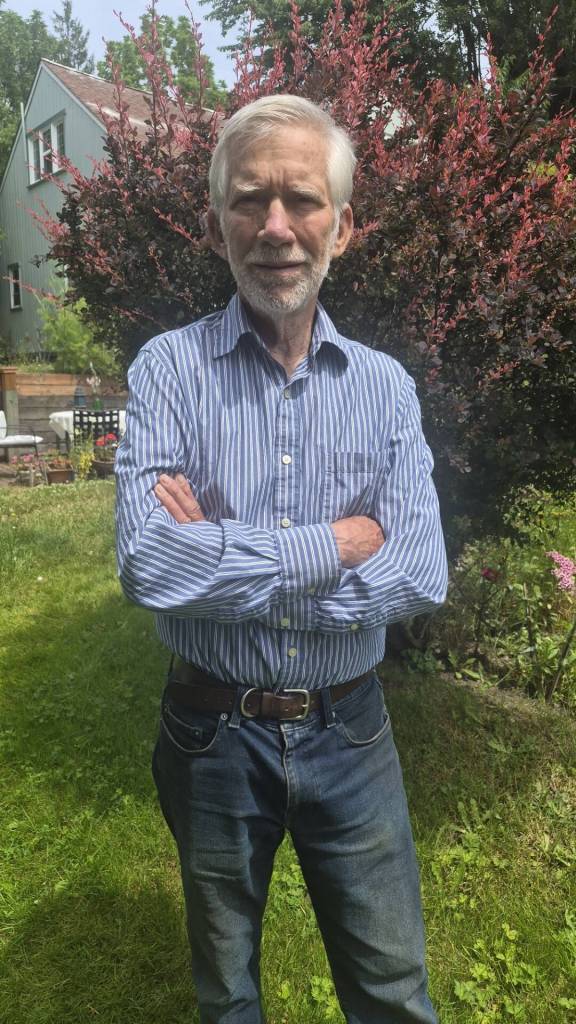
Rob Crawford has lived on Vashon since 1987. He was a founding faculty member for the University of Washington Tacoma campus in 1990, where he taught history, politics and culture until 2016.