Thunderbird gives nearly $350K for Vashon emergency helipad
Published 1:30 am Tuesday, July 7, 2026
When an emergency helicopter is called to Vashon, it has two main options for where to land.
Under rainy, wet or dark conditions, it can land at Sunrise Ridge, where the landing pad is concrete but has only basic perimeter lighting. Under more ideal conditions, it can land at the preferred helipad at Vashon Municipal Airport, where the runway helps guide the aircraft.
But occasionally — under very low visibility or poor weather — a helicopter cannot land at either site, forcing a patient in a time-sensitive medical emergency to leave the island by ferry instead.
And at the airport, even when a helicopter can land, the current helipad presents another challenge: For years, first responders sometimes have had to move patients across wet, uneven grass, guiding gurneys through mud in the dark while ambulance headlights helped illuminate the helipad.
Now, a nearly $350,000 donation from Seattle Indian Health Board will fund a new emergency helicopter landing pad at the airport — a project first responders and airport officials say could make life-saving medical transport from Vashon faster, safer and more reliable.
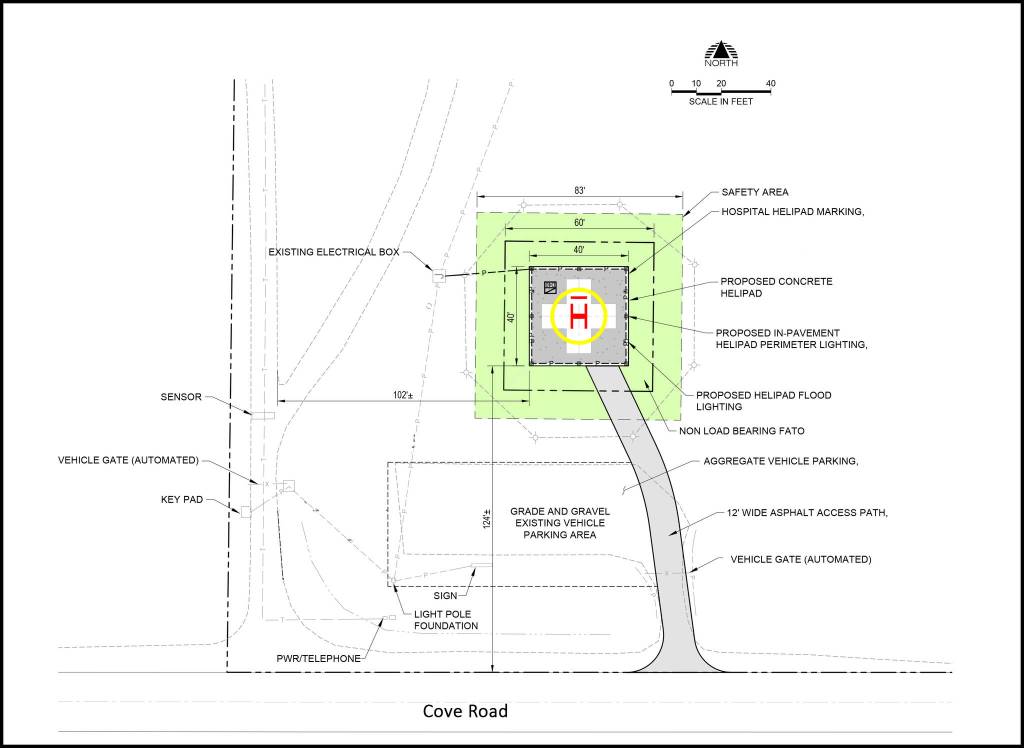
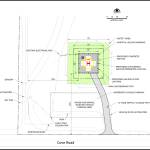
The donation, made through SIHB’s soon-to-open Thunderbird Treatment Center, will pay for a 40-by-40-foot concrete helipad, paved access for ambulances and gurneys, brighter pilot-controlled lighting, weather monitoring equipment and an instrument approach to help Airlift Northwest helicopters navigate to the airport in poor weather.
The project is expected to be completed by the end of September.
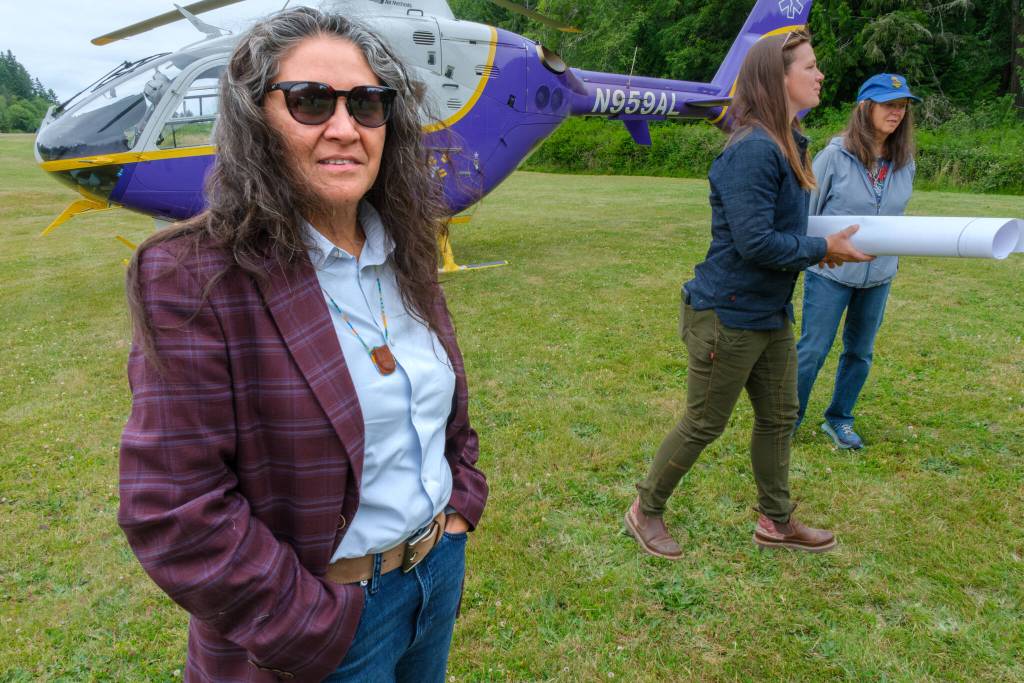
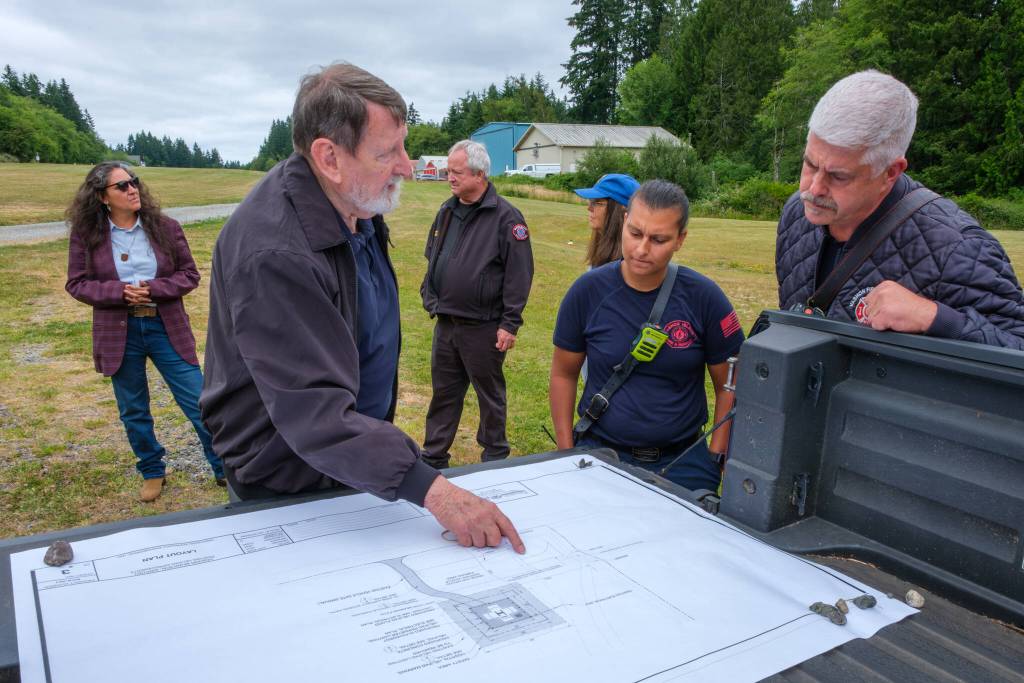
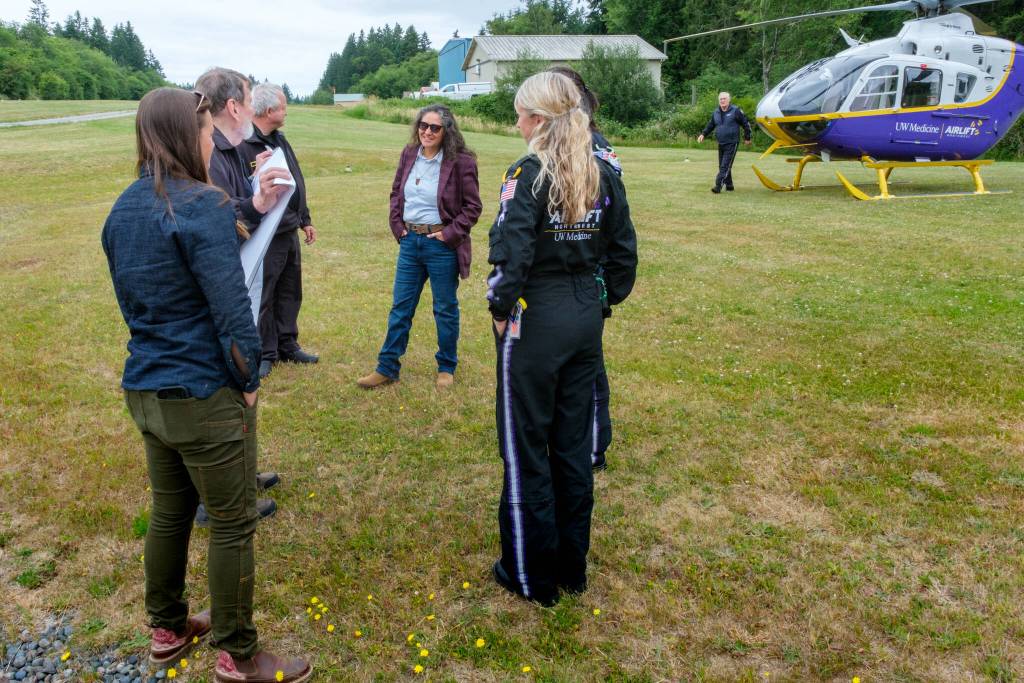
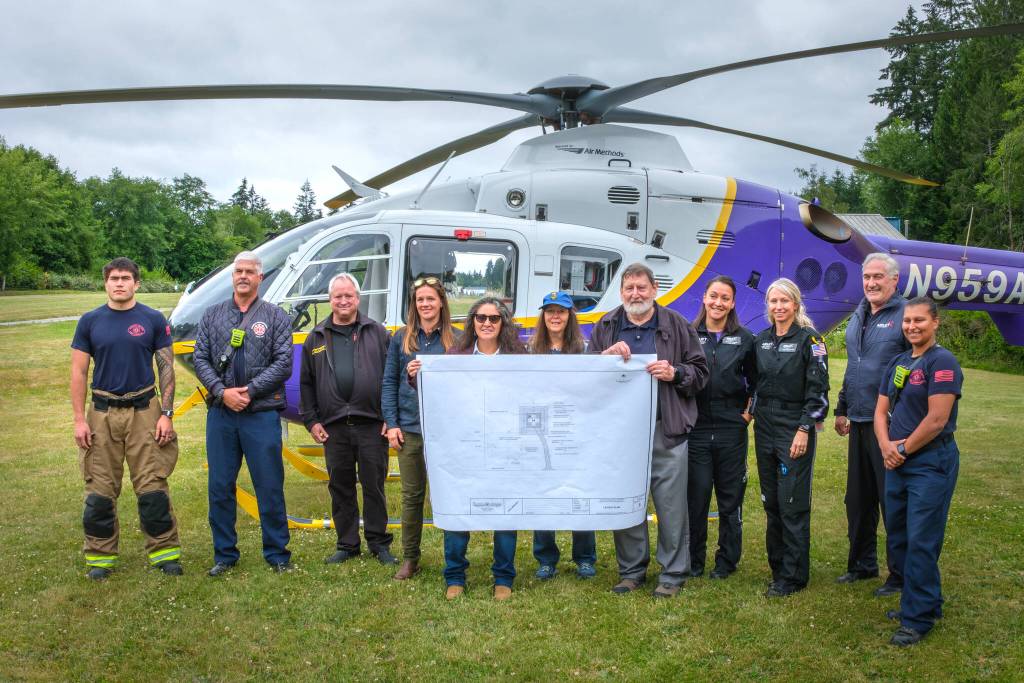
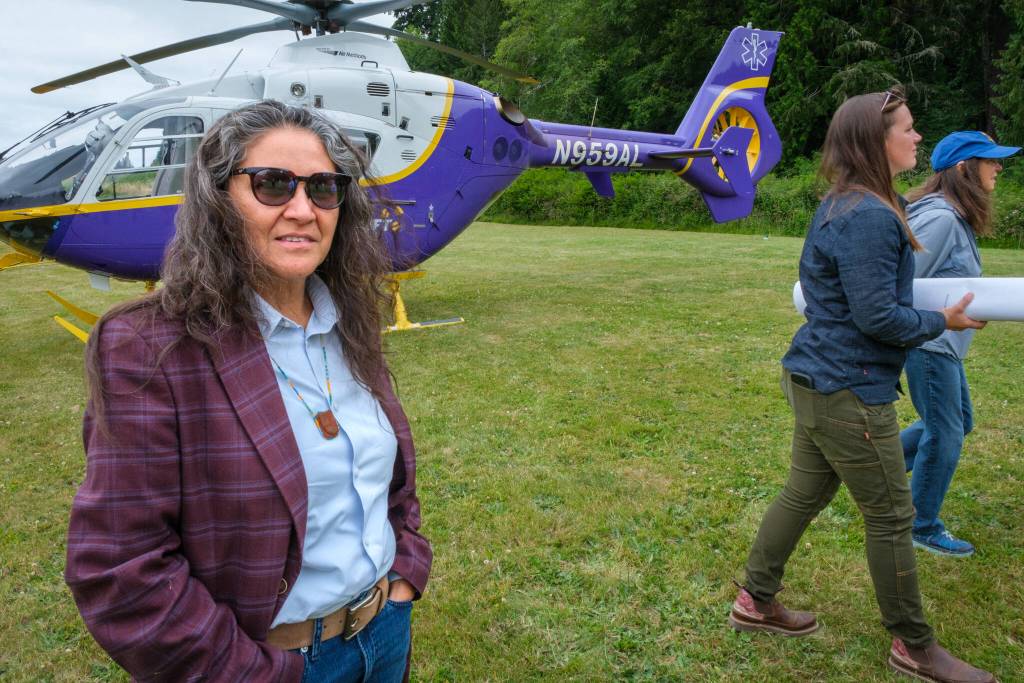
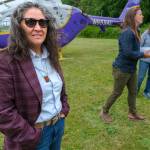
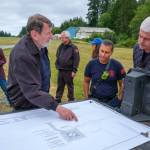
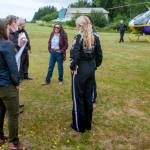
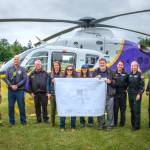
On a recent gloomy late-June afternoon, Thunderbird officials, Vashon Island Fire & Rescue leaders, airport commissioners and an Airlift Northwest crew that flew in for the occasion gathered beside the grassy landing area to discuss the project and show the community what the new helipad is meant to replace.
“This will certainly help,” Vashon Island Fire & Rescue Chief Bill McLaughlin said. “Currently, it’s almost not usable during part of the year.”
McLaughlin said Vashon has roughly two to three airlifts a month. Those transports are reserved for serious, time-sensitive emergencies, he said — the kinds of calls where “minutes, even seconds matter to the life of someone in those conditions.”
That urgency is heightened on Vashon, where there is no hospital and no critical emergency care. Patients who need immediate hospital treatment must leave the island by boat or air.
The current airport helipad is a 98-foot grassy circle with perimeter lights that are on from dusk to dawn, said Truman O’Brien, a commissioner with King County Airport District No. 1, which owns and operates Vashon Municipal Airport. But the lights only outline the landing area and do not illuminate the surface around the helicopter.
“When a patient has to be loaded, there’s no light on the helipad,” O’Brien said. “When the aid car comes in, they’re trying to move this gurney across the grass, and in the wintertime, deep wet grass to the helicopter, and there’s no light there, so they have to take their other vehicles and shine their headlights on the helipad in order to light it.”
With the new system, O’Brien said, pilots will be able to activate floodlights from the helicopter by radio before landing. A paved route will allow ambulance crews to roll a patient directly to the aircraft, rather than carry or maneuver the gurney through wet ground.
“If we have this where they can roll right up to the helicopter and load and go, it’s going to be so much faster,” O’Brien said.
Airport officials estimate the new helipad could save 15 to 20 minutes during some airlifts — not because the helicopter itself will land much faster, O’Brien said, but because crews will no longer have to struggle across mud, grass and uneven ground.
“You can imagine landing a helicopter in a bog, and then trying to roll a gurney across that bog,” O’Brien said. “It’s very, very dangerous and time consuming.”
The upgrade has long been on the airport district’s wish list, O’Brien said, but its tight budget never allowed for the investment.
That changed after O’Brien approached SIHB leaders during a June meeting at the new Thunderbird Treatment Center. SIHB purchased the Vashon facility in 2024 and has been renovating it as a 92-bed inpatient drug and alcohol treatment center, which is expected to open to patients by late summer or early fall.
SIHB President and CEO Esther Lucero (Diné) said Thunderbird had originally budgeted for a boat or similar emergency evacuation option, especially with plans to eventually open a wing for pregnant and parenting patients.
But after hearing from O’Brien, Lucero said, SIHB decided to redirect that money toward a project that would benefit the entire island.
“We want to be good community members and make sure that we uplift the Vashon community as a whole,” Lucero said. “It increases access and improves the access for all of Vashon.”
Lucero said the decision was not made because SIHB expects Thunderbird to place a major new strain on Vashon’s emergency system. Patients will have completed detox and a mental health evaluation before arriving at the residential treatment facility, SIHB leaders have said, and Lucero said Thunderbird historically had little need for emergency medical transport when it operated in Seattle.
McLaughlin also said he does not expect the treatment center to significantly increase the number of airlifts from the island.
For Lucero, the helipad donation is also about answering community concern with community investment. Some islanders had raised worries about Thunderbird’s arrival, including whether the facility could burden already limited emergency resources on Vashon.
“We’ve been looking for ways to really show up for community,” Lucero said. “This seemed like the right opportunity.”
She said the project reflects the kind of partnership Thunderbird hopes to build as one of Vashon’s newest community members.
“We have to get back to that culture of lending a hand,” Lucero said. “That’s what it means to be in community.”
Mindy Churchwell, an Airlift Northwest flight nurse, said the existing setup adds risk for flight crews and first responders, especially in the dark or in wet weather.
A smooth, paved surface would make it easier to move patients safely, she said, and would also help protect first responders, who sometimes have to carry a patient when a gurney cannot move through mud.
“It’s the body mechanics that really make a difference for our first responders,” Churchwell said.
For patients with strokes, heart attacks or other time-sensitive medical emergencies, Churchwell said, lost minutes can change outcomes. “From cardiac muscle to brain, those are all timed things,” Churchwell said.
The new weather station will also give pilots direct information from the airport, including wind direction and speed, temperature, cloud height and visibility. Currently, flight crews rely on weather reports from Bremerton, Tacoma Narrows and Sea-Tac, then estimate what conditions may be like on Vashon.
“If we have direct weather reporting, then we know we can [land], or we can tell them sooner that we can’t,” Churchwell said.
O’Brien said Airlift Northwest is also designing an instrument approach that will help helicopters navigate to the airport in poor weather, even when pilots cannot see the ground for part of the approach.
The final portion of any landing still must be completed visually, he said, but the new system should improve safety and make the airport a more reliable landing site.
During construction, the airport helipad will not be usable, O’Brien said. Emergency helicopters will use Sunrise Ridge instead.
The new helipad is not for private use, sightseeing or routine airport traffic, O’Brien emphasized. It is only for emergency medical operations.
“The helipad does not benefit the airport in any way,” O’Brien said. “It is only a benefit to the citizen of Vashon whose life depends on rapid transport to medical attention. In my mind, this is very cheap insurance no matter what the cost. Just ask the patient whose life was saved.”