Q&A: Amanda Knox on telling her story through comedy
Published 1:50 pm Wednesday, July 22, 2026
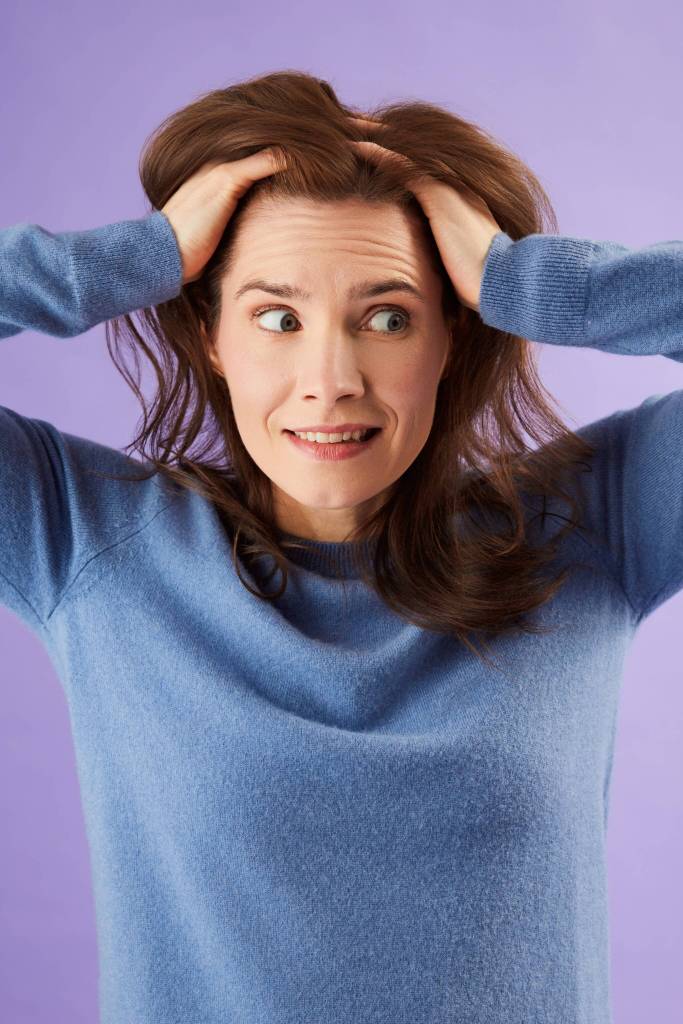
To islander Amanda Knox, some of the best comedy touches on something uncomfortable.
In her new one-woman comedy show, “Cartwheel,” Knox embraces discomfort, combining playfulness and vulnerability as she reflects on her wrongful conviction, media scrutiny and the challenge of recounting her experience to her young daughter.
The author of two memoirs, a podcast host and activist, Knox has candidly discussed issues ranging from police reform, the media’s portrayal of women and the human impact of wrongful convictions.
Now, she’s exploring some of these same topics through a new lens.
“I’m at a certain point in my life where I want to talk about something new,” Knox said. “Even though I am talking about the worst experience of my life again, I’m talking about it in a completely new way.”
The show has been a long time in the making. And before taking it to the Edinburgh Fringe Festival in August, she’ll perform “Cartwheel” on July 24 and 25 on Vashon, giving the island she calls home a first look.
Ahead of her sold-out Vashon shows, The Beachcomber talked with Knox about the show’s origins, motherhood, her relationship with comedy and more.
This interview has been lightly edited for length and clarity.
Tell me about your journey into comedy. Was it always something you saw yourself pursuing?
A lot of people ask me that question, and I feel like it speaks to how much people’s perceptions of me have to do with how they got to know me. People associate me with something very serious and tragic, and the idea that I might be interested in pursuing performance and comedy feels so strange.
But I’ve spent the last 10 years of my life writing, speaking and storytelling. I can’t say that I ever imagined that I would be doing anything like stand-up, but as far back as middle school and high school, I was on stage goofing around and doing comedy.
I’ve always been a very silly, lighthearted person. And so if anything, this journey feels very much like coming home to something that was denied from me for a long time.
What do you think comedy can accomplish in storytelling that another approach might not be able to?
When speaking about anything difficult, there are two strategies. One way that you can go about it is with full honesty and vulnerability, and that’s very effective. But I think comedy adds something extra.
Comedy is about surprise; it’s about making surprising connections and activating feelings that have to do with the taboo. I think some of the best comedy out there is needling at something uncomfortable.
I like that comedy allows me to talk about the full scope of my experiences, and still lean on the playfulness that, even in the midst of trauma, we still have.
We tend to expect things to look and feel a certain way and see things in black-and-white. But the truth is, I’ve always been cracking jokes about my experience.
When I first came home, my family brought me to my aunt’s house, because my mom’s house was surrounded by media vans. We had a big party, and my whole family was there to celebrate me.It was very overwhelming because I’d been in isolation for four years. At one point, they brought out a cake, and gave me the knife to cut it, and I’m like, ‘Are you sure about that, guys?’ I was so overwhelmed, I just had to make a joke to release that tension.
That’s why comedy is so magical, because it’s striking a balance of building up tension and then releasing it.
Have you found comedy to be empowering or therapeutic?
There’s certainly something defiant in me pursuing it. People have said not only that I can’t do comedy, but that I shouldn’t do comedy because of who I am. I’m extremely responsive to reverse psychology, so when someone tells me, ‘You can’t do that,’ I feel empowered to be like, ‘Yes, I can.’ I think that anytime you’re self-expressing, it’s very cathartic and empowering.
There’s also an extra challenge because of people’s predetermined ideas about me. I think a lot of people who might come to the show are coming because they’re like, ‘I don’t know what I’m gonna see,’ or ‘What could this person possibly be doing?’ And that’s something that I can play with as a comedian as well.
What inspired you to create a show centered on motherhood?
A couple of things immediately come to mind, one of which I describe in the show. My daughter is very emotionally intelligent. She notices people’s energy in the room. She has come up to me and asked me very directly, ‘Mama, why is your face sad?’ There are parts of myself that are deeply impacted by all of this unresolved grief that my daughter is picking up on without even knowing the facts.
And so the questions of not only what do we tell our kids, but how do we be around our kids, I want to be very intentional about that.
I want my daughter to have a better experience in life than I have had. But at the same time, there’s tension between wanting to prepare her for a world that can be unfair and unkind, and wanting to let her be fearless, friendly, free and unburdened with hard truths that I had to learn the hard way.
I want to be honest with her, but how do you even begin to have that conversation? I thought that was an interesting entry into a story about coming to terms with things that hadn’t yet been fully processed.
In your previous performances, what elements of the show have audiences most responded to that have stood out to you?
I’ve had a lot of fun really digging into the accusation that I was odd. Like, ‘It’s your fault you were wrongly convicted because you’re weird.’ I really dig into that in this show because, of course, I’m raising my daughter to be a little weirdo, too.
I’m very open to her expressing herself and being quirky. Quirkiness was weaponized against me, and I explore that in this show, where it’s like, of all things, doing a cartwheel, really, that’s evidence of murder now? Like, ‘Are we really serious right now?’
A more serious part of this show is an acknowledgment of what my mother went through. Because up until I became a mom, I couldn’t fully appreciate what it was like for my mom to go through that. But once I became a mom, I was stricken with this realization, and that’s something that I also grapple with in the show.
What do you hope people take away from this show?
Of course, I’m hoping that people have a good time and see themselves in the things that I describe. But I also hope that people come away really thinking about how the world, to this day, continues to set up women to tear them down.
It’s something that I think is really worth thinking and feeling about. And I do a lot of thinking and feeling about it in the show, and I hope the audience is gonna be on that ride with me.
What are you most excited about for the Vashon shows?
Well, Vashon is home. It’s a small town where everyone knows each other. And it’s one of the first places that I started experimenting with stand-up comedy. I got to have the normal experience of an open mic that I wouldn’t have been able to have in another place because people would make a big deal about it. I’m allowed to just be a person trying out something new without being put under the microscope.
I love Vashon because it makes me feel safe. So it’s a really nice place to try new things and just see what works in a way that I don’t necessarily feel safe or comfortable doing outside of our little island.