Vashon co-op preschool faces uncertain future
Published 10:30 am Tuesday, August 4, 2026





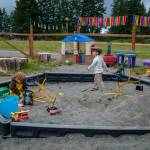
Vashon’s long-standing cooperative preschool is searching for a way forward after Washington recently changed the way it allocates funding to community colleges.
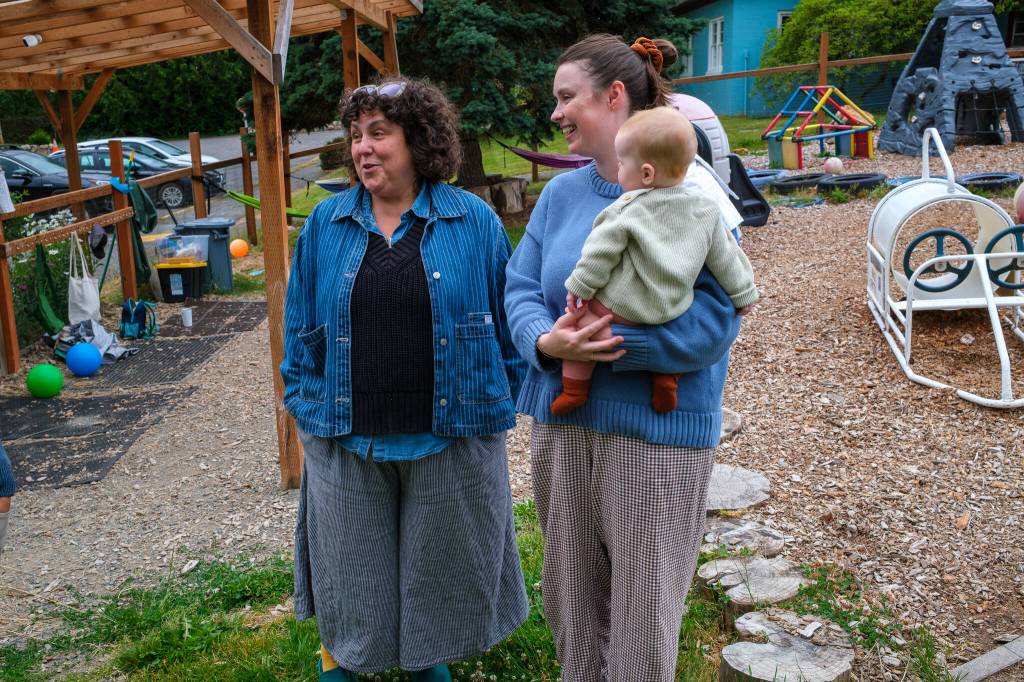
At Vashon Maury Cooperative Preschool, enrolling a child also places parents in a parent education course through North Seattle Community College. The courses are taught by the preschool’s parent educators, who also work in the classroom each week.
In addition to taking classes, parents put what they are learning into practice by volunteering as assistant teachers once a week, which counts towards class lab hours.
“They’re working, but they’re also learning at the same time,” preschool parent educator Tami Brockway Joyce said. “So you really get to have this hands-on experience in the classroom.”
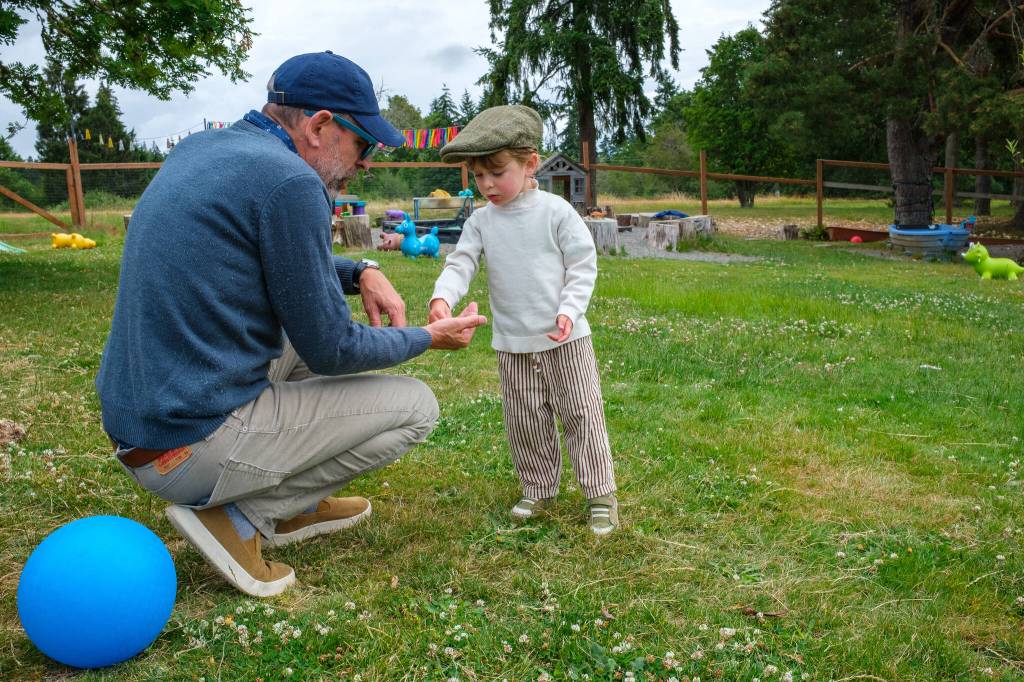
With roots on the island dating back to the 1970s, the preschool has become a Vashon institution, linking generations of families — including some of today’s parents, who once attended the co-op themselves.
“It’s a very special program, and it’s one of the few programs that has gone on for so long,” former co-op parent educator Melanie Salonen said.
A shift in state funding
Under the previous funding model, community colleges could include parent education programs in their enrollment figures, allowing them to receive state funding through the State Board for Community and Technical Colleges (SBCTC).
At North Seattle Community College, state money covered more than 90% of the parent-education program’s funding, said Peter Lortz, the college’s vice president of instruction.
But under a new funding model approved by SBCTC in 2025, the state will stop counting parent education programs when calculating how much money to send to community colleges. Beginning July 1, 2026, only programs tied to workforce credentials will qualify for that enrollment funding.
That shift has left community colleges across the state scrambling to find ways to keep parent education programs alive.
“All of the programs more or less have been told that if there’s not another funding solution by June of next year, 2026-27 will be the last year,” said Jen Giomi, a faculty coordinator and educator for the South Seattle College Cooperative Preschool Program.
This spring, North Seattle Community College — along with several other colleges — submitted applications to SBCTC to credential their parent education programs, which would allow them to keep receiving state money.
That process required colleges to show which entry-level jobs students could get after completing the programs, and that the credential would be required to be hired, SBCTC Communications Director Rachelle Alongi said in an email.
None of the colleges that applied were able to meet that requirement, she said.
But parent educators say the skills gained through the co-ops — both from parent education classes and volunteering as fundraisers, treasurers and secretaries of the preschools — offer valuable workforce benefits.
To Giomi, the failure to recognize parenting as a viable vocation is a regressive decision.
“There is no workforce without parents; people need to have children, or we have no economy,” Giomi said. “This is the foundational workforce, and how well parents do and how well they’re supported directly impacts every other thing.”
North Seattle Community College is now looking at classifying its parent education program under continuing education, which, while Lortz said would look instructionally similar, would be drastically more expensive.
Under the previous model, parent education programs received tuition waivers from the state, and quarterly tuition amounted to about $61 for parent-education classes at the co-op.
But under continuing education — where tuition is self-supported — the program would be hundreds of dollars more.
Parents and educators say that’s expensive enough that most families couldn’t afford it.
“There’s just no way our students could sustain that,” Joyce said. “It is essentially kind of a way of canceling the program without saying they’re canceling the program is what it feels like.”
North Seattle Community College is working with the co-op to strike a balance, where some version of the program could still exist, but be scaled back enough to where families could afford to enroll, Lortz said.
That could mean offering less frequent parent education classes and reducing the presence of parent educators in the classroom.
Another option, Joyce said, would be to become an independent preschool — a privately operated early learning facility with a 501(c)(3) status.
While some independent preschools have found ways to offer parent education, it’s not nearly as robust under this pathway, Giomi said.
Under that model, the preschool would no longer be connected to the college, parents would no longer be enrolled as students, and the formal parent education component could effectively disappear, Giomi said.
To those involved with the Vashon Maury Cooperative Preschool, a reduced or eliminated parent-education component would be a drastic shift to what has been the program’s guiding structure for decades.
“It would be a great loss to lose that piece,” Joyce said. “It’s really a cornerstone of how the preschools have functioned and what makes the programs special.”
The heart of the co-op
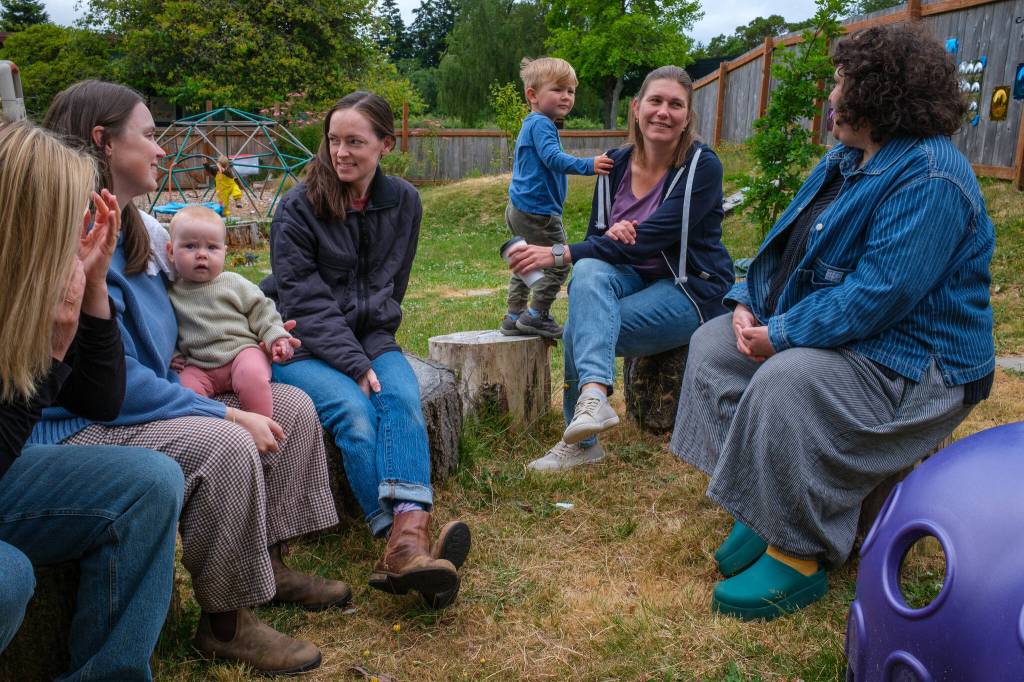
For co-op parents, educators are more than just their teachers; they’re the heartbeat of this village-centered approach to parenting.
“Having teacher Tammy available to send a message to and just text her and say, ‘Hey, this is going on’, ‘Can you help me?’… And not only as a parent educator and expert in the field, somebody who actually knows my kid,” co-op parent Mallory Schull said.
For families who move through the co-op together, the relationships often endure, creating a community of parents who continue supporting one another — and their kids — through elementary, middle and high school.
“To have that base of this friendship that developed in the four or five years that you might have been in preschool together … builds this community that really sticks with you,” Salonen said.
The decision to change how funding is allocated to parent education programs also comes as child care costs continue to rise in Washington and across the country, placing a significant financial strain on parents of young children.
Because parents volunteer to run co-op preschools both administratively and in the classroom, fewer staff are needed, and the preschools can charge lower tuition.
With prices ranging from $87 to $350 per month at Vashon Maury Cooperative Preschool, it’s an affordable part-time childcare option for island families who have time to pitch in as volunteers.
In Washington state, the average monthly price of full-time child care for infants and toddlers can easily exceed $1,000, according to a state report from Child Care Aware.
After raising thousands of dollars in donations this spring, North Seattle Community College will be able to maintain its parent education programs until the end of the fall quarter.
That gives the Vashon Maury Cooperative Preschool a little over four months to find a long-term funding solution to maintain the program that, for many parents, has become the center of parent life on Vashon.
“This is a disappointing outcome; we had really hoped and had fought to the end to try to maintain the program,” Lortz said.