
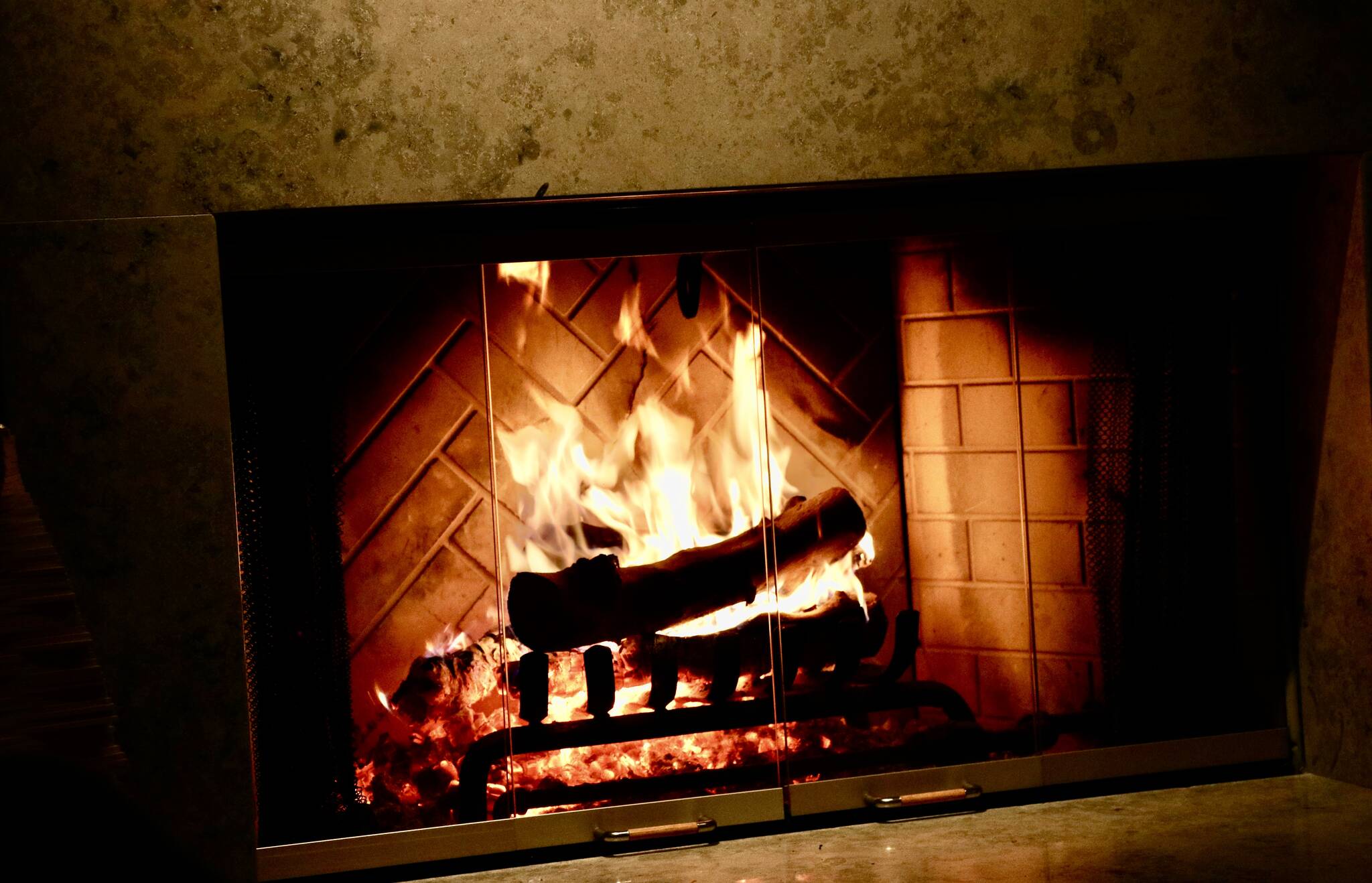
The holidays on Vashon are made for wood-burning fires. The smell drifts from chimneys, clings to sweaters and fills the air with the comforting scent of winter.
But behind every good fire is good wood, and without it, that cozy crackle could turn your holiday celebration into a costly cleanup – a real concern for Vashon Island Fire & Rescue Chief Bill McLaughlin, who said roughly 25% of structure-fire calls involve fireplaces or woodstoves.
The Beachcomber spoke with local and national experts who live and breathe fire safety. Their advice boils down to one idea: A good fire takes wind, warmth, and waiting.
Don’t get burned before you light the fire
Scroll through Facebook Marketplace for firewood and you’ll see most every ad promising “seasoned,” “dry” or “ready to burn.” The problem is that those terms don’t always mean much to the buyer or seller.
“People will say their wood’s seasoned when it was cut last week,” said Dan Schaffner, whose YouTube channel is devoted to all things firewood. “They might not even know what that means.”
The difference between seasoned and green wood is huge. Fresh-cut “green” wood is packed with moisture, and when you burn it, most of the fire’s energy goes into boiling off the water instead of producing heat.
“You’re using the wood’s energy to evaporate moisture and dry the wood, not heat your house,” Schaffner said. “It’s not efficient.”
The trapped moisture creates thicker smoke and faster creosote buildup — the tar-like residue that can ignite inside your chimney and fog up your fireplace glass.
Generally, the longer the wood has been split and stacked properly, the drier it should be. All the experts said the same thing in different ways: the drier the wood, the better the burn.
“Seasoned wood burns hotter, cleaner and safer,” said Rob Husted of Dave’s Chimney Service in Olalla, who’s cleaned thousands of chimneys across the region. “It’s the cheapest insurance you can buy.”
Don’t slack on proper stacking
To season wood, it takes the three Ws: wind, warmth and waiting. Stack wood off the ground on something like crates or rows of 2x4s to avoid rot, and cover the top — not the sides — said Brad McGuirk, a firewood YouTuber who runs the popular channel “Firewood at the Furnace.”
Wood needs to breathe and should be exposed to the wind and warmth. Stack it too tight, and the middle can mold.
Codie Cundiff, vice president of Vashon Island Firewood, compares it to stuffing sweaty gym clothes in a bag and throwing them in a closet. “It’s going to get musty fast.”
A little rain won’t ruin your stack. “Wood isn’t a sponge,” said Daniel Schaffner, a content creator for Back 40 Firewood. “It’ll dry quickly with a breeze.”
But VIFR Chief Bill McLaughlin warns residents to keep firewood stacks 30 feet from structures because they can contribute to fast-moving blazes.
“Woodpiles easily catch fire from wildfire embers, and the fire can spread to homes or other structures if piled close by,” McLaughlin said.
As for the waiting part of the three Ws? Rule of thumb: give it a year. Time does the heavy lifting — Schaffner and McGuirk are already splitting next year’s firewood. If your home depends on firewood for heat, start stockpiling early. “You can never have too much firewood,” McGuirk said.
Know before you glow
The experts shared a few telltale signs that the wood you’re buying is ready to burn.
Weight test: Pick up a piece. If it feels heavy for its size, it’s probably still green. Sound test: Knock two pieces together — dry wood rings like bowling pins, not dull thuds. Look test: You want to see cracks on the ends and bark peeling away. Moisture test: Use a moisture meter; 20% or less is ready to burn.
Unless you’re buying straight from a wood yard, it’s tough to tell how much wood you’re really getting for your money.
A cord of wood, a tightly stacked pile measuring 4 feet high, 4 feet deep and 8 feet long, is the official standard. Anything advertised as a “truckload” or “pickup load” isn’t measurable. “That’s a red flag,” McGuirk pointed out.
That said, a “truckload” of wood is worth whatever you’re willing to pay. “If you’re happy with the price and the quality,” Schaffner added, “then it’s the right price.”
Cundiff with Vashon Firewood said island buyers prefer conifer woods like fir and hemlock because it lights easy, burns clean and is more economical.
But wood like madrone and maple burns longer and hotter and may be worth the investment.
A cord of Vashon Island Firewood’s seasoned fir can go for $505, while maple could be as high as $680. “Although it’s pricier, burning a cord of maple is almost equal to burning two cords of fir,” he said, suggesting buyers could save money in the long run.
Firewood prices can fluctuate through the year. Buy in spring and summer and you may save a few bucks. Wait until winter, and you’ll likely pay what McGuirk called a “cold and scrambling” tax.
Schaffner and McGuirk both warned against online scams. “Do not pay until the wood is sitting at your house and you get what you’re paying for,” Schaffner said. “People are getting ripped off every day by fake ads using stolen photos.”
Build it right, burn it bright
When it’s time to light up, resist the urge to cram the stove full.
“Start small,” McGuirk suggested. “Dry kindling, thin pieces, maybe some newspaper. Stack it like a log cabin so air can move through. Add bigger pieces slowly.”
There’s a little physics in every good fire. Even running your clothes dryer can affect air pressure and weaken the draft.
“That’s called the stack effect. It pulls air out of the house faster than your stove can pull it in. Just cracking your window open on the other side of the house will help your fire roar back to life,” said Husted.
Husted mentioned safe, efficient burning comes down to combustion temperature.
“What matters is heat. If your fire’s too cold, you’re building up creosote. Hot, fast-burning fires are what keep chimneys clean.”
How can a fire be “cold”? Husted said you want a dancing flame, not a lazy one like a matchstick. If you close the stove door and the flame dies, that’s too cold. An inexpensive stovepipe thermometer can tell you if you’re in the “too cold,” “just right” or “too hot” zone.
Keep the holiday cheer going
As much as Santa might disagree, keep stockings — and anything flammable — at least three feet from the fire.
McLaughlin urged residents to check their smoke detectors regularly and, just as importantly, to make sure they have carbon monoxide alarms.
VIFR provides smoke detectors for residents who can’t afford them and will help install or maintain smoke and carbon monoxide alarms.
Both McLaughlin and Husted recommend getting your chimney inspected and cleaned at least once a year if you’re a regular user. Those who burn only seasoned wood may be able to stretch it every two years.
A little prevention beats a chimney full of excitement, and with the right wood, a little patience and a dancing flame, your holidays will stay merry and bright — and safe.
Eddie Macsalka is a contributing journalist for The Beachcomber.