J, K and L Pods visit during Native Heritage Month
Published 10:20 am Wednesday, November 12, 2025
Editor’s note: This account by Orca Annie Stateler, an Indigenous marine naturalist, researcher and founder of the Vashon Hydrophone Project, details her observations and personal perspectives of a Nov. 2 visit to island waters of 59 members of J, K and L pod.
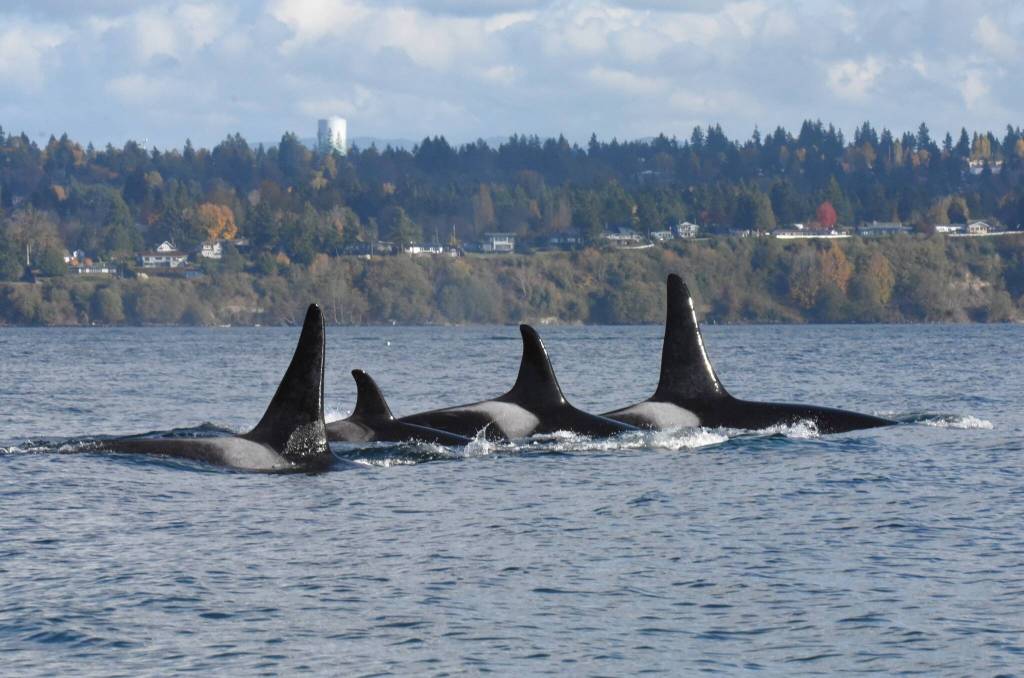
In a brilliant start to Native American Heritage Month, 59 critically endangered Southern Resident Killer Whales (SRKW) visited Vashon-Maury waters on November 2.
All of J and K Pods as well as three L Pod matrilines — the L4s, L47s and L72s — were present. Indigenous peoples regard SRKW as relatives — a fellow First Nation.
The orcas progressed steadily south in East Passage through the late morning and early afternoon. They stalled out at Tramp Harbor for more than an hour, arousing nervous speculation that they might turn north. They eventually gathered up and continued to Point Robinson, where they transited at about 2:00 PM, coinciding with the afternoon high tide.
Similar to the September visits, the resplendent procession of “the most sacred creature in the sea,” according to a Mowachaht/Muchalaht First Nations Elder, passed by in groups: J Pod families in the lead; mother Racer (L72) and son Fluke (L105) next; followed by all of K Pod; and a large trailing group of L Pod orcas with mother Oreo (J22) and son Cookie (J38) in the mix.
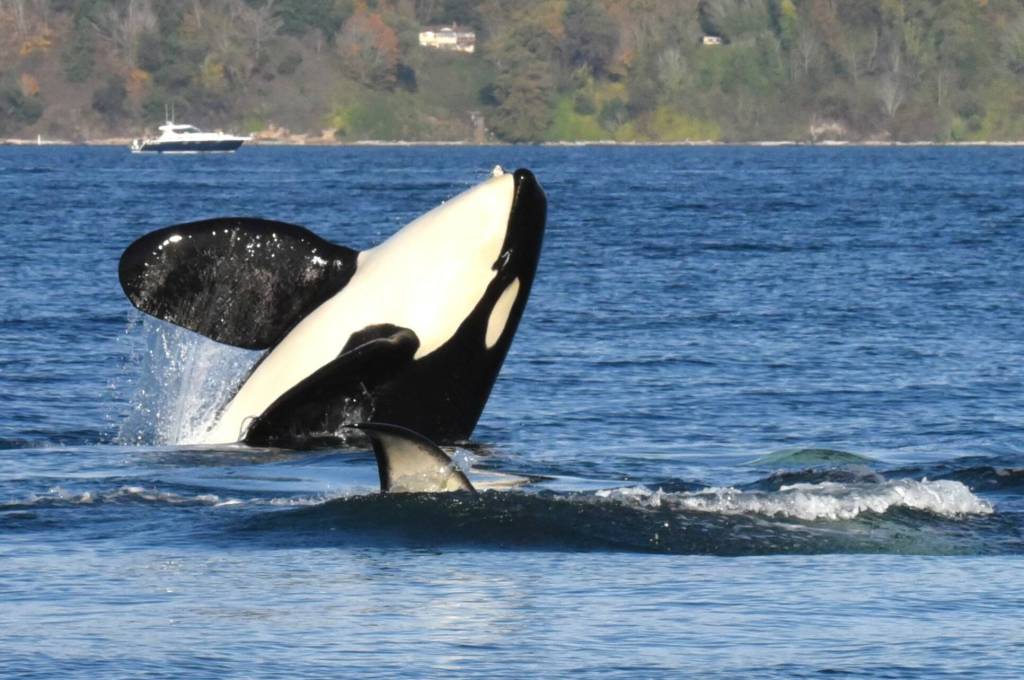
Their exuberant surface activity included spyhops, dorsal slaps, pec slaps, tail slaps, breaches, cartwheels, and inverted pec slaps and tail slaps — inverted as in belly up. I was honored to observe L Pod whales I rarely see in Puget Sound.
Several vessel-based researchers collected data on the SRKW on November 2: Mark and Maya Sears, the Center for Whale Research, and SR3 SeaLife Response Rehabilitation and Research. SR3 deployed a permitted research drone, which they use to monitor changes in the body condition, growth and reproductive success of the SRKW population. Flying recreational drones above SRKW is illegal.
The orcas traveled to Dalco Pass in the late afternoon, where they spread out between Commencement Bay and Point Defiance to forage. Ferry commuters reported that the whales were still there after dusk. By early morning on November 3, Southern Resident calls were audible on the Sunset Bay hydrophone north of Edmonds. Later that day, the SRKW departed Puget Sound through Admiralty Inlet.
This healing visit from so many SRKW helped to offset the soul-crushing news from the Center for Whale Research that Baby J64, the first known calf of 18-year-old Echo (J42), was nowhere to be seen during an encounter on October 23. The weeks-old baby, first documented on September 18, is missing and presumed dead. The J16 matriline journeyed through Vashon-Maury waters with Baby J64 between September 17 – 20.
I deeply admire and am humbled by the selflessness I perceive in the SRKW. I teared up at the sight of the first two orcas I identified on November 2, matriarch Slick (J16) and adult male Mike (J26), Baby J64’s grandmother and uncle.
In September, the entire J16 family behaved as if they were gravely concerned about the well-being of newborn J64. Under Grandma Slick’s cautious, strategic guidance, they avoided the trip down to Carr Inlet, a traumatic capture site, with the rest of J Pod. The J16s struggled mightily to keep J64 alive, to no avail.
The frenzied gold rush mentality that pervades Point Robinson when whales are expected is, to some long-time Islanders, distressing and antithetical to optimal conservation practices. The individual and collective carbon footprints from hundreds of people driving many miles and riding multiple ferries for a “whale fix” is harmful to SRKW and their food source, salmon.
Stormwater runoff from cars and tires contains toxicants – metals, petroleum-derived compounds, 6PPD in tires, to name a few – that pollute waterways and impair or kill salmon. Orcas are exposed to toxins in car and boat exhaust when they surface to breathe.
The sustainable alternative is to watch whales from the shoreline closest to where we live. Considering the prodigious sacrifices of our critically endangered SRKW, this is a modest accommodation humans should be willing make to save “the most sacred creature in the sea.”
Orca Annie Stateler is an Indigenous marine naturalist, researcher and founder of the Vashon Hydrophone Project.
Correction: Due to a proofreading error, Orca Annie’s author bio in this article did not properly identify her as an Indigenous marine naturalist, researcher and founder of the Vashon Hydrophone Project — an important distinction and identification used in previous work she has contributed to The Beachcomber. We regret the error.