After the disaster, how will you come back from a windstorm, earthquake, or fire?
In order to get recovery funds, you may need to prove you owned or rented your home, and you’ll need insurance papers. What about getting medical care and your prescriptions?
That’s why we’ve put together this how-to guide. First, how to make backups. Second, a handy checklist of items to copy.
How should I store my documents?
It’s important to have copies and backups of important documents that are accessible from multiple places if disaster strikes while you are away, or restricts access to your home.
- Keep your original documents somewhere that will protect them: a waterproof document holder in a water- and fireproof safe in your home, or a safe deposit box at a bank.
- Make paper copies to keep somewhere off-site. For example, you could send them to a trusted family member or keep them in a safe deposit box.
- Make digital copies. If you have a computer and scanner, scan the documents, or you can use the cameras on many cell phones to photograph or scan them.
- There are lots of ways to store digital copies: collect them in a computer folder, then store them in a secure online drive (in “the cloud”), or on a USB flash drive that you can keep in a safe place (ideally password-protected), or email them to yourself.
- Online backups can be an excellent option. Having access to your documents online can make a recovery from a disaster much smoother. Make sure you have any login information you’ll need to access the online documents while away from home.
What documents should I back up?
This list might seem a bit daunting at first, but get started with a few basic items. Then each time you handle a new document, make copies to keep building your backup collection.
Identification and citizenship (driver’s license, passport, green card, birth certificate): For you and your minor children, you’ll need identification for accessing medical care, reuniting with family and pets, and filing insurance claims.
Family documents (marriage/divorce, adoption, custody): Family documents can take a long time to replace and may be needed for reunification with minor children.
Health Information: Having prescriptions, immunization records, and records of allergies, chronic conditions, and other health information on hand is very useful, because, in an emergency, you may need to receive healthcare from providers other than your regular doctor, without access to your patient records. It’s helpful to sign up for access to your online medical chart, a service offered by many healthcare organizations.
Financial (tax, investments, insurance, bills): you’ll need to continue paying your bills, so keep banking information available. Copies of insurance policies can also help with filing claims more promptly.
Property (car titles, real estate deeds, home inventory): you’ll want proof of the things you own, so you can reclaim, replace, or rebuild them after a disaster. If you haven’t done it already, take a video inventory of your house this weekend. Store the video on a USB flash drive in your safe deposit box. Or use a home inventory smartphone app, such as Home Contents, to document and photograph your valuable possessions.
Legal (estate documents): add copies of legal and estate documents such as wills, living wills, powers of attorney, and end-of-life care.
Find an even more detailed checklist of documents you’ll want to back up here.
Update and Review
Update your backup sets whenever an important document is added or changed. And, do an annual checkup on your backup system. It may help to put a yearly recurring entry on your calendar for a time of year when you may be less busy, such as in the summer or just after the winter holidays.
Medical Facility Masking Requirement Ends
The Washington State Department of Health has ended the masking requirement for healthcare, long-term care, and adult correctional facilities. The decision was announced in early March and became effective on April 3. Some facilities have announced they will continue their masking requirements.
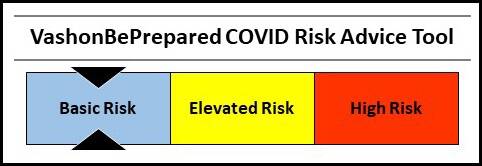
COVID risk level now Basic
What does the basic risk level mean? The primary metric for the VashonBePrepared COVID Risk Advice Tool is the hospitalization rate in our three-county COVID risk area with additional consideration for other factors such as the new case rate, the positive test rate, and results of wastewater testing by regional public health departments.
In making the risk level evaluation, we combine data for King, Pierce, and Kitsap because ferry system statistics show the equivalent of one-third of the island’s population make round-trip ferry journeys to the mainland each day, where Vashonites may be exposed to COVID while working, attending school, shopping, or receiving medical care.
Current COVID safety advice now is to wear a N95 mask indoors in public if you have been exposed to COVID, are at risk for health or other reasons, or live with or spend time with someone at high risk.
Keep vaccinations up to date, including boosters, and maintain good ventilation at home and at work.
Avoid those with suspected or confirmed COVID. If exposed to COVID, wear a mask in public and avoid contact with those at high risk for 10 days.
Always home-test if you have symptoms, and if you test positive, isolate for at least five days and until you test negative. If immunocompromised, discuss additional prevention actions with your healthcare provider.