
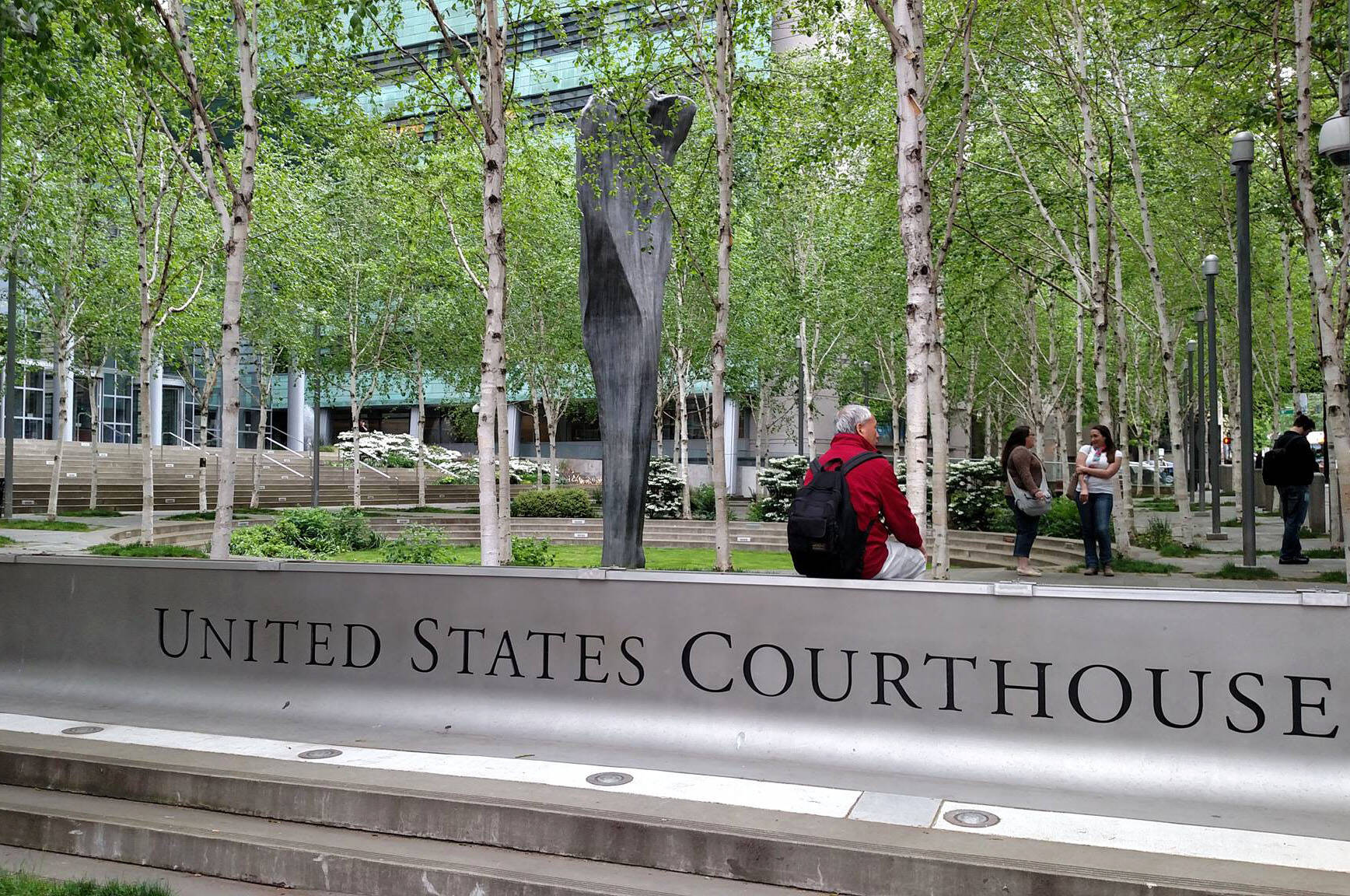
The U.S. Marshals Service in the Seattle-based Western District of Washington is alerting the public of a fraudulent court order scam.
Scammers claiming to be U.S. Marshals or court officers call or email unsuspecting victims telling them they have outstanding warrants and need to pay a fine to prevent their arrest, according to a Jan. 5 U.S. Department of Justice news release. In recent cases, scammers have emailed fraudulent arrest warrants that appear to originate from a local district containing case numbers and an active judge’s alleged signature.
These fake warrants have a “Did you know” section at the bottom informing the recipient that the fines can be paid via Bitcoin, according to the news release.
“If called by or emailed by an unknown person claiming there is a warrant for arrest related to missed federal jury duty, subpoena, or other offenses, do not make any payments to them,” according to the news release. “Neither the U.S. Marshals Service nor the U.S. District Court will ever call or email to request payment of fines over the phone or via Bitcoin.”
The sender may use a variety of tactics to sound credible and may identify themselves as a Deputy U.S. Marshal, law enforcement official, court officer, or a federal judge. They may provide information like badge numbers, case numbers, names of actual law enforcement officials, public servants, and federal judges. They may also spoof their phone numbers on Caller ID to appear as if they are calling from a courthouse or a government agency like the U.S. Marshals Service.
During these exchanges (whether by phone or email), scammers attempt to collect a fine in lieu of arrest by requesting a wire / transfer of funds or purchase prepaid debit cards, such as a Green Dot card or gift card, and read the card numbers over the phone, according to the news release. Recently scammers have requested payment via Bitcoin.
You can get help determining the authenticity of a call by contacting the U.S. Marshals Service at 206-370-8600. U.S. District Court case information can be verified by calling the Seattle Clerk’s Office at 206-370-8400 or Tacoma Clerk’s Office at 253-882-3800.
If you believe you were a victim of a scam, report the incident to your local FBI office and file a consumer complaint with the Federal Trade Commission (FTC), which has the ability to detect patterns of fraud from the information collected and share that data with law enforcement.
Things to remember:
• U.S. Marshals will never ask for credit /debit card / gift card numbers, wire transfers, bank information, or Bitcoin for any purpose.
• Don’t divulge personal or financial information to unknown callers.
• Report scam calls to your local FBI office and to the FTC.
Additional information about the U.S. Marshals Service can be found at http://www.usmarshals.gov.