Finding inspiration in the public sector heroes
Published 6:09 am Wednesday, September 24, 2025
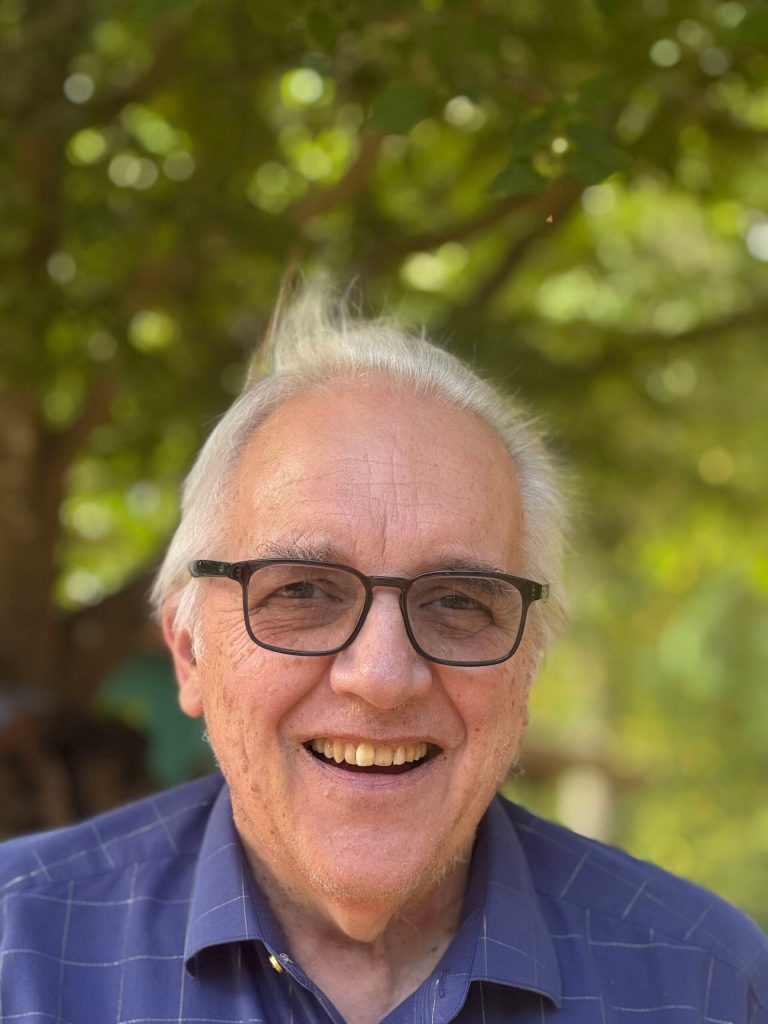
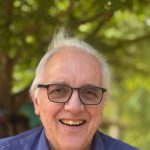

I am a professor emeritus at Seattle University, and will soon, in conjunction with Vashon Indivisible, offer a lecture series entitled “Finding Courage in Dark Times: Public Sector Heroes Rediscovered.”
Many of the issues that divide America now are ones that have also divided this country in the past. In my lectures, I will highlight how previous public sector heroes have confronted injustices and I will draw some parallels with the present. I hope in this lecture to provide some hope to islanders who are discouraged by the recent turn our politics has taken.
These heroes were often opposed to the status quo and yet they persisted.
In my upcoming lectures, I will focus on four public sector heroes and either their nemeses or people of prominence who were proponents of a completely different agenda in the era in which they lived.
The first hero I will discuss, on September 30, is John Lewis. This lecture is especially personal to me, because I worked on the immediate staff of John, when he was a political appointee in the Carter administration.
John became famous in his early 20s and is known for both his speech at the March on Washington in 1963 and the March in Selma, Alabama, known as “Bloody Sunday,” during which he and his fellow marchers were bludgeoned by Alabama state troopers and a sort of posse made up of Klan members. His nemesis was Sheriff Jim Clark, who was intent upon maintaining white supremacy in Selma. The March was a pivotal event in the Civil Rights Movement in that it led to the passage of the Voting Rights Act of 1965.
The second hero I will discuss, Oct. 14, is Eleanor Roosevelt. Eleanor broke the rules when it came to how first ladies are supposed to behave. She was not happy merely hosting receptions for FDR; she was also his eyes and ears, especially because of his disability of polio. Eleanor was a prolific writer and speaker. Indeed, she became an elder stateswoman in the Democratic Party during a time when politics was the near exclusive domain of men.
The person opposite Eleanor was not a direct nemesis of hers, but certainly was representative of a completely different ideology — Joe McCarthy, otherwise known by his admirers as “Tail Gunner Joe.” McCarthy was one of the most insidious politicians in the history of America. Whereas Eleanor was inclusive and deeply humanistic, McCarthy spewed hate.
The main focus of my third lecture, on Oct. 28, will be Fred Korematsu. I will also briefly discuss two other Japanese American heroes from the Pacific Northwest — Gordon Hiribashi and Min Yasui. Fred, Gordon, and Min refused to merely submit to orders from the American government that they be incarcerated in concentration camps during World War II along with their fellow ethnic Japanese.
Their claim was simple — they had committed no crime, why should they be arrested and confined? This was clearly a case of pure racism. Fred’s counterpart was Earl Warren, who later became the chief justice of the Supreme Court. At the time, Warren was the Attorney General of the State of California and running for governor. Warren not only campaigned on the issue of incarcerating ethnic Japanese, but he also worked with the Roosevelt administration to ensure that it occurred.
My final lecture, on Nov. 11, will be on Eugene Debs. Debs ran for president five times on the Socialist Party ticket. During his final run for the presidency in 1920, he was a prisoner. He had been incarcerated because of exercising his freedom of speech during an anti-war rally. In doing so, he ran afoul of the recently promulgated Espionage Act. That Act was backed by President Woodrow Wilson, who although he was known by many of his admirers as an idealist, he also had a dark side. In addition to jailing Debs, he also imprisoned 1,200 other war protesters.
My lecture series, “Finding Courage in Dark Times: Public Sector Heroes Rediscovered,” will take place at 7 p.m. Tuesdays, Sept. 30, Oct. 14, Oct. 28 and Nov. 11, at Vashon High School’s theater. The lectures are free, but attendees are encouraged to find out more and donate to Vashon Indivisble at indivisiblevashon.org.
Larry Hubbell, PhD, is a retired Seattle University Professor Emeritus and former Director of the Institute of Public Service. He is a retired academic, a Fulbright scholar, and an author with extensive international experience in public administration and organization development.