We can restore the balance of nature on Vashon
Published 1:30 am Thursday, October 27, 2022
Editor’s note: This commentary is part of an ongoing series, “Green Briefs,” appearing in The Beachcomber through a partnership with the Whole Vashon Project. Find out more at whole vashonproject.com.
The singular and most wondrous biochemical transformation on this planet is clearly photosynthesis, a capability that only plants have.
Utilizing only air, water, minerals, and sunlight, plants create nearly all the living matter, food, and oxygen that is used by all living beings on this planet.
Aside from that vital function, fungi, the alchemists of our life system, create soil, and mine and convert to available forms most all the nutrients and minerals that plants need to live. You may have heard that dead leaves, twigs, etc., that gather on the forest floor would quickly become tens of feet thick without fungi, and that the plants in their vicinity would soon starve for lack of nutrients.
As the plants go, so do we.
Animals, including us, have the gift of muscular mobility and are the movers, disseminators, and balancers of the different forms of life. Animals decrease overabundances of certain species and resources when they occur, and enable other species, in certain locations, to grow where they are needed. Plants and fungi have only the mobility of growth, which is often too slow, and the currents of water and air which are often too random, to maintain optimum balance.
We humans also have the power to plan and conceptualize — and in failing to understand our interdependence on plants and fungi, have designed systems for ourselves that minimize their importance.
As a result, we have confiscated habitat and energy for ourselves and have not ensured that materials used are recycled into the matrix.
In nature, there can be no waste, because we operate in a closed system. When we put pollutants into the air or water, we create an imbalance. When huge forces are in balance, it only takes a feather to set those forces in motion. Balance is easily upset, but maintaining it is vital.
We need to turn our pollutants into resources, and we can’t do that without plants and fungi.
When pollutants get into the water, they are difficult to eliminate or contain. Nutrient pollution, mainly nitrogen and phosphorus, cause eutrophication — a depletion of oxygen in the water through the growth and decomposition of plant matter.
Most of these nutrients come from our incompletely treated sewage and from rainwater runoff that picks up organic matter and lawn fertilizers. Toxic and complex chemical pollution enters the water in runoff from industrial processes, pesticides and herbicides, pharmaceuticals, and degraded products made from exotic molecules. This pollution kills or harms sea life.
When the balance is lost, the aquatic ecology can spin off wildly in unpredictable ways.
The good news is that we now know that we can extract and recycle the nutrients in constructed wetlands and estuaries, utilizing the powers of fungi and plants, and can then reuse the water and composted solids. There is a great deal that has been learned recently about the ability of fungi to remediate toxins and heavy metals.
You can learn more about this by reading about mycoremediation.
The pollutants already in Puget Sound can be lessened through the extensive cultivation of shellfish and seaweed. Of course, it is better to treat the polluted water thoroughly before releasing it into the Sound.
There are places, such as Arcata, California, that have natural wastewater sewage treatment facilities, and you can learn more them at tinyurl.com/djuz8wyp.
Arcata has a population of 16,000, so a system such as theirs would be suitable for Vashon as well.
On Vashon, we have the potential to completely detoxify and reuse all the products from our sewage treatment plant.
This includes five million pounds of septage, hauled off the island every year, and thousands of gallons per day of incompletely treated water piped directly into the Sound.
This would require the construction of wetlands and the reconstruction of once-thriving saltwater estuaries, such as our lone surviving estuary at KVI beach.
These areas would have the additional benefit of creating wildlife habitats and sequestering carbon.
The toxins and exotic chemicals present the biggest challenge, but the best solution, in the long run, is to stop using them!
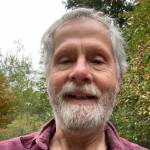
— Terry Sullivan is an island writer and activist with his heart aimed at the planet’s well-being.