Fire department to begin charging for ambulance transports next month
Published 1:30 am Tuesday, June 27, 2017
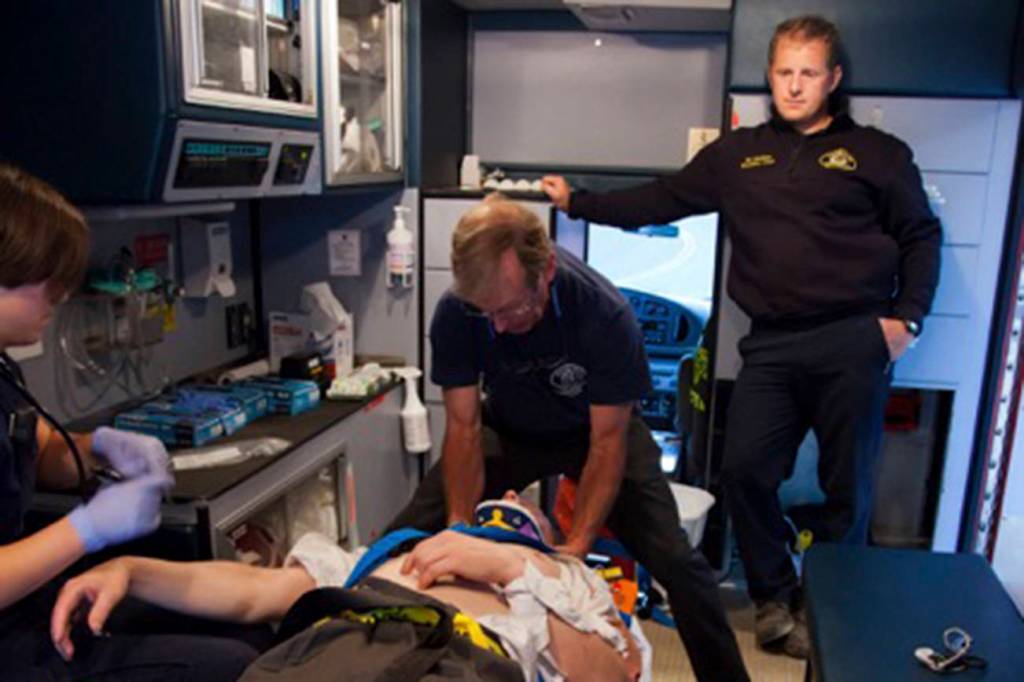
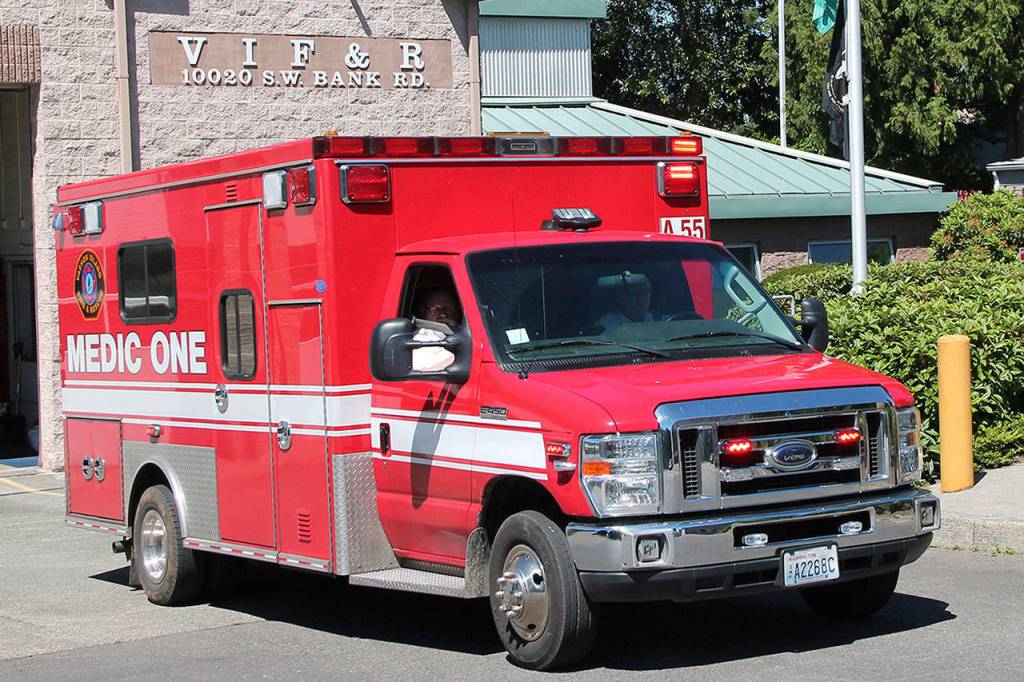

Beginning in July, Vashon’s fire department will begin charging patients with non-life threatening emergencies for hospital transports, a move that fire district officials say will put the district in line with the practice of many other departments and help fund a program to pay part-time firefighters.
Charlie Krimmert, the chief at Vashon Island Fire & Rescue (VIFR), first announced the coming changes this spring, and now both the fee-for-transport and part-time paid programs are slated to be implemented in the coming weeks. To offset the costs for islanders, the district plans to offer a membership program that would cover patient financial responsibility beyond what insurance companies pay; VIFR’s program is patterned after Aircare — frequently referred to as helicopter insurance — and will be available as soon as all the details are finalized.
With the fee-for-transport program about to be implemented, district personnel are urging members of the public to call 911 without hesitation, and services will be provided, regardless of ability to pay.
“If they need us, call us,” Krimmert said.
He emphasized that point as fundamental, saying that refusing to provide service because of someone’s inability to pay would be contrary to the district’s mission.
“We are not even considering turning people away,” he stressed.
VIFR’s fee for transport to nearby hospitals is expected to be $700 plus $15 per mile, which Assistant Chief Bob Larsen said is the median of the regional standard. Larsen noted this charge is also comparable to what Tri-Med, the private ambulance company VIFR now relies on for many transports, charges. As is typical in health care, people are encouraged to know what their insurance benefits cover so they can know what will be covered for emergency transport — and medical care beyond it.
Fees from transports are expected to bring in $300,000 annually, a sum Krimmert termed a “best guess,” noting district officials will establish regular benchmarks to ensure program income predictions are on target. VIFR will likely implement the program in the middle of July, first billing insurance, be it Medicare, Medicaid or private insurance. Patients, except for those with Medicaid, will receive bills for the amount insurance does not cover — unless they are part of VIFR’s membership program. Larsen noted that most private insurance plans cover 75 to 80 percent of the costs of emergency transport.
These changes at VIFR come at a time when the district is at a critical juncture financially and has seen a decrease in volunteer numbers — leaving it with a small pool of people to respond to emergencies. In the last year, to help keep its firefighters and emergency medical technicians (EMTs) available for calls, the district has increasingly relied on Tri-Med, transferring patients at the Fauntleroy dock. As the district provides increasing numbers of hospital transports, Krimmert noted it will reduce its reliance on Tri-Med, but will continue to use the service when staffing levels require a quick turnaround to get back to the island.
This will not be the first time the district has charged for hospital transports. Former chief Craig Harmeling, who served as chief between 1958 and 1991, has said patients were charged for a time while he was at the helm of the district. More than a decade ago, the fire board voted to re-institute transport fees, but Chief Jim Wilson did not implement the program. In 2007, the commissioners again voted to launch such a program, but it, too, was shelved. At the time, local union leaders voiced opposition to the plan, expressing concerns that people would not call if they needed assistance and were worried about a large bill. Currently, however, union President Randy Tonkin said union members support the effort because the district’s staffing needs and inadequate financial resources are a greater concern. He added that the union supports a program that would bill insurance companies, including Medicare, but does not send patients to collection services if they cannot pay. Like Krimmert, he stressed that people should call 911 when they need to.
“The bottom line is VIFR does need these revenues, primarily to address staffing issues; however, people should never ignore potential medical emergencies if they do not have money to pay for an ambulance ride. We provide service regardless of a patient’s ability to pay,” Tonkin said.
The fees will be charged only when EMTs transport a patient to a hospital; there will be no charges for transport to an island clinic or for services such as assisting someone who fell, helping with oxygen or checking blood pressures. Paramedic services, which are provided in life-threatening illnesses and emergencies, will also not incur charges.
The new funds, in turn, will support paying part-time firefighters/EMTs — a staffing approach the district has not taken before; it currently relies on full-time career firefighters and volunteers only. Some in the district would say that the departure of the paramedics earlier this year increased staffing pressures, as they also served as firefighters. The declining numbers of volunteers is creating its own pressures, and Krimmert is trying to address the situation with limited funds.
“The goal is to increase staffing in as economically viable way as possible,” he said.
Current volunteers are eligible to be part of the new part-time paid program, which Krimmert said will expand incrementally initially and will also depend on the election in November, when islanders may vote on a higher levy rate for the district.
“The more (people) we have, the more aggressive and successful we can be at fire scenes,” he added.
Both Krimmert and Larsen cautioned against thinking the part-time paid program would solve the district’s staffing issues.
“This is not fixing everything,” Larsen said. “It is a step toward solving the people problem.”
In addition to its full-time and part-time paid staff, VIFR welcomes islanders volunteers as EMTs, firefighters and support personnel. Information about volunteering is available on VIFR’s website, VIFR.org.
In this time of transition at the district, fire officials encourage islanders to attend commissioner meetings, which are held at 6:30 p.m. the second and last Tuesdays of the month at Station 55 on Bank Road. In July, commissioners will determine what the levy rate increase should be on the November ballot.
Vashon Island Fire and Rescue commissioners are holding extra meetings regarding the state of the district, its finances and considerations for a November election to raise its levy rate. The first of the meetings is set for 7 p.m. Thursday, June 29, at the Penny Farcy Building. The next meeting will be at 7 p.m. Thursday, July 6, also at the Penny Farcy Building. The next regular commissioners meeting is set for 6:30 p.m. Tuesday, July 11, at Station 55. Commissioners encourage the public to attend any or all of the meetings.
This version of the story corrects the amount VIFR plans to charge for transports to $700 plus mileage. The fire department had previously provided a different amount.