Local beachcombers find solace on the shoreline
Published 1:30 am Thursday, April 16, 2026

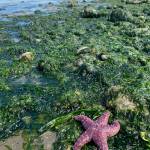
Jenni Olson doesn’t need much time.
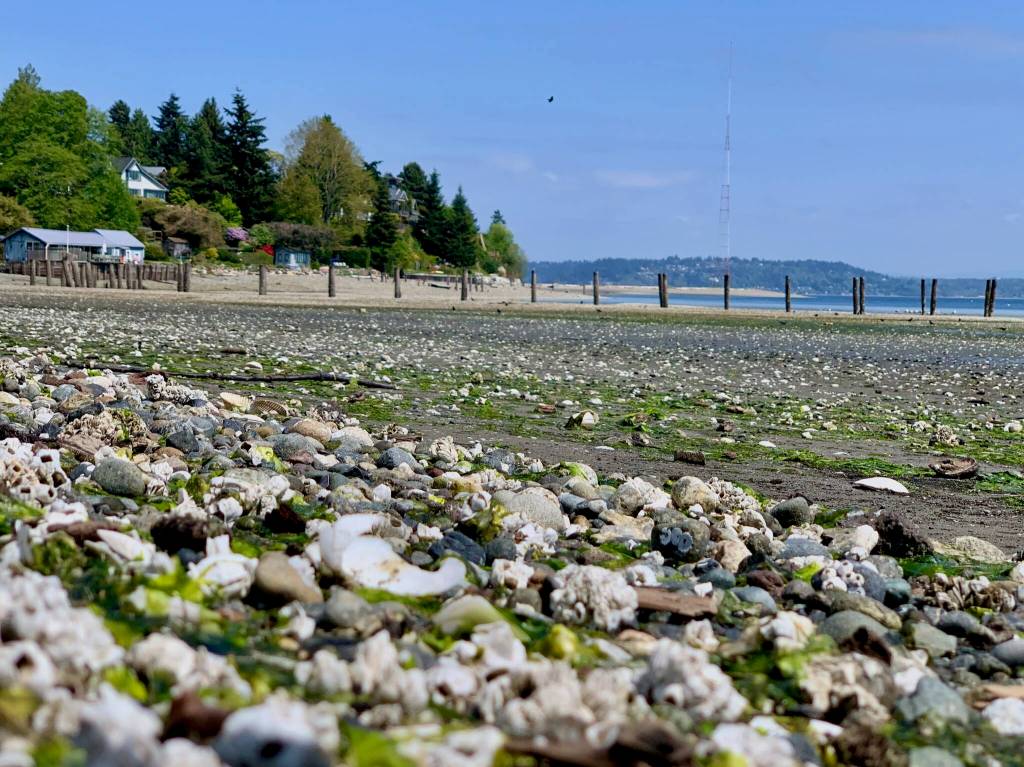
On a lunch break, she heads for the nearest beach, favoring Quartermaster Harbor, scanning the ground for something small — a glint of color, a shine in the sand — anything that stands out.
For an hour, her job is simple: look closer.
“Even if it’s winter, I’m out there looking for color or just something that really catches my eye,” she said. “And to reset my energy for the rest of the day.”
A nurse on Vashon Island, Olson spends her days in a fast-paced, high-demand environment. But out on the beach, the pace changes. The stress level drops.
“For me, it’s a form of therapy,” Olson said. “It is the chance for me to slow down and to focus on something that’s not work.”
What she finds — agates, bits of jade, polished stones shaped by time and tide — is almost beside the point.
On Vashon, the rocks have stories. And so do the people who collect them.
A beach full of stories
Retired geologist Steve Bergman has spent decades studying rocks — in labs, in the field and across continents. These days, he spends most of his time walking Vashon’s beaches, often with a few samples tucked into his pockets.
The rocks beneath his feet have traveled a long way.
“Most of what you see on the beach came from British Columbia and the Olympic Mountains,” Bergman said. “The glaciers dragged them all down here.”
The ice sheet, at times 3,000 feet thick over Vashon, advanced and retreated over thousands of years, leaving behind what geologists call Vashon Till and Outwash. They are dense mixes of sand, silt, clay and rocks that now erodes from the island’s bluffs—about three feet every decade, according to Bergman — feeding the shoreline.
To Bergman, each stone tells a story measured in millions — sometimes billions — of years.
But even after a lifetime in geology, he still understands the modest appeal.
“It’s the beauty of the textures, the colors,” he said. “Every time the tide comes through, it’s a different palette.”
That changing shoreline — always shifting, always revealing something new — is part of what keeps locals and visitors coming back.
More than a hobby
In the rockhounding world—the loose community of rock collectors, gem enthusiasts and amateur geologists who scan shorelines for something worth pocketing — islander Donna Liberty is a natural.
Just don’t tell her it’s her hobby.
“A hobby is something you do when you’re bored and don’t have anything better to do,” she said. “I love this. I’m not a rockhound, I’m a rock freak. I’m just cuckoo about it.”
Liberty has been collecting rocks since she was four years old, filling egg cartons with carefully sorted finds. These days, she regularly walks the beach south of Point Robinson Lighthouse, looking for agates, petrified wood, bones and anything that feels interesting enough to take home.
“It’s so much more than just looking for rocks,” she said. “It’s exercise, it’s picking up litter, it’s sunshine, it’s getting the fresh air. It’s real therapeutic on so many levels. I’ll walk for miles if I need to.”
She tries not to go out with expectations because “then whatever you find is interesting and you’re not disappointed.” Some days, the beach offers little. Other days, it surprises her.
The pull of the search
For islander Teresa Louis, the connection began during a difficult time.
“I just needed to spend some time out in nature,” she said.
After the loss of her mother — and during the isolation of the COVID-19 pandemic — Louis found herself walking KVI Beach regularly. At first, it was simply a way to get outside.
Then she started noticing the rocks.
“There’s all these different colored rocks that are constantly getting your attention,” she said.
Over time, the walks became routine — and more intentional.
Now, she looks for specific finds — agates, jade — but also for the quiet satisfaction that comes with discovering them.
“It’s just so satisfying to actually find something you’re looking for,” she said. “And I love that I’m coming home with some treasures.”
Even when she’s not on the beach, those moments stay with her.
“When I look at a rock, it just transports me back to how I was feeling when and where I found it,” she said.
Learning to see
For all three women, it’s changed how they move through the world.
Olson traces it back to a childhood game — “Riddle, riddle, Marie” sometimes called “I Spy” — where she learned to notice color and detail. Now, she views the beach differently.
“That’s the first training for a kid to pay attention to the things around them,” she said. “You just have to slow down, be willing to stay in one place and really look.”
Liberty describes something similar — an openness to whatever appears.
“Different beaches have these pockets of amazement that come upon you,” Liberty said. “I don’t look for them. It just somehow finds me, and when it does I pick it up, give it a kiss, and say, ‘Thank you’ out loud because I’m so grateful.”
And for Louis, what began as a walk became something that held her attention long enough to quiet everything else.
“Sometimes I’ll be out on the beach for two hours without realizing any time had gone by.”
Bergman sees that transformation often.
“There’s a natural beauty to all of it,” he said. “And each one has its own story.”
For Olson, Liberty and Louis, those stories aren’t just geological. They’re personal.
And on most days, those stories start the same way: eyes down, scanning the shoreline, waiting for something small to stand out.
Eddie Macsalka is a contributing journalist for The Beachcomber.