Breaking the stereotype: immigrants tell their stories
Published 1:30 am Tuesday, March 6, 2018

Editors’ Note: This story is the second of two stories about immigration that first appeared in Vashon High School’s newspaper, The Riptide.
It is reprinted here with permission.
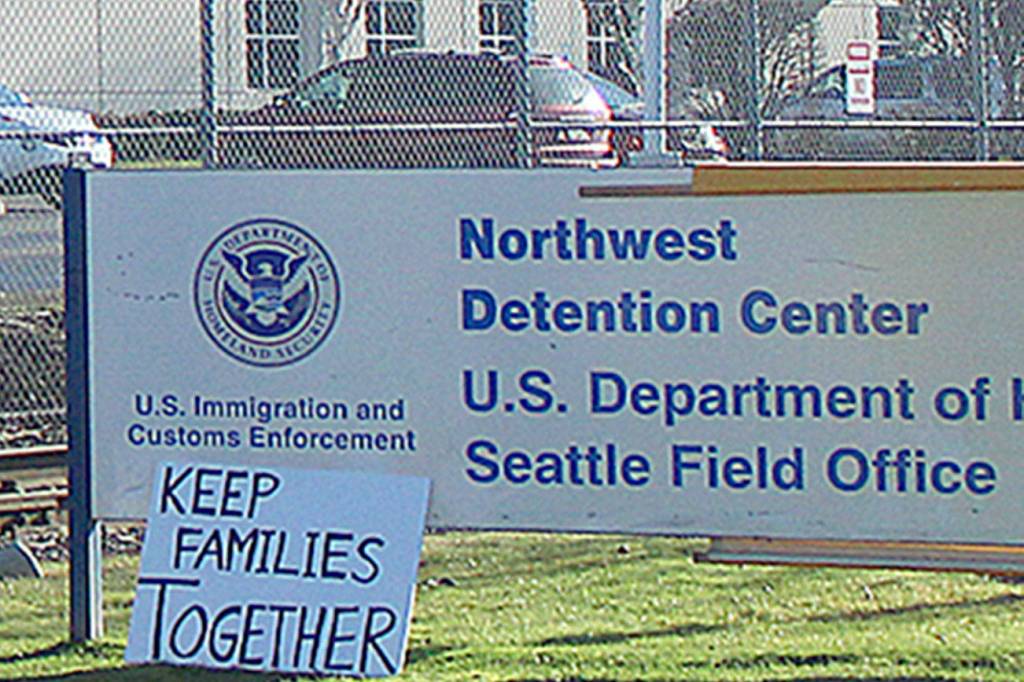
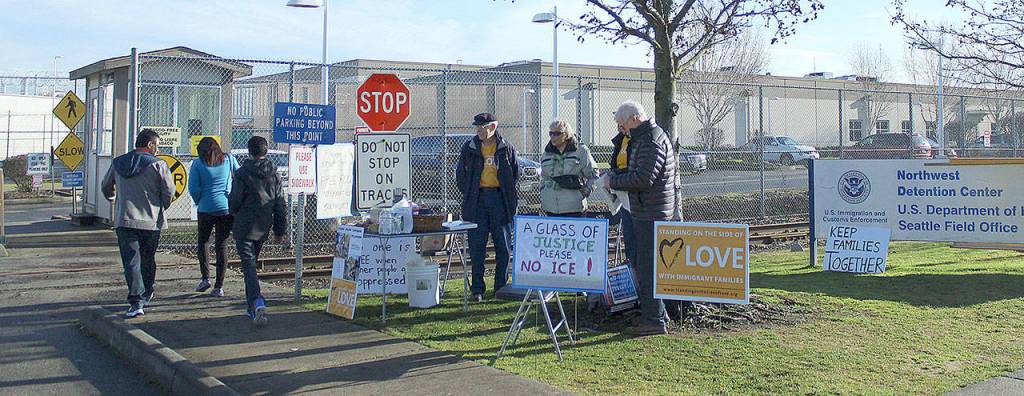
A woman holds tightly to her two sons’ hands as she walks solemnly down the concrete path that leads to the Tacoma Northwest Detention Center (NWDC). She is visiting her partner of 10 years who was detained by U.S. Immigration and Customs Enforcement (ICE) only four days prior.
This woman, Irisha, is a citizen of the U.S. However, her partner is a Mexican immigrant. They recently moved away from Phoenix, Arizona, with their three children — an 8-year-old boy, a 7-year-old boy and a 2-year-old girl. The family had been forced to move in order to escape pervasive racism.
“We came here to Washington to get away from all of that immigration stuff because it’s a really big thing over there in Arizona,” Irisha said. “It’s just sad because we came here to make a better life for our kids.”
Her partner, Adrian (his name has been changed for privacy), was brought from Mexico to the U.S. when he was 11 months old. He ran into trouble with the law several times in his past and had spent most of his life dealing with an unstable citizenship status.
“[Adrian] did have his citizenship at one point, but [he] had it taken away,” said Irisha. “He was young and dumb. We all were at one point in our lives, but we live and learn from our mistakes and better ourselves. That’s what he did when we met.”
After a long streak of keeping his head down and working hard, Adrian’s past caught up with him.
“He was on his way to work that morning with a coworker, and ICE was waiting for him outside of the apartment complex,” Irisha said. “They [must] have been watching him for quite some time, because they knew what he was driving and when he would leave and come back home.
Six undercover [cars] pulled him over.”
The officers asked him if he had identification, and when he told them that he had none, they ordered him to put his hands behind his head. When he asked, “Why, what did I do wrong?” all that they said was that they were from ICE and that they had a warrant for his detention.
“I visit every day, if not every other day, because I work full-time and am a full-time mom as well,” Irisha said. “For my boys, it’s hard because they don’t have a [father] figure in their life as much as they did, and for my daughter, she doesn’t really understand anything, and she’s kind of like ‘Papi, where’s Papi?’”
With no one in Washington to support them and an insufficient job to provide for her kids, Irisha is forced to move the family back out to Arizona and leave her partner here at the NWDC.
“They said that he might be here for a while, because [the federal government] wants to take over his case,” Irisha said. “So, I don’t want to leave him here. But I think it’s better for me to go back so that I can have extra money to pay the lawyer fees.”
These stories of families being separated by immigration laws are ubiquitous in the U.S., but the U.S. government isn’t entirely to blame, according to Andres (name changed for privacy), an undocumented immigrant living in the Puget Sound area.
“Neither the U.S. government nor the Mexican government want to talk about how the problem is with both countries,” Andres said. “They are done with the workers of both countries. The policies like the [North American Free Trade Agreement] (NAFTA) were made without consideration of the working class.”
Andres lived in Puebla, Mexico, until he was 12 years old. His family were corn farmers and lived a relatively successful life until NAFTA took effect.
The sales of locally produced corn dropped dramatically as people became partial to the cheaper, U.S.-grown corn. This unstable financial situation forced the family to make a tough decision — they could either work through the hard times and see if it got better, or pick up the family and move.
“My mom and dad were just trying to survive,” Andres said. “They had … three kids, and the easiest way [to support them] was to save a little bit of money and travel north looking for work. We found that everywhere in Mexico was the same story.”
With no sustainable work available in Mexico, Andres’s parents decided to make the trek over the border into the U.S. Five years later, when Andres was in high school, ICE agents showed up at his door.
“They took two of my older brothers and myself,” Andres said. “I was detained. When they found out that I was only 17, they had to take me back to my house.”
After this, one of his older brothers was deported back to Mexico, and Andres fell into the thralls of depression.
He has now lived undocumented in the U.S. for almost 14 years and is employed as a construction worker in Seattle. The Internal Revenue Service (IRS) collects taxes from him every month, but he receives no benefits from this financial withholding.
“They know that we’re going to work, and we’re going to get a check — they just want their cut,” Andres said. “We’re basically paying these things as citizens but without any of the benefits.”
Now, young immigrants face a new problem. Under the Obama Administration, Deferred Action for Childhood Arrivals (DACA) was put into place. Now, according to the Pew Research Center, over 800 thousand immigrants are registered under this program as of September 2017. It is designed to protect minors who enter the country illegally from immediate deportation so that they have sufficient time to apply for a work visa.
However, DACA now hangs in the balance.
“I didn’t apply for DACA, even though I qualified for it, because I knew what would happen,” Andres said. “I told my friends not to get DACA because that would put them on federal files. They know where they are, and what car they drive — they know everything.”
Although times appear difficult for immigrants under the Trump administration, Andres has hope for the future.
“We are all on this planet together,” Andres said. “We can’t fight each other. We are living in a new era and need to look to the future. But we first have to resolve the politics and bad things of the past.”
Andres’s interview was translated from Spanish.
— Julian White-Davis is the photo and publishing editor of the Vashon High School newspaper, The Riptide.