Historians ask, how will the coronavirus era be remembered?
Published 1:30 am Thursday, April 23, 2020
By Beachcomber Staff
While many islanders ask themselves how long the coronavirus pandemic will go on, historian Bruce Haulman has another thought on his mind — he’s wondering how it will all be remembered.
Haulman, a historian, author and professor who is also the current president of the Vashon Heritage Museum, is currently helping to lead a coordinated drive to collect oral histories, letters, documents and other historical artifacts pertaining to the pandemic and its effects on Vashon.
The effort is a three-pronged partnership between the Vashon Heritage Museum, the Vashon Library, and VashonBePrepared, which is hosting vashonbeprepared.org/Archives — a place for islanders to make online submissions of everything from photos, written anecdotes or observations, to audio recordings and videos related to the pandemic.
Islanders can also email their contributions to the archive by emailing vashonheritagecoronaarchive@gmail.com or aalincoln@kcls.org.
Haulman, reached by video call, said he was spurred to help create the archive in late February and early March, when he dove into the Heritage Museum’s records to find out more about what happened during the 1918 Spanish influenza pandemic, only to discover that the museum had scant information on the previous public health catastrophe.
“We don’t have a single photograph [from Vashon] from that time that is Spanish flu-related — no photos of people with masks,” Haulman said. “The schools [at that time] were closed for five weeks initially, and then closed two weeks later for six weeks, so it’s very similar to what we’re experiencing now, with churches closed down and canceled public meetings. But what I found was that the only records for Vashon were in the newspapers, and they are just sort of fleeting references.”
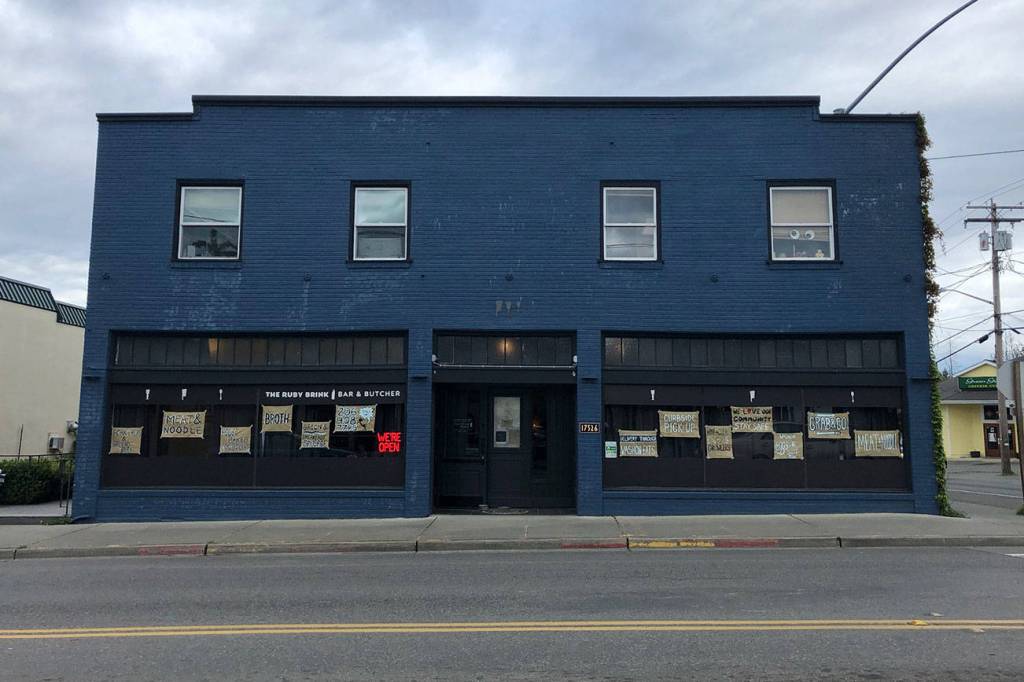
This time around, Haulman is determined to leave a better record behind for future generations — one that includes photographs of shuttered schools and businesses and documentation of a darkened arts scene and even the disappearance of Metro busses.
But he also wants the project to reflect the community’s strength and resolve in the face of an unimaginable public health crisis.
Speaking of all the important work being done now by organizations like VashonBePrepared and groups including Vashon Live, Vashon’s Medical Reserve Corps, the Backbone Campaign and others, Haulman said he was determined to create what he called “a community memory.”
“There is just a ton of stuff going out in the community, and my concern is that it is going to get lost,” he said. “And so let’s create this sort of central archive depository and people can just dump stuff into it … we can come back in two or three months and sort through it and index and catalog it, but if we don’t capture it now, it may sit on a website for a while, but it could just disappear.”
Vashon librarian Amelia Lincoln Ecevedo, who is also working to collect islanders’ contributions to the project, concurred.
“As a librarian, I think it’s very important to gather as many experiences as possible while we are still going through the pandemic,” she said. “Things can look very different in retrospect. As well, history has a habit of distilling a big event down into a few sentences. This is a very big event, and it also affects us each personally.”
Lincoln Ecevedo is now soliciting personal stories about the way the pandemic has affected islanders, hoping to authentically capture as broad a portrait as possible of how islanders felt and acted and lived during this time. She is particularly interested in collecting the experiences of island children, she said.
Eventually, Lincoln Ecevedo will work with Vashon Library staff to compile these into a single document to be added to the Vashon Library special collections and the Heritage Museum archives.
“Vashon has an amazing amount of resources and people working hard to carry us through this, and I would like to capture that memory too,” she added. “We should be proud of how we are taking care of each other. Vashon is a place full of writers and poets and artists of all ages who can help us preserve their stories — the story of Vashon — for the future.”
Haulman, too, hopes that many islanders will contribute to a history project that that proves the island’s resiliency.
“It could be a very celebratory thing to come back in a year or two, to say, ‘look at what we did, in the face of this horrible kind of tragedy, Vashon pulled together, we did some pretty special stuff,’” he said.
Be a part of history
An online form for islanders to submit materials to the coronavirus history project can be found at vashonbeprepared.org/Archives. This is the preferred address for anyone who would like to upload images and photos.
Vashon Heritage Museum also has an email address, vashonheritagecoronaarchive@gmail.com, for those who are not comfortable with the online form, as well as anyone who wishes to contact the museum directly or donate an artifact to the museum.
The Vashon Library’s Become a Vashon Historian Community Project is also accepting submissions from islanders of all ages at aalincoln@kcls.org. Those submitting to this address should stay within a format of an 8 and a half by 11-inch piece of paper or smaller and include the name of writers and artists and any other information they’d like attached to the submission. At a later time, after the library has reopened, actual artworks can be brought to the library. For more information, visit tinyurl.com/y8d76qxyor write to Amelia Lincoln Ecevedo at aalincoln@kcls.org.