Vashon Green School, aiming for inclusion, becomes nonprofit
Published 1:30 am Wednesday, October 20, 2021
By Aimée Cartier
For The Beachcomber
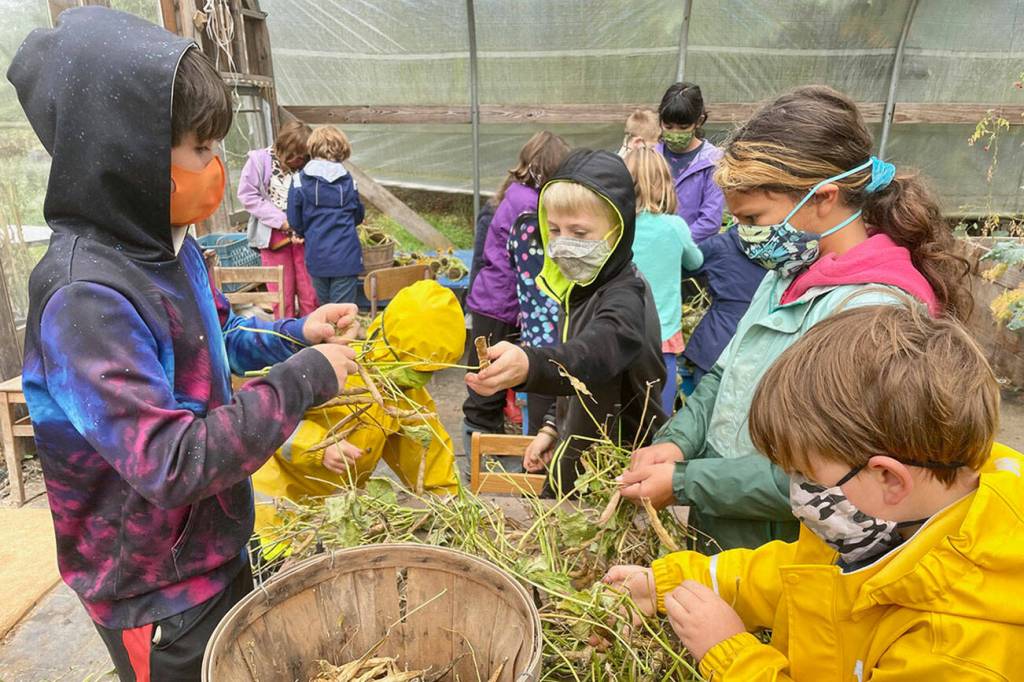
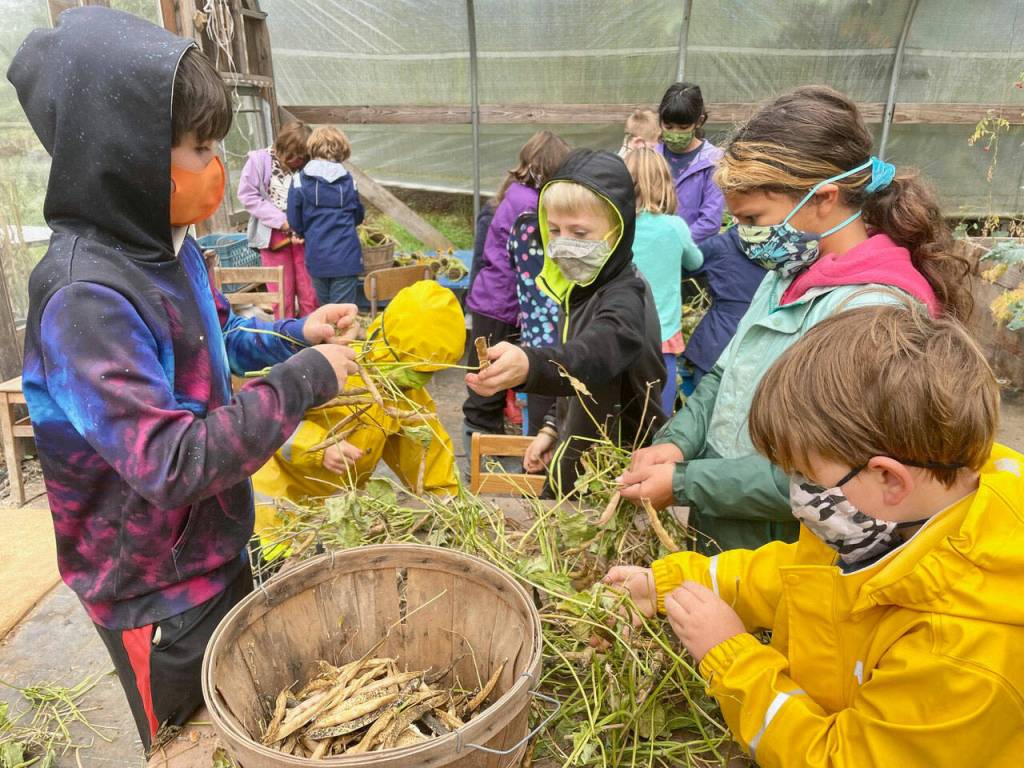
This autumn equinox marked the start of Vashon’s only completely outdoor primary school: Vashon Green School (VGS).
The start of the new year at VGS also marked the beginning of the school’s new status as a non-profit — a move made possible by another nonprofit, Sustainable Vashon (SV) which, in closing down its own organization, transferred its nonprofit status to the school.
Established in 2007 and having served more than 200 children, VGS is an unusual model for elementary school learning. VGS founder and lead teacher Dana Schuerholz calls it “place-based education” — a learning modality in which curriculum is designed to connect students with the social and physical community they call home. It is the culture, history, and geology of a place that becomes the foundation for all of their learning.
At VGS, this means that science class may take place by the pond or Fern Cove — where children will study the life that exists within that ecosystem. Math class can involve measuring, planting, or calculating heights and spacing in the garden or wood shop. When local resident Orca whales are circumnavigating the island, VGS students can go to the beach to observe them.
Often, it can take considerable time and effort to achieve a 501(c)3 tax exempt status. In years past, with only Schuerholz at the helm, this leap didn’t seem possible.
In operating both a seven-acre working farm and the school, there has always been plenty for Schuerholz to do. Goats need to be milked, fences need to be fixed, structures need to be built and curriculum needs to be developed. There are administrative details, phone calls, meetings and, of course, teaching children.
In the past two years, the school has also shifted to being a completely outdoor experience — something that allowed VGS to remain open as a completely in-person school, throughout COVID, with zero COVID cases.
According to Schuerholz, becoming a non-profit had always been something she considered for several reasons. First among these were her commitment to keeping tuition low and offering financial assistance to families who needed it.
“This has never been a great, or very sustainable business model, ” she said.
In addition, Schuerholz also said her expenses in completely retooling VGS to move it entirely outdoors during COVID added urgency to her goal of becoming a nonprofit.
“Last year’s added costs made it clear that for VGS to continue to be part of the movement for education equity, we needed a different financial structure,” she said. “As a nonprofit, we hope to be able to garner more support from the community and from foundations who would support us as an investment in the future.”
In short, Schuerholz knew something had to give in terms of her school’s business model.
“I realized that if I wanted this place, this school, to keep giving — even after I am gone — I needed to make it more sustainable,” she said.
Enter Sustainable Vashon — an organization willing and eager to transfer its nonprofit status to the school.
According to Schuerholz, the move was proposed by Amy Morrison, a VGS parent alum and a longtime admirer of the school.
Morrison, who is currently the deputy director of Vashon’s Backbone Campaign, understood the way to legally transition one organization’s 501(c)3 status to another. She was also aware that Sustainable Vashon could partner with VGS to do this.
“When Amy called to ask about our plans and the idea of transferring our tax-exempt status to the Green School, it was a perfect solution for us,” said Merrilee Runyan, a founding member of SV. “We knew it was time to bring Sustainable Vashon to a close. It was both a good ending and a new beginning.”
Sustainable Vashon (SV) was an island organization originally started in response to the attacks of Sept. 11, 2001. A group of islanders met for more than a year to respond to the attacks in a different way than war. In 2003, they incorporated as a non-profit. Their intention was to learn and advocate for solutions to island problems that were sustainable, to move away from dependence on fossil fuel and extractive practices and be a model for other communities.
“Our mission was to educate, model and advocate for the economic, environmental, and social sustainability of Vashon Island,” said Runyan.
SV also developed a Green Seed Grant program, offering grants of up to $500 to islanders who proposed ideas designed to “ignite imagination, build community and provide models of sustainable living here on Vashon.” Over the years, Sustainable Vashon made 51 of these grants.
In addition to the grants, SV also developed a solar initiative, bringing demonstration solar projects to the island – including rooftop installations at the Land Trust Building and JG Commons, along with explanatory information to show Islanders the efficacy of roof-top solar.
SV also initiated and maintained the No Trash Bash Stash – a collection of dishes, cutlery, serving ware, tablecloths, and napkins, so that people could have events without using paper and plastic. (The Stash now lives with the Vashon Island Growers Association.)
SV was also aware of the innovative work of VGS, and did what it could to support the school. On more than one occasion, SV also served as a pass-through for donations that were made to VGS to fund student scholarships.
“We have always seen ourselves as a model and catalyst for other individuals and groups [or] organizations to create their own ideas and programs focused on sustainability,” said SV Board Member Janie Starr.
So instead of fading away, Sustainable Vashon has now been repurposed to sustain VGS.
For the school, it means that it will finally be able to accept tax-deductible donations to fund its scholarship program, as well receive grants and to make their bigger long-term vision possible.
Now, Schuerholz has a team of people, a whole board, helping her seed this kind of education into the future both far and wide.
“I am grateful and honored to be part of the next evolution of what a small group of committed changemakers started with Sustainable Vashon,” she said.
And so, the work of VGS — to connecting students to what sustains them through an immersion and stewardship education — takes the torch of one group of sustainability visionaries and passes it on to the next generation of changemakers.
To donate, or find out more about Vashon Green School go to www.VashonGreenSchool.org.