Tripledemic Steps, Sniff, Sniff, What to Do?
Published 1:30 am Wednesday, December 28, 2022

Uh oh. Sniffles. Scratchy throat. Feeling low-energy.
So what do you do now? And, is it COVID or just a cold? Or flu? Or that RSV thing?
It’s hard to tell the difference between the three tripledemic respiratory illnesses because their early symptoms are so similar. However, your goals are pretty much the same, whatever you have: COVID, seasonal influenza (flu), or Respiratory Syncytial Virus (RSV).
The first goal is to take care of yourself. Plus, you need to take steps to protect those around you from getting one of the three tripledemic infections. So, here’s a step-by-step mini-instruction manual on what to do.
- Test for COVID, and do it again 48 hours later to be sure of the result.
- If you are at increased risk from respiratory viruses, talk to your doctor about a flu test. Flu treatment exists but must be started soon after symptom onset.
- Stay at home while you have symptoms. You don’t want to spread any illnesses around, no matter whether it’s flu or COVID or RSV.
- Take care to avoid contact with elderly people and with others at increased risk of heart or lung disease or a compromised immune system.
- Wear an N95-quality, well-fitting mask at home if you live with someone at increased risk, and/or in public if you absolutely must go out.
- If you do test positive for COVID, here are the recommended steps from Vashon Medical Reserve Corps:
- Stay at home for a minimum of five days.
- Isolate from others in your household if you can.
- Contact your healthcare provider right away and ask about treatments such as Paxlovid, which must be started within five days.
- Count back 48 hours and notify anybody you spent time with that they have been exposed. Tell them to wear an N95 or equivalent mask in public settings for the next 10 days and home-test according to the schedule suggested by the Washington Department of Health (DOH) here.
- On the sixth day, test yourself again. Continue to isolate until you test negative.
- Delay further COVID vaccination for three to four months.
- Report your case to DOH here.
Federal Home Tests Are Back: No Charge to You
While supplies and funding last, you now have two sources to order home COVID tests without charge:
- • After being shut down for several months, the federal government has restored the free at-home test program in an effort to tamp down the COVID winter surge.
Every U.S. household is eligible to order four free at-home COVID tests here.
- • While supplies last, you can also get ten home COVID tests each month from Washington state. The order page is here.
Two-Year Anniversary of COVID Vaccine
A major milestone passed this month with little notice: on Dec. 14, 2020, nurse Sandra Lindsay received the first COVID vaccination in the United States.
A team of scientists marked the two-year anniversary by publishing a statistical analysis of the vaccines’ impact on the pandemic.
They estimate that vaccines prevented 3.2 million deaths and 18.5 million hospitalizations in the United States alone. Many additional lives were saved worldwide.
The work was done by researchers at the University of Maryland, York University, and Yale School of Public Health.
The report published by The Commonwealth Fund is available online here.
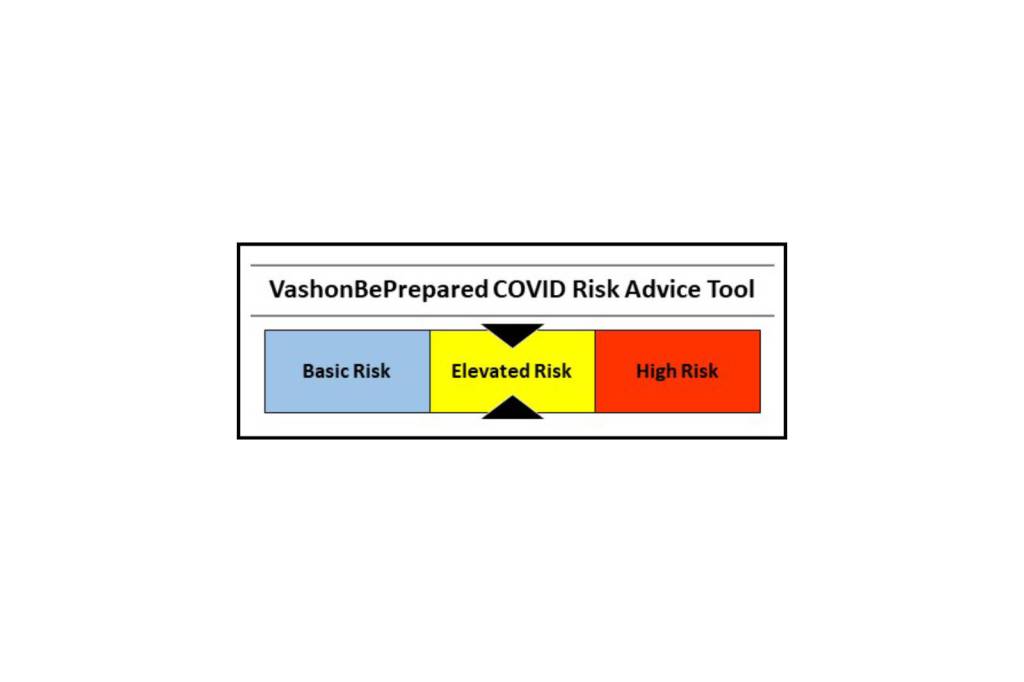
Current COVID Risk Level: Elevated
The current COVID hospitalization rate for our tri-county area (King, Pierce, Kitsap) remains at the Elevated Risk Level that it reached since Thanksgiving began the holiday gathering and travel period.
Fortunately, it has stayed flat for several weeks. However, many people will again be traveling and gathering with friends and family this weekend. For the past two years that has meant a bump in the COVID rate.
The VashonBePrepared risk estimate takes into account that Vashon is in a three-county COVID exposure pool —King, Pierce, and Kitsap. Over 3,000 people take a round-trip ferry ride to or from the mainland each day. That’s equivalent to almost one-third of the island population.
Therefore, the metrics from the three counties are blended to take into account the island’s regional COVID exposure risk. Although the primary tracking metric is the hospitalization rate, we also monitor the new case rate and test positivity rate. Hospitalization, case, and test positivity rate data comes from the state Department of Health’s COVID dashboard.
At this Elevated Risk level, it’s smart for everyone to wear an N95 mask indoors in public.
People who are unvaccinated, at high risk from COVID, or living with someone at high risk should avoid non-essential indoor public activities.
If you must be indoors in a public place, it’s extremely important to wear an N95 mask if you are unvaccinated, and/or at risk for COVID for health reasons, and/or live or spend time with someone at risk from COVID, and/or are regularly exposed to COVID risk in work or group settings such as retail, school or commuting.
It is recommended to
- Test at home before gathering with friends and family.
- Get the bivalent COVID vaccine if you have not already done so.
- Maintain good ventilation at home and at work.
- Avoid individuals with suspected or confirmed COVID.
- If exposed to COVID, wear a mask in public and avoid contact with those at high risk for 10 days.
- Always home-test if you have symptoms.
- If you test positive, isolate for at least 5 days until you test negative.
- If immunocompromised, discuss additional prevention actions with your healthcare provider.
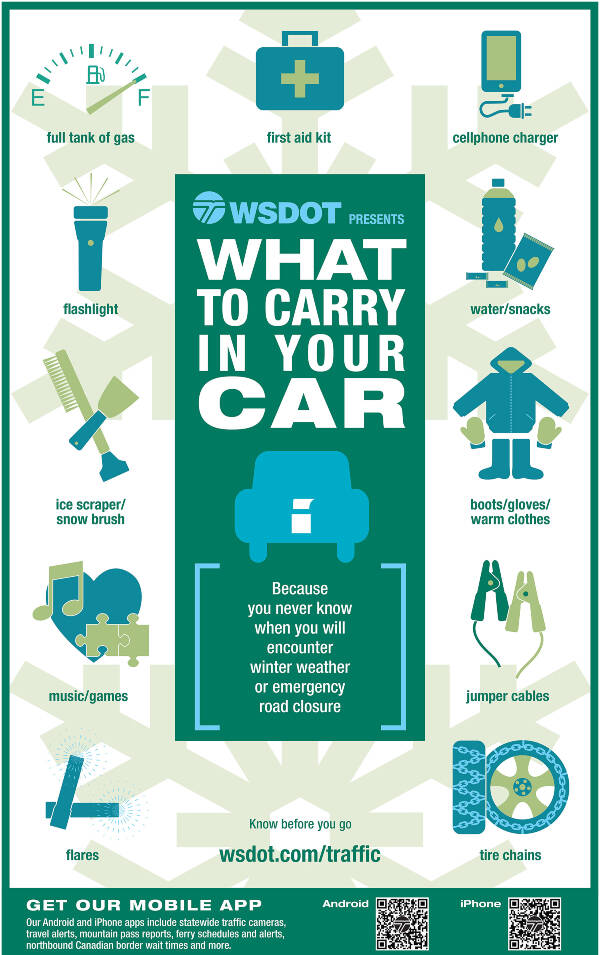
Safety Tips: Driving in Snow, Ice and Black Ice
Here are some winter driving tips compiled by VashonBePrepared from the Washington Department of Transportation, the Auto Club, and other sources.
Monitor the weather: Consider whether you really need to get out on the roads. Snow and freezing rain increase the risk of driving, even if you are a great winter-weather driver.
Be alert for re-freeze and black ice: Be especially on guard when temperatures are hovering around freezing. Slight warming can melt snow and it can then quickly re-freeze into very slick road ice. Black ice can be nearly impossible to see.
Slow down: On snow or ice, a lower speed gives you more time to react to road problems in slick conditions.
Accelerate slowly: Apply the gas slowly. Once tires begin spinning it can be hard to regain traction.
Double or triple following distance: Leave extra room between your vehicle and the vehicle in front of you.
That gives you an extra margin of safety if you need to stop.
Look way out ahead: Anticipate road conditions and begin slowing earlier than normal for intersections, stop signs, curves, other vehicles and pedestrians.
Clear your vision: Before starting out, take the time to clear all your windows. You can’t avoid trouble unless you can see it coming. Clear snow off your vehicle roof to avoid throwing snow bombs at drivers behind you.