COVID Deaths: Our Older Family and Friends Bear the Burden
Published 1:30 am Thursday, March 2, 2023

Two Vashon COVID deaths reported in the last few weeks remind us all that COVID has not gone away.
The Centers for Disease Control and Prevention (CDC) report that COVID-19 kills more than 400 Americans every day, remaining one of the top three causes of death in our country.
Older people bear almost all of the burden of those pandemic deaths.
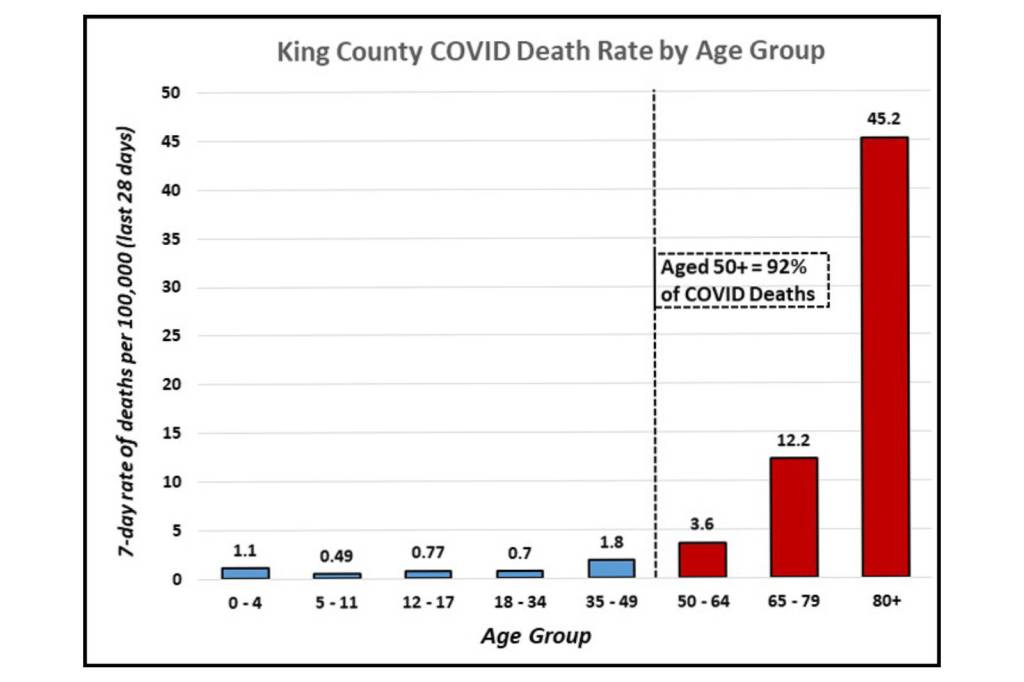
King County matches the national statistics: over 90% of COVID deaths in the county occur among people aged 50 or older, according to Public Health – Seattle & King County (PHSKC).
Dr. Jim Bristow, from the Vashon Medical Reserve Corps, said that this data makes it clear that islanders should do what they can to protect their older friends and family.
“It’s a problem if people younger than 50 see the lower death rate for their age group, conclude that they’re relatively safe, and then behave as though the COVID death rate for elders doesn’t matter to them,” said Bristow. “But that’s only true if you don’t care about the elderly in our community. The people who die from COVID catch it from another person. COVID is not going away anytime soon, but we know from our case investigations over the last three years that a few simple precautions can protect our elders.”
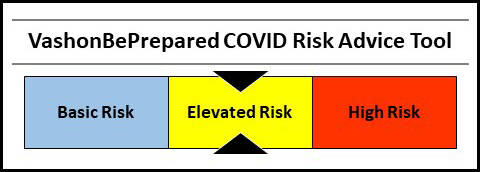
The COVID safety precautions are the same for any age, but they are much more important when it comes to your family and friends in the older age groups shown in the infographic. We list the risk reduction techniques below with our VashonBePrepared COVID Risk Advice Tool.
Protect yourself and others by following the advice while shopping, going to school, taking a ferry, attending a show, or being in similar crowded settings.
COVID risk level: elevated
The VashonBePrepared COVID Risk Advice Tool remains at the yellow Elevated Risk level, based on the hospitalization rate in our three-county COVID risk assessment area. The risk level rating also takes into account the new case rate, the positive test rate, and COVID virus levels in wastewater tested by regional public health departments.
At this Elevated Risk level, it’s smart for everyone to wear an N95 mask indoors in public.
It’s doubly important to mask up if you are unvaccinated, at risk from COVID for health reasons, spend time with someone at risk from COVID, or are regularly exposed to COVID in group settings such as retail, school, or commuting.
Avoid non-essential indoor public activities if you are unvaccinated, at high risk from COVID, or living with someone at high risk. Test at home before gathering with friends and family and always test if you have symptoms.
Get the bivalent COVID vaccine if you have not already done so.
Maintain good ventilation at home and at work. Avoid individuals with suspected or confirmed COVID. If you are exposed, wear a mask in public and avoid contact with those at high risk for 10 days.
If you test positive, isolate for at least five days after the first COVID symptoms or a positive test. Stay isolated until you test negative. Wear a mask around others for a full 10 days even if testing negative.
Vaccine pledge: No out-of-pocket cost
Moderna has joined Pfizer in making a pledge: there will be no out-of-pocket cost to patients for their COVID vaccines. The two companies had previously indicated that a dose of vaccine might cost as much as $130. However, in responding to criticism, the companies have pledged to find ways to make the vaccine available to all, even the uninsured, with no out-of-pocket charge.
Study: Bivalent booster works
A new CDC study shows that people who got the updated bivalent COVID-19 booster by the end of last year were 14 times less likely to die from the disease than people who were never vaccinated, and three times less likely to die from the disease than those who got only the original vaccines. Older adults received the most benefit from the bivalent booster.
The study analyzed data from more than 21 million COVID cases, including 115,000 COVID deaths, across two dozen states. That makes the study the most comprehensive one so far, based on real-world field data rather than laboratory testing of vaccination effects.
Prep Tip: Family home hazard hunt
It only takes three minutes to watch a video with your family, and then everyone can join in a home hazard hunt. The video, viewable here, points out possible hazards during an earthquake or other emergency and how to remedy them, plus gives tips on general home maintenance items to keep up to date.
This video comes from the Washington Emergency Management Division’s series called “Prepare in a Year.” It’s excellent and we use it as a source for many of our tips. Go ahead, binge away!