Summer brings a COVID wave, for fourth year in a row
Published 1:30 am Thursday, August 10, 2023


For the fourth year, it looks like we are heading into a summer season COVID wave.
So far, there has only been a small uptick in the COVID tracking data for Vashon, but at the national level, the upward trends are clear.
The Centers for Disease Control and Prevention (CDC) tracks the pandemic with two main metrics — the number of new hospital admissions with COVID, and the percentage of emergency room visitors diagnosed with COVID. Both metrics are rising, and have been doing so for more than a month.
Despite the rise, those two rates remain near historic lows after months of decline both nationally and on Vashon, so it’s possible the summer wave will be more like a wavelet, rather than a surge or spike.
However, it’s important to understand that COVID tracking is a challenge these days. Many people do not test, and if they do, they likely use a home test kit which may be falsely negative early in the COVID infection, and most people do not report positive results to authorities.
The CDC says no single variant has caused the increase in cases, unlike the previous deadly spikes from the Delta and Omicron variants.
However, experts mention two factors for the summer wave. Summer travel is way up and that means COVID exposure is way up. In addition, in parts of the country experiencing record-setting heat, people are staying indoors to stay cool, which increases exposure if there’s an infected person in the group.
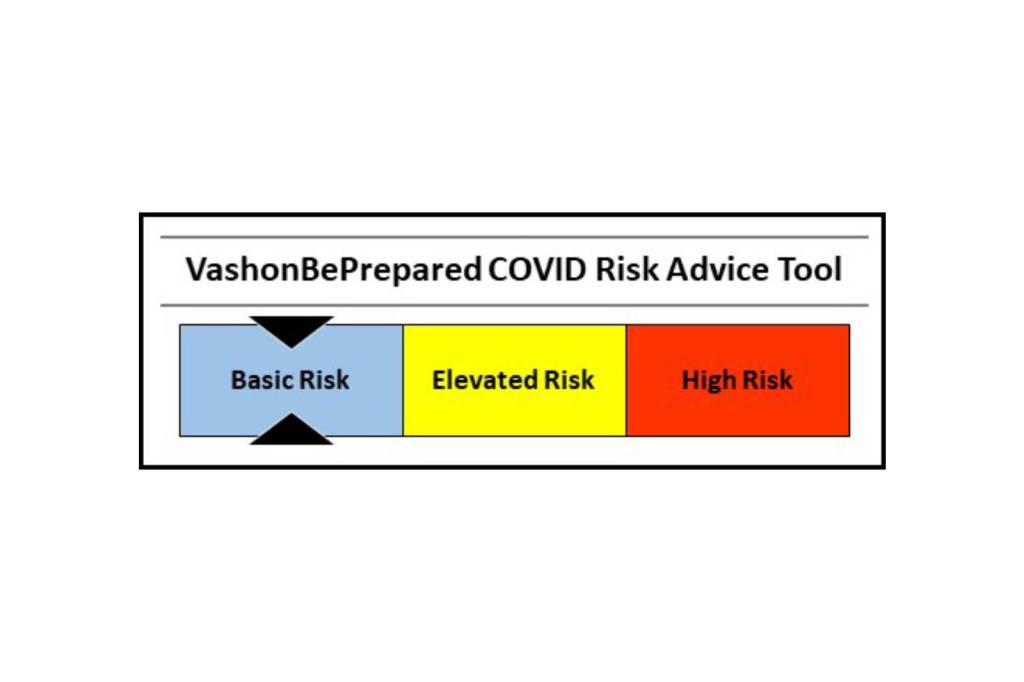
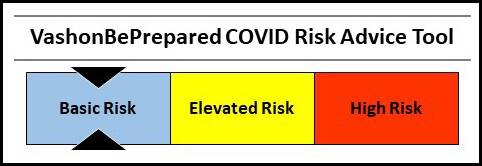
Vashon Risk Level: Basic
Fortunately, as mentioned above, there has not yet been a concerning upward swing in Vashon COVID tracking statistics. However, VashonBePrepared has received a number of anecdotal reports of COVID on Vashon, many of them initially mistaken as summer colds.
It’s important to test, isolate if positive, and to follow the risk advice below in order to protect your household and community. That summer cold might turn out to be COVID, so it’s important to stay away from those at risk until your symptoms have abated.
Wear an N95 mask indoors in public if you have been exposed to COVID, are at risk for health or other reason, or you live with or spend time with someone at higher risk.
If you haven’t yet had a bivalent booster or you are over 65 and it’s been at least 4 months since your last booster, you’re eligible now.
Maintain good ventilation at home and at work, and avoid those with suspected or confirmed COVID.
If exposed to COVID, wear a mask in public and avoid contact with those at high risk for 10 days.
Always home-test if you have symptoms. If you test positive, isolate for at least five days and until you test negative. Also check in early with your doctor about treatment, even if your symptoms are initially mild. If immunocompromised, discuss additional prevention actions with your healthcare provider.
Don’t Toss That Mask
As this latest summer wave teaches us, COVID has not gone away. In addition, it seems likely that we could have wildfire smoke events again this year. You probably already own two very effective aids to help you stay healthy in both of those situations. Hold on to your supply of N95 masks and keep that air purifier.
In fact, this would be a good time to replace the filter in your air purifier in readiness for smoke season.