Staying safe: Rising COVID cases, new vaccine and smoke tips
Published 1:30 am Thursday, August 31, 2023


The current break from wildfire smoke here on Vashon provides an opportunity to get ready if (when) the smoke returns.
We’ve boiled down previous wildfire-smoke advice to create a quick refresher.
Here are your overall objectives: Keep track of smoke forecasts so you know when to take action, stay inside during bad smoke events, and keep your indoor air as clean as possible.
- Visit the smoke forecast website and find current air quality readings here.
- Get a portable HEPA air purifier or assemble a homemade box fan filter. Use them to filter out smoke particles and set up a cleaner-air room to hang out in when it’s smokey outside. Find out how to do this at bit.ly/CleanerAirRoom.
- It’s often hot when wildfire smoke gets bad. If you don’t have air conditioning, pull shades or draw curtains to block heat from the sun, and limit the use of equipment that generates heat.
For more detailed info on dealing with wildfire smoke, check this link, and this one, too, from the Washington State Department of Health and the University of British Columbia.
Help 911 Responders Find Your House
Seconds count when you’ve called 911 for help.
Help will get to you faster if responders can quickly find your house. You can purchase a blue reflective street-number sign for your home by making a small donation for one of the signs, which are made by firefighters at Vashon Island Fire & Rescue (VIFR). Find out more here.
New Vaccine on the Way
The Vashon partners who have worked on COVID vaccination all through the pandemic have started planning for the new COVID vaccine expected to arrive in September.
There are some questions still to be answered by the Centers for Disease Control and Prevention (CDC), such as recommendations for ages recommended to get the vaccine.
Several variants have been getting attention in media reports and are being monitored. So far, none of the variants appear to cause more severe disease. One of the variants, named EG.5, has now become the dominant strain of COVID. It makes up about 20% of national COVID cases in the United States and it has been rising.
Increased Reports of Cases
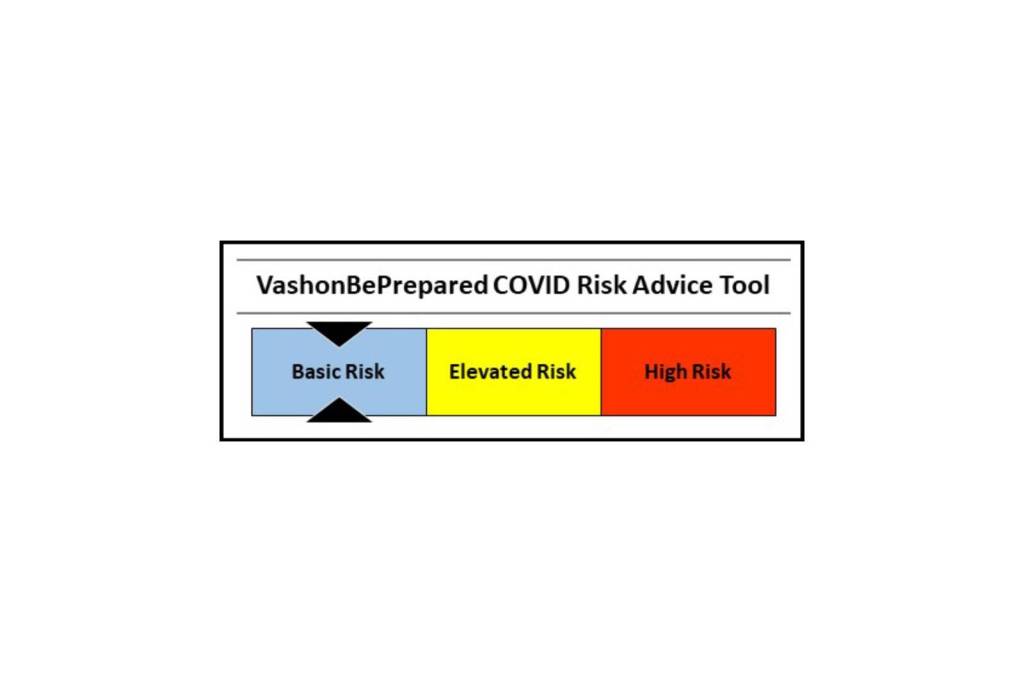
Reports of COVID infections on Vashon continue to increase. However, at this time, the metrics for COVID risk have not been pushed into the Elevated Risk level.
In addition to many reports of individual cases of infection in the community, Vashon Thriftway reported this week, on vashonthriftway.com, an unusually high number of cases among staff in the past week.
The store has collaborated with Vashon Medical Reserve Corps, Vashon Emergency Operations Center, and VashonBePrepared and has put in place a protocol to prevent further COVID spread. The protocol includes testing exposed individuals, urging masking at work, and providing rapid tests.
At this time, advice from Vashon’s Medical Reserve Corps remains to wear an N95 mask indoors in public if you have been exposed to COVID, are at risk for health or other reasons, or live with or spend time with someone at high risk.
If you haven’t yet had a bivalent booster or you are over 65 and it’s been at least 4 months since your last booster, you’re eligible now.
Maintain good ventilation at home and at work, and avoid those with suspected or confirmed COVID.
If exposed to COVID, wear a mask in public and avoid contact with those at high risk for 10 days. Always home-test if you have symptoms.
If you test positive, isolate for at least five days and until you test negative. Also check in right away with your doctor about treatment, even if your symptoms are initially mild.
If immunocompromised, discuss additional prevention actions with your healthcare provider.
The VashonBePrepared COVID Risk Advice Tool aggregates data in our exposure area. That includes King, Pierce, and Kitsap counties, since the island ferry routes generate thousands of round trips daily to those mainland areas.
The primary metric evaluated by the Vashon Medical Reserve Corps is the COVID hospitalization rate, since that is very reliably reported by public health agencies.